


More news on this day
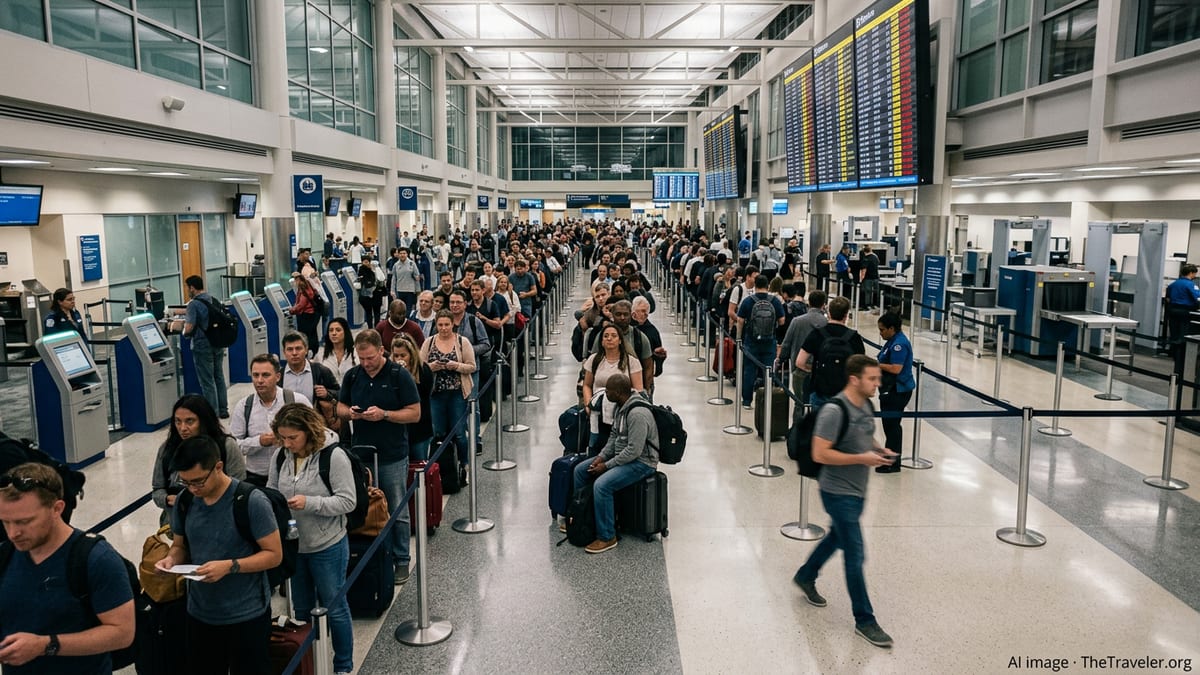
Dozens of travelers at Indianapolis International Airport encountered significant disruption on Saturday as a cluster of airline delays and cancellations rippled through schedules to major U.S. hubs, complicating summer weekend travel plans across the country.
Get the latest news straight to your inbox!
Cluster of Disruptions Across Major Carriers
Publicly available flight status boards for Indianapolis International Airport on June 20 indicate a pocket of operational disruption, with around 20 departures and arrivals showing delays and at least three flights canceled by midday. The affected services involve several of the largest U.S. carriers, including American Airlines, Southwest Airlines and United Airlines, highlighting how quickly routine weekend traffic can become strained.
The irregular operations are centered on some of the country’s busiest connecting hubs, with flights touching Chicago, Dallas and Atlanta among those impacted. These cities serve as key transfer points for domestic itineraries, meaning schedule shifts in Indianapolis have the potential to cascade into missed connections and rebookings across the wider network.
While the total number of disrupted flights remains modest in comparison with national volumes, the concentration among a small set of routes and times has amplified the effect on individual travelers. Reports from flight-tracking platforms show creeping departure pushes of 30 minutes to several hours in some cases, as aircraft and crews fall out of position.
The mix of delays and cancellations underscores the sensitivity of airline schedules to even localized issues at one airport or hub. According to general delay statistics published by the U.S. Department of Transportation, a relatively small percentage of flights on a given day can translate into a sizeable share of passengers experiencing disruption when routes funnel through the same key cities.
Chicago, Dallas and Atlanta Routes Bear the Brunt
Indianapolis is heavily linked to Chicago, Dallas and Atlanta, all of which are major domestic and international gateways. On Saturday, services connecting Indianapolis with Chicago O’Hare, Dallas Fort Worth and Atlanta Hartsfield-Jackson appeared prominently on the list of delayed or canceled flights, according to real-time schedule data reviewed by TheTraveler.org.
Even short-haul links, such as the Indianapolis to Chicago corridor that in normal conditions can be completed in less than an hour of flight time, are susceptible to wider network strains. When congestion or staffing challenges emerge at a hub, ripple effects can quickly extend back to feeder airports like Indianapolis, forcing aircraft to sit at gates awaiting inbound connections or release slots.
Dallas Fort Worth and Atlanta, both prone to summer thunderstorms and intense traffic flows, also figure prominently in the disruptions. Publicly available coverage of recent travel conditions shows that these hubs have experienced intermittent operational challenges in recent days, with rolling delays sometimes stretching late into the evening and ultimately resulting in overnight cancellations for some services.
Because many Indianapolis passengers rely on one-stop itineraries through these hubs to reach destinations on the coasts or in the Mountain West, a delay on the first leg can be enough to derail an entire day’s travel. Reaccommodation often requires rerouting through alternative hubs or rebooking to the next day, particularly when aircraft are already operating at high load factors during the busy summer season.
Pressure on American, Southwest and United Networks
American Airlines, Southwest Airlines and United Airlines account for a significant share of domestic traffic into and out of Indianapolis, and all three carriers appear within Saturday’s disrupted schedule. Real-time status feeds show select departures on these airlines leaving late from Indianapolis or arriving behind schedule from other cities, reflecting a mix of localized and network-wide pressures.
Recent industry reporting and consumer discussions have highlighted how staffing gaps, maintenance requirements and air traffic control flow constraints can converge on peak days to push carriers beyond their built-in buffers. For American and United, which rely heavily on hub-and-spoke systems centered on airports such as Dallas Fort Worth and Chicago O’Hare, even small timing slips can snowball into ground holds and missed crew connections.
Southwest, which operates a point-to-point network, faces a different kind of vulnerability. Because many of its aircraft fly multiple segments in a day without returning to a central hub, a delay early in the schedule may propagate from city to city until the aircraft can be reset or swapped. Publicly accessible discussions among travelers in recent weeks describe multi-hour disruptions and forced overnights when this type of rolling delay collides with already tight turn times.
All three carriers have outlined reliability initiatives in their public communications, including investments in technology, staffing and schedule adjustments designed to improve on-time performance. However, the conditions observed in Indianapolis on Saturday show that, even with these efforts, weather, traffic and operational frictions continue to test airline resilience as summer travel ramps up.
Summer Travel Demand Magnifies Impact on Passengers
The timing of Saturday’s disruptions at Indianapolis International Airport coincides with a seasonal surge in demand as families, leisure travelers and business flyers converge on airports ahead of the July 4 holiday period. Industry forecasts for summer 2026 point to passenger volumes that in many cases meet or exceed pre-pandemic levels on key domestic routes, intensifying competition for available seats when schedules go awry.
When a departure is delayed or canceled on a busy weekend, options for rebooking can be limited. Publicly available guidance from airlines and consumer advocates notes that same-day alternatives are not always guaranteed, particularly on heavily traveled city pairs such as Indianapolis to major hubs like Chicago, Dallas and Atlanta where flights are already operating near capacity.
Travelers posting on social media platforms in recent days have described a pattern of incremental delay notices, where departure times are pushed back in short intervals rather than canceled outright. While this strategy can give airlines flexibility as they work to resolve operational issues, it can also increase uncertainty for passengers who must make real-time decisions about missed connections, hotel stays and ground transportation.
Consumer advisories from transportation agencies emphasize the importance of closely monitoring flight status on days when irregular operations emerge. For passengers departing from or connecting through Indianapolis, that means checking both the initial leg and any onward flights to hubs like Chicago, Dallas or Atlanta, and being prepared for schedule changes that may arise with limited notice.
What Travelers Can Expect Through the Weekend
With summer storms, airspace congestion and ongoing staffing challenges remaining a factor at multiple U.S. hubs, travel analysts suggest that conditions seen at Indianapolis on Saturday could continue intermittently through the weekend. A cluster of 20 delays and three cancellations at a single medium-sized airport can serve as an early indicator of broader strains in the national system on a peak travel day.
Airline and airport operational data show that recovery from such disruptions typically occurs over several scheduling banks, as carriers reposition aircraft and crews and work through backlogs of displaced passengers. This process can be complicated when irregular operations span multiple hubs at once, particularly those serving as gateways for Indianapolis traffic.
Travelers departing Indianapolis over the coming days may encounter longer lines at ticket counters and customer service desks as those affected by Saturday’s problems seek rebooking and compensation. Industry guidance suggests arriving early, traveling with flexible itineraries where possible and considering earlier departures in the day, which historically have a lower likelihood of severe delay than late-evening flights.
For now, the situation at Indianapolis illustrates how quickly a localized pocket of disruption can ripple through a summer travel weekend, particularly when it affects major carriers and critical hub connections. With volumes high and margins for error slim, minor disturbances can rapidly escalate into travel turmoil for passengers on even a relatively small number of flights.