


More news on this day
Drivers using the M1 around junction 25 are facing long delays after a collision led to lane closures on the southbound carriageway towards East Midlands Airport, disrupting journeys across the East Midlands corridor.
Get the latest news straight to your inbox!
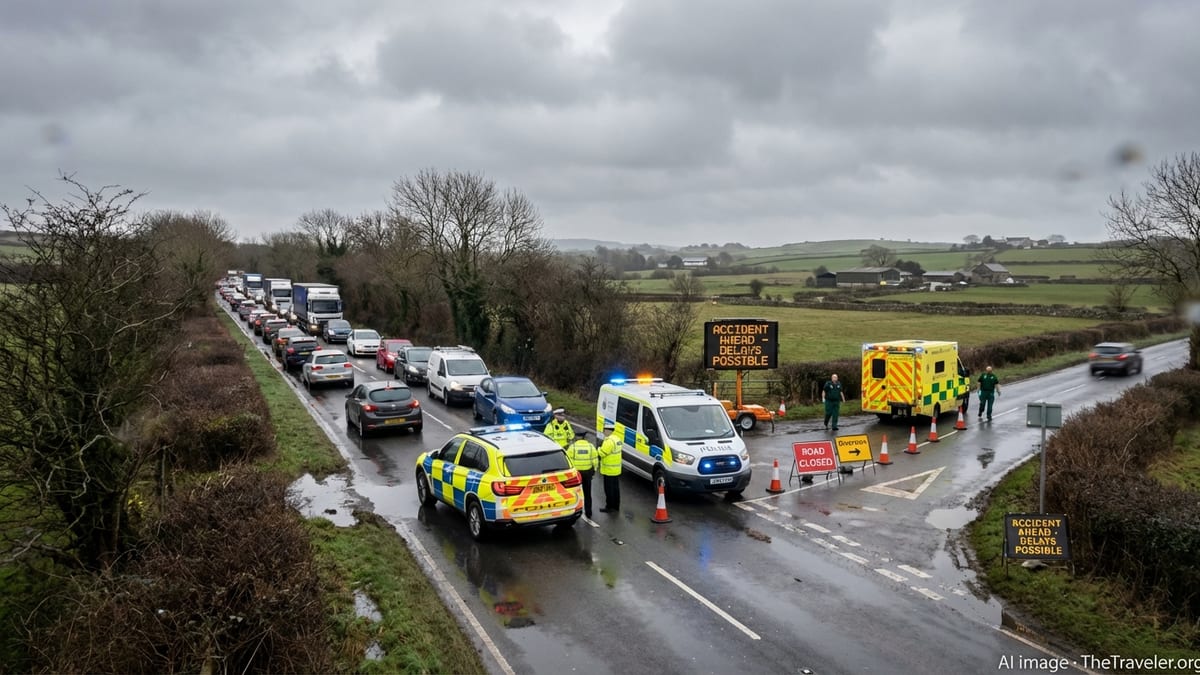
Collision near junction 25 triggers heavy congestion
Reports indicate that a multi-vehicle collision occurred on the M1 in the vicinity of junction 25, a key interchange for traffic heading towards East Midlands Airport and the wider Nottingham and Derby area. The incident has led to at least one lane being closed on the southbound side, with traffic building rapidly in both directions as vehicles slow past the scene.
Early information from traffic monitoring services suggests that queues on the southbound approach have stretched for several miles, with average speeds reduced to well below normal motorway conditions. Congestion is also being reported on connecting routes feeding into the junction, as drivers attempt to re-route away from the affected stretch.
The collision has taken place on a busy section of the M1 that regularly carries both long-distance traffic and local commuter flows, particularly those travelling to and from East Midlands Airport and nearby logistics hubs. Even minor incidents on this section can quickly translate into lengthy delays, and the current disruption appears to be significantly affecting evening travel.
Images and descriptions shared via traffic cameras and user-generated traffic reports show long lines of stationary or slow-moving vehicles, with emergency and recovery vehicles working within the closed lanes. Drivers are being urged by traffic services to avoid the area where possible and to expect journey times to be substantially extended.
Impact on access to East Midlands Airport and regional routes
The collision is having a noticeable impact on access routes to East Midlands Airport, which relies heavily on the M1 and adjoining corridors for passenger drop-off, pick-up and staff travel. Travellers heading to the airport from the north are experiencing significant delays as they approach junction 25, with knock-on effects on punctual arrival for evening flights.
Traffic data indicates that congestion is spilling onto the A52 and other local roads as drivers seek alternatives to the motorway. These diversions, while offering potential relief for some, are putting additional pressure on local networks that are not designed to handle sustained motorway-level traffic volumes.
Publicly available information on regional road performance has frequently highlighted the importance of the M1 between junctions 25 and 24, particularly for freight and logistics linked to the airport. Disruptions on this stretch tend to propagate quickly, affecting commercial schedules and delivery windows as vehicles are held in extended queues or forced onto longer diversionary routes.
Travellers heading for East Midlands Airport are being advised by travel services to allow significantly more time for their journeys, to check live traffic information before departure, and to consider alternative approaches where feasible. For some passengers, rail links to nearby stations combined with local bus or taxi connections may offer a more predictable arrival time while the motorway remains partially blocked.
Lane closures, recovery operations and expected clear-up
According to live traffic feeds, at least one lane on the southbound M1 near junction 25 remains closed to allow for collision investigation, vehicle recovery and debris clearance. At various points during the response, additional lanes have been restricted as recovery teams manoeuvre equipment and specialist vehicles into position.
Such closures on a heavily used motorway section can quickly reduce capacity and amplify delays, particularly when they occur close to a major junction where vehicles are already changing speed and position. Traffic control systems are using overhead signs and speed restrictions to manage flows approaching the incident, aiming to reduce sudden braking and secondary collisions.
The duration of the disruption is likely to depend on the scale of damage to vehicles and the carriageway, as well as the time required for any safety inspections. In previous incidents on this corridor, resurfacing or spill clean-up has extended closure times beyond the initial collision response, though there is currently no confirmed indication of long-term damage in this case.
Motorists are being encouraged, via traffic service updates, to remain in their vehicles where stationary, to follow lane closure signals carefully and to avoid attempting to turn in the carriageway or use the hard shoulder unless directed. Once recovery operations are completed and the scene is deemed safe, lanes are expected to reopen gradually, with residual delays likely to persist until traffic levels normalise.
Advice for drivers and likely travel patterns this evening
For drivers yet to begin their journeys, transport information services are recommending that anyone travelling towards junction 25 consider alternative routes that bypass the affected section of the M1. Options may include using earlier exits onto parallel A-roads or re-routing via other motorway links further west or east, depending on origin and destination.
Those already in the congestion should prepare for extended travel times and limited opportunities to leave the motorway until reaching a designated junction. Keeping fuel levels in mind, managing in-car temperature and ensuring that mobile devices have sufficient charge for receiving updates are all practical steps for minimising discomfort during prolonged queues.
Even as lanes begin to reopen, experience from similar events suggests that traffic is likely to remain heavy through the evening peak. Outbound leisure trips, commuter flows and airport-bound travel often coincide at this time of day, meaning that any reduction in motorway capacity can ripple across the wider East Midlands road network.
Transport analysts regularly point to the sensitivity of this section of the M1 to unplanned incidents, due to its combination of local access, regional freight movements and airport traffic. The current collision near junction 25 is providing a fresh example of how quickly conditions can deteriorate when lanes are lost, reinforcing the importance of planning ahead, observing speed restrictions and allowing generous margins for time-critical journeys such as flights or rail connections.