


More news on this day
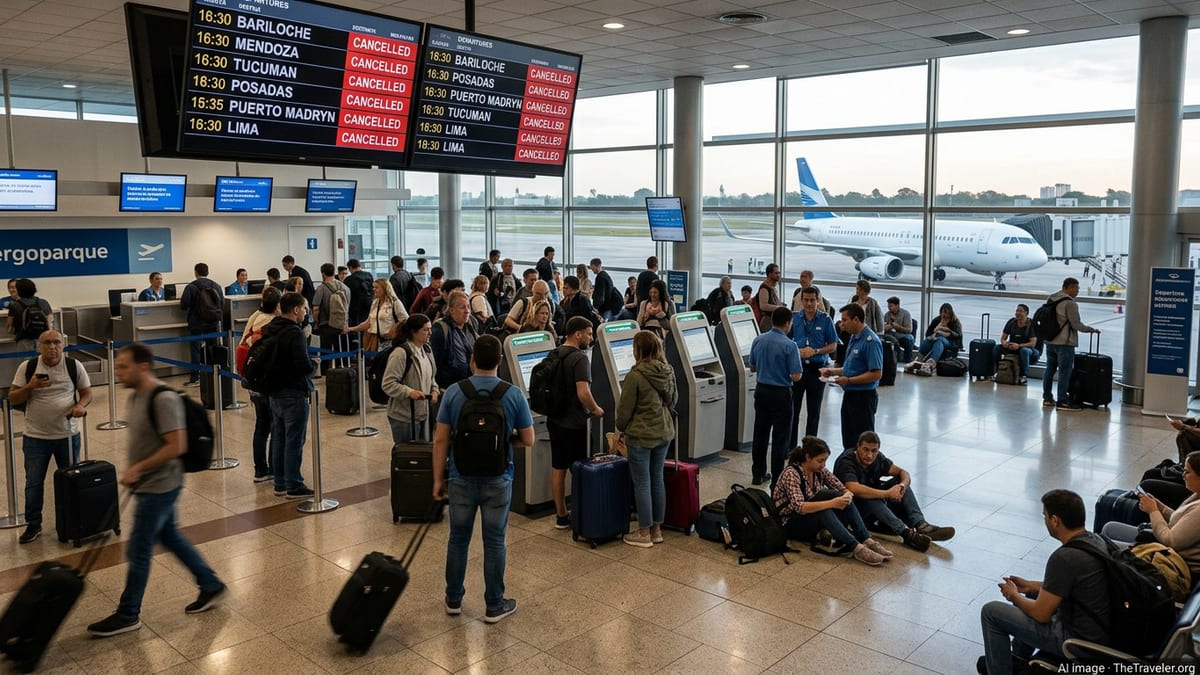
Operations at Buenos Aires Jorge Newbery Airport were severely disrupted in early June 2026, with publicly available data and local coverage indicating 44 delayed flights and at least three cancellations affecting Aerolíneas Argentinas and several budget carriers on one of the season’s busiest travel days.
Get the latest news straight to your inbox!
Stormy Weather and Network Strain Hit Key Domestic Hub
Reports from Argentine media and aviation tracking platforms point to a combination of adverse weather and network congestion as the main drivers of the disruption at Aeroparque Jorge Newbery, Buenos Aires’ downtown airport and primary domestic hub. A series of strong storm systems over central Argentina, including heavy rain, hail, and high winds over Córdoba and other inland cities, led to widespread knock-on effects across the country’s short haul network in early June.
The operational pressure was particularly acute at Aeroparque, where Aerolíneas Argentinas concentrates much of its domestic traffic and where low cost carriers such as Flybondi and JetSMART also maintain significant schedules. When flights into intermediate airports were forced into holding patterns or diversions, rotations quickly fell out of sync, producing rolling delays on both outbound and inbound services.
Data from live flight trackers for arrivals and departures at Aeroparque during the affected window show successive services operating well behind schedule, with some turnarounds pushed back by several hours. Local outlets describe long lines at check in and boarding areas as passengers waited for updated departure times and gate changes, many of them traveling at the start of the Southern Hemisphere winter holiday period.
Aeroparque’s location close to the Río de la Plata and dense urban surroundings leaves little margin for irregular operations. Runway occupancy times increase when conditions deteriorate, and with few spare slots and limited space for aircraft on the ground, even modest weather disruptions can cascade into significant system wide delays.
Aerolíneas Argentinas Bears the Brunt, Low Cost Carriers Also Affected
As Argentina’s flag carrier and the single largest operator at Aeroparque, Aerolíneas Argentinas absorbed a substantial share of the 44 delays and three cancellations reported for the day in question. Publicly accessible flight histories for Aerolíneas Argentinas services show multiple domestic routes from Buenos Aires to Córdoba, Mendoza, Neuquén, Iguazú, and Patagonian cities departing well behind schedule as aircraft and crews arrived late from earlier segments.
Published coverage also highlights the exposure of low cost airlines that rely heavily on fast turnarounds and tight aircraft utilization. Ultra low cost carrier Flybondi, which uses Aeroparque as a base, and JetSMART Argentina, which operates a growing domestic network from the airport, both saw parts of their morning and afternoon programs affected when inbound aircraft missed planned slots and rotations had to be reworked.
For budget carriers operating with smaller fleets, the loss of even a single rotation can force difficult decisions between extended delays and outright cancellations. According to local travel industry reporting, at least some of the three cancellations recorded at Aeroparque on the affected date involved low cost services to regional destinations, where alternative flights were limited and rebooking options constrained.
The disruption underscores how concentrated Aeroparque’s traffic has become in recent years. With Aerolíneas Argentinas holding roughly half of the domestic market and low cost carriers accounting for a growing share of remaining capacity, any disturbance to operations at the downtown airport can reverberate across the national network within hours.
Passenger Experience: Long Queues, Tight Rebookings, Limited Alternatives
Accounts compiled from local newsrooms and social media posts describe a challenging day for travelers at Jorge Newbery Airport. Photos and reports point to crowded departure halls, long queues at airline counters, and many passengers seeking clarification on whether their flights would operate, be delayed further, or be canceled outright.
Because Aeroparque is primarily a domestic and regional gateway, many affected passengers were connecting onward by road or planning short trips that left little flexibility in their itineraries. Several services to popular leisure destinations such as Puerto Iguazú, Bariloche, and coastal cities reportedly departed hours behind schedule, compressing holiday plans and, in some cases, forcing travelers to forgo prepaid ground arrangements.
Rebooking options within the same day were limited. With high load factors and a busy seasonal schedule, seats on alternative flights were scarce, particularly on routes with limited competition. Travelers on canceled flights often faced the choice between waiting for space on later services, traveling from the more distant Ezeiza International Airport, or postponing their plans altogether.
Compounding frustrations, some passengers reported difficulty accessing timely information via digital channels. While airline apps and airport information boards eventually reflected revised departure times, the pace of change on a day of cascading delays made it hard for travelers to plan around shifting schedules, especially those already en route to the airport.
Operational Lessons Ahead of Planned August Closure
The June disruption arrives just weeks after the publication of notices regarding a planned temporary closure of Aeroparque later in the Northern Hemisphere summer, when the airport will suspend operations for approximately 55 hours for maintenance and infrastructure works. Industry associations and local commentators have already raised concerns about the short lead time and logistical complexity involved in relocating hundreds of flights to other airports over that period.
The experience of handling 44 delays and three cancellations in a single day is likely to be studied closely by airlines and airport operators as they refine contingency plans for the August shutdown. Publicly available statements from airline groups emphasize the need for clearer planning and communication, noting that Aerolíneas Argentinas and key low cost carriers will have to reassign aircraft, crews, and passenger flows to alternative facilities within a narrow window.
For travelers, the combination of June’s unplanned disruptions and the prospect of a scheduled closure later in the season serves as a reminder to build extra time into itineraries involving Aeroparque. Travel agents in the Argentine market have been advising clients to consider flexible fares where possible and to monitor flight status carefully in the days leading up to departure from the Buenos Aires metropolitan area.
While irregular operations are not uncommon during the Southern Hemisphere winter, the concentration of domestic traffic at Aeroparque, the growing presence of budget airlines, and a busy calendar of infrastructure works mean that even relatively short bouts of bad weather or technical constraints can quickly translate into widespread delays. The events of early June 2026 highlight both the resilience and the vulnerabilities of Argentina’s central domestic aviation hub.