


More news on this day
A fresh wave of disruption at Lisbon’s Humberto Delgado Airport has triggered travel chaos for passengers across Europe and North America, with airport data indicating 114 flight delays and five cancellations affecting TAP Air Portugal, Ryanair and a range of international connections.
Get the latest news straight to your inbox!
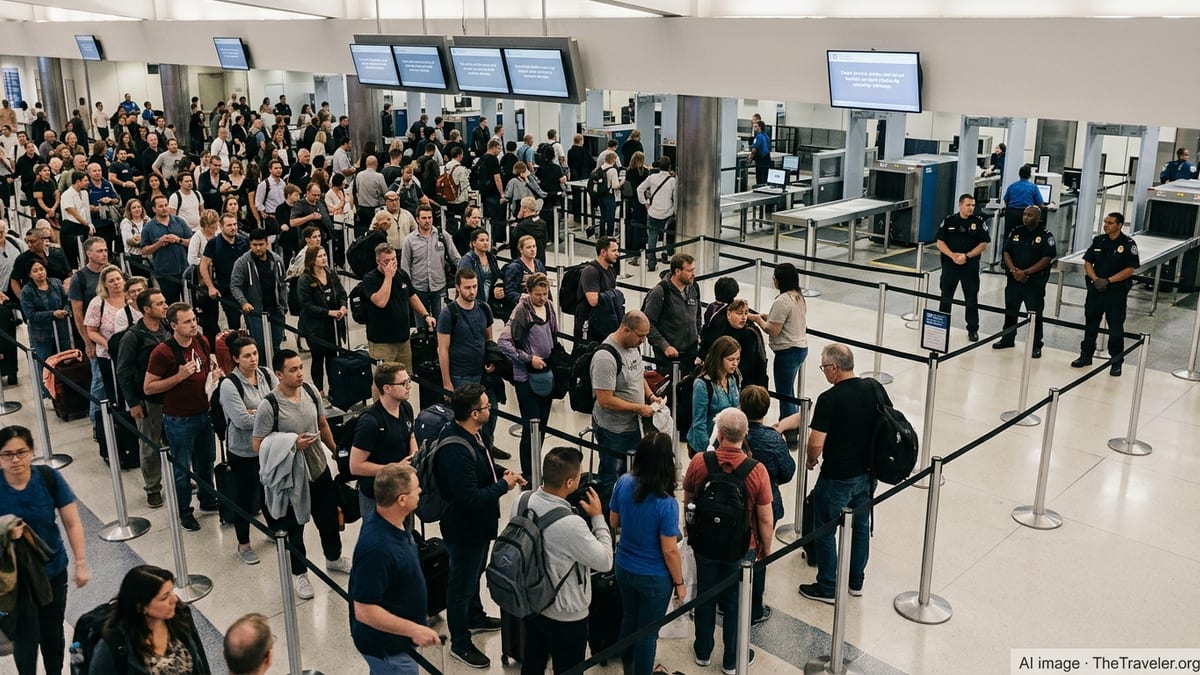
Operational Bottlenecks Converge At Portugal’s Busiest Hub
Humberto Delgado Airport, Portugal’s main international gateway and primary hub for TAP Air Portugal as well as a key base for Ryanair, has been operating under heavy strain as peak summer traffic builds. Publicly available flight tracking boards for Lisbon on June 18 show a dense schedule of European short haul and transatlantic services, leaving little margin for disruption once delays begin to cascade through the day.
Reports from flight status platforms indicate a pattern familiar to many congested hubs: morning delays on key feeder routes into Lisbon compress already tight turnarounds, which then ripple outward to afternoon and evening departures. TAP’s European services into Lisbon from cities such as Brussels, Florence and the Azores, and Ryanair’s departures from Terminal 2 to Italian and other European destinations, are central to the network of onward connections that link Portugal to the wider continent and North America.
Lisbon’s main terminal handles the bulk of TAP’s arrivals and departures, including long haul flights to Brazil and the United States. When inbound aircraft arrive late, ground handling teams are left with limited time to turn aircraft around for their next sectors, which can quickly translate into rolling delays and missed onward connections. The airport’s dual role as both an origin and transfer hub means that relatively small schedule disruptions can have outsized effects on passengers transiting through the Portuguese capital.
Airport performance data published in recent months has highlighted how even well run European airports struggle to keep on time performance high during summer peaks. In this context, a single day with over one hundred delayed flights at Lisbon underscores the sensitivity of densely scheduled hubs to weather variations, air traffic control restrictions and operational issues across multiple airlines.
TAP Air Portugal Network Feels The Strain
As the dominant carrier at Humberto Delgado Airport, TAP Air Portugal bears a significant share of the impact when delays spike. Publicly accessible timetables show that TAP relies heavily on tight connections through Lisbon, using waves of arrivals from European cities and Atlantic islands to feed long haul flights to Brazil, North America and Africa. When short haul flights into Lisbon run late, passengers risk missing those onward sectors, and aircraft scheduled to continue to other destinations may depart behind schedule or with rebooked passengers.
Recent days’ flight status information for TAP services between Lisbon and destinations such as São Paulo, Salvador, Brussels and various European cities illustrates how narrow the operating window can be. A late arrival into Lisbon of a widebody aircraft from Brazil, for example, reduces the time available for cleaning, catering and crew changes before the aircraft is due to depart again, amplifying the knock on effect into the evening departure bank.
TAP’s own publicly available guidance on delays and cancellations emphasizes rebooking passengers on the next available flight, providing meals or accommodation when required, and offering refunds or compensation when eligible under European passenger rights regulations. On days with more than one hundred delayed flights, however, the practical challenge lies in finding seats across a constrained network, particularly on heavily booked transatlantic routes in late June.
Travel discussion forums have in recent weeks reflected growing passenger frustration around rebooking times, voucher values and the complexity of claiming compensation after major disruptions affecting TAP services. These accounts, while anecdotal, align with the picture of a flag carrier operating near capacity at its home hub and occasionally struggling to absorb unexpected shocks.
Ryanair Passengers Face Knock On Delays From Lisbon
Ryanair, which operates from Lisbon’s low cost terminal and uses the airport as a base for flights to a range of European destinations, has also been swept up in the latest disruption. Data from flight status trackers for Ryanair departures out of Lisbon show tight turnarounds and a concentration of services into popular summer destinations such as Milan, which are particularly vulnerable when the first flight of the day leaves late.
Ryanair’s business model depends on high aircraft utilization, with jets operating multiple sectors per day. Any delay at an early stage in the rotation can spread quickly across subsequent flights, affecting passengers far from the original point of disruption. When Lisbon’s operations slow, flights leaving Terminal 2 may push back later than scheduled, and aircraft scheduled to return to the Portuguese capital later in the day then arrive off schedule, reinforcing the cycle.
Online commentary from recent weeks shows that some Ryanair passengers across Europe have reported issues relating to delay notifications, changing reasons given for disruptions and the process for accessing EU compensation. While not specific to Lisbon alone, these experiences point to wider tensions between ultra low cost operating models and the statutory obligations airlines must meet when flights are delayed or cancelled for reasons within their control.
On a day when five flights are reported cancelled from Lisbon across multiple airlines, Ryanair travelers may find themselves competing for limited rebooking options, particularly to leisure destinations with already high load factors as summer holidays begin in earnest.
Knock On Effects For European And North American Connections
The disruption is not confined to departures and arrivals within Portugal. Lisbon’s position as a connecting hub between Europe, Brazil and North America means that local delays can strand passengers thousands of kilometers away from their origin or destination. Published schedules show that TAP in particular uses Lisbon to funnel travelers from smaller European markets onto long haul services, making punctuality at Humberto Delgado critical to maintaining global connectivity.
When 114 flights in and out of Lisbon are delayed in a single day, even by under an hour, the cumulative effect can be missed minimum connection times, missed last flights of the day to regional airports and the need to reroute passengers onto alternative itineraries via other European hubs. This can add hours or even an extra day to journeys between North America and secondary European cities when direct alternatives are limited.
Passengers transiting Lisbon from North America rely on early morning arrivals to connect onto mid morning flights to destinations across Spain, France, Germany and the rest of Portugal. If these long haul flights are held at departure due to late arriving aircraft, crew rest constraints or congestion in Lisbon’s airspace, travelers can be forced into overnight stays, meal vouchers and lengthy queues at transfer desks, all of which add stress to the passenger experience.
Similar challenges arise on westbound routes when European feeders into Lisbon arrive behind schedule, leaving too little time for travelers to clear passport checks and reach long haul gates. In some recent cases shared publicly, passengers have described sprinting through Lisbon’s terminals only to find that boarding had closed minutes earlier, illustrating how thin the margin for error can be on busy days.
Passenger Rights, Planning And What Travelers Can Do
The latest wave of delays and cancellations at Humberto Delgado Airport again draws attention to the importance of passenger rights frameworks and proactive trip planning. Under European regulations, travelers departing from Lisbon or arriving there on EU carriers may be entitled to care, rebooking and in some cases financial compensation when flights are significantly delayed or cancelled for reasons not attributable to extraordinary circumstances such as severe weather or air traffic control strikes.
Airlines including TAP Air Portugal and Ryanair publish guidance explaining when vouchers, hotel stays or refunds are available and how to file claims. However, recent online accounts from affected passengers suggest that accessing these entitlements can be time consuming, particularly when call centers, airport help desks and digital platforms are all under pressure after a day of widespread disruption.
Travel specialists often recommend that passengers with critical connections through Lisbon build in extra buffer time, especially during busy summer months, and keep essential items such as medication, chargers and a change of clothes in hand luggage in case of missed flights or unplanned overnight stays. Checking flight status tools before leaving for the airport and monitoring airline apps for rebooking options can also help travelers react quickly when disruptions unfold.
With the summer travel season still ramping up, the episode of 114 delays and multiple cancellations at Lisbon’s Humberto Delgado Airport underscores both the fragility of tightly wound airline schedules and the importance of resilient planning by travelers who depend on this key Atlantic gateway.