


Along the French Riviera, Menton and Villefranche sur Mer sit just a short train ride apart, yet they offer surprisingly different travel experiences. One hugs the Italian border with a mellow, almost retro resort feel. The other curves around one of the Mediterranean’s most beautiful natural bays, steps from busy Nice but with its own village rhythm. If you are planning a Riviera trip in 2026 and debating where to base yourself, this side by side comparison will help you decide which town better matches your style, interests, and budget.
Get the latest updates straight to your inbox!
First Impressions: Two Very Different Riviera Moods
Menton is the last major French town before Italy and it feels like it. You notice pastel facades climbing the hill, orange and lemon trees in public gardens, and restaurant menus that casually switch between French and Italian classics. The old town rises in layers above the sea, ending in a hilltop cemetery with sweeping views toward Ventimiglia. Even at the height of summer, the pace here is gentler than in Nice or Cannes, and evenings are as much about a slow passeggiata along the promenade as they are about cocktails.
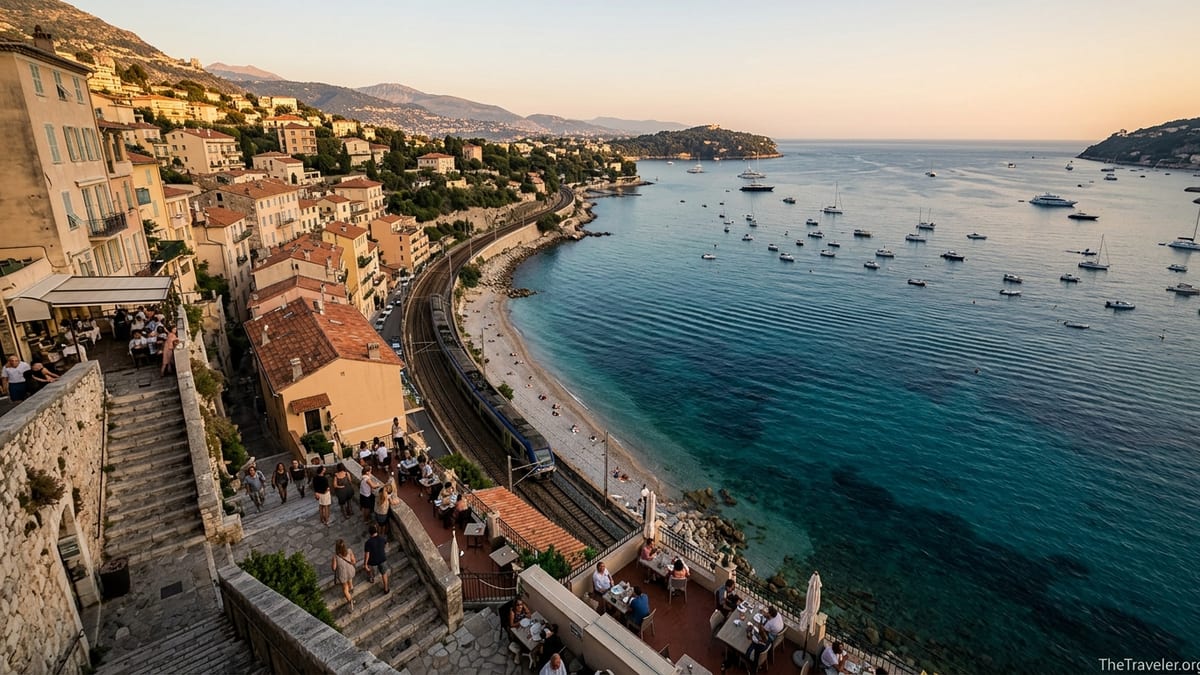
Villefranche sur Mer, by contrast, is all about the curve of its deep natural bay between Nice and Cap Ferrat. Trains from Nice pull into a small station perched just above the water, and a few minutes later you are on a narrow beach facing a harbor where fishing boats and gleaming yachts share the same view. The old town is compact, tumbling down from the sixteenth century citadel to the waterfront terraces. It feels more like a postcard village than a full scale town, and the atmosphere changes quickly with the arrival or departure of cruise tenders anchored in the bay.
Think of Menton as a small city on the sea, with neighborhoods, museums, and several kilometers of waterfront to explore. Villefranche is more of a jewel box: what it lacks in size it makes up for in drama, with steep lanes, arches, and sea views that appear at the turn of nearly every corner. Your choice starts with this basic mood. If you want a self contained place where you can wander for days without repeating the same streets, Menton wins. If you prefer an intimate, cinematic setting where everything is within a ten minute walk, Villefranche may suit you better.
Location & Getting Around: How You Will Actually Explore
Both Menton and Villefranche sit on the same coastal rail line, which makes day tripping straightforward. From Nice to Villefranche, regional TER trains typically take about 5 minutes and cost only a few euros one way, with dozens of departures per day. That means you can stay in Villefranche, have breakfast by the bay, and still be in central Nice in less time than many people commute to work at home. Buses and coastal walking paths connect Villefranche to neighboring Beaulieu sur Mer and Saint Jean Cap Ferrat, so car free travelers can explore easily.
Menton lies farther east, around 35 to 40 minutes by regional train from Nice, again for a modest single ticket. From Menton you can also reach Monaco in roughly 10 to 15 minutes, and cross into Italy by train or bus in a similar time frame. This makes Menton an excellent base if you want to blend French Riviera classics with quick hops to Ventimiglia’s markets or the seaside village of Bordighera without changing hotels.
In practical terms, Villefranche feels like an extension of Nice. You might have dinner at a small bistro in the old village one night and head into Nice for a concert the next, without thinking twice about the commute. Menton, meanwhile, feels like its own small world. A Menton base encourages you to slow down and build your days around one or two focused excursions rather than bouncing back and forth constantly.
If you are planning many evening activities in Nice, or flying in and out on early or late flights, Villefranche’s proximity is a clear advantage. If you want to spend as much time in Monaco and Italy as in Nice, basing yourself in Menton will cut down on backtracking and give you more peaceful train rides in the less crowded eastern direction.
Beaches & Swimming: Pebbles, Sand, and Sea Color
Beaches in Villefranche sit directly along the bay, just below the train tracks. The main stretch is a relatively narrow band of pebbles and coarse sand, but the water is normally clear and calm thanks to the protection of the natural harbor. In summer, you can rent a pair of loungers and an umbrella at one of the beach clubs or simply spread a towel in the public section. Families appreciate that the bay is often sheltered from larger waves, and strong swimmers enjoy the unusual experience of looking back at the colorful old town rising almost vertically behind them.
Menton offers a different beach experience. Several long beaches line the seafront, some with small pebbles and others topped up with imported sand, especially closer to the town center. The Promenade du Soleil stretches along much of this waterfront, so you can choose between quieter fringes toward Roquebrune Cap Martin or busier sections near the old town. Beach clubs rent loungers, but there are also wide public sections where you can simply drop your towel. Water shoes are useful in Menton, where stones under the surface can be smooth but slippery.
If turquoise water is high on your wish list, both towns deliver on sunny days, especially in May, June, and September when the sea is usually clear and boat traffic a little lighter. Villefranche’s bay is particularly photogenic in early morning or late afternoon when the light hits the painted facades and reflections shimmer on the water. Menton’s vistas are more open, with the sea stretching unbroken to the horizon and the Prealps providing a mountainous backdrop inland.
For travelers who want variety, Menton has a slight edge. You can mix central beaches with quieter coves a short walk or bus ride away, and combine swimming with long seafront walks. If you are happy returning to the same lovely bay day after day, and like the idea of stepping off the train right onto the beach, Villefranche may feel wonderfully convenient.
Character, Culture & Everyday Life
Menton is large enough to support a genuine year round community. Outside of peak summer and its famed winter Lemon Festival, you will see residents shopping at street markets, schoolchildren in uniform, and older locals claiming the same café tables every morning. The town has several museums, including a museum devoted to artist Jean Cocteau, and formal gardens that are open most of the year. Street life here depends less on the cruise calendar and more on the rhythm of the seasons.
Villefranche sur Mer is smaller and more concentrated around tourism. It still has a core of residents and long running businesses, but the waterfront is heavily oriented toward visitors, especially on days when large ships anchor in the bay and tenders shuttle passengers ashore. The citadel houses small museums and a shaded park where locals walk dogs or sit on benches, but much of the energy in town flows through the waterside restaurants and the narrow lanes directly behind them. At night, the village can feel quite romantic, with warm lights reflecting on the harbor and fewer day trippers about.
If you enjoy lingering in local bakeries, browsing different parts of town, and feeling like you are blending into everyday life rather than staying in a resort, Menton generally suits that slower, more lived in style. The weekly markets sell seasonal produce from the surrounding valleys, including citrus, olives, and roses used in regional products. In Villefranche, daily life is more compressed. You can explore the entire old town and citadel easily in a single morning, then either repeat favorite corners or hop on a train or bus for variety.
Both towns are photogenic, but in slightly different ways. Villefranche gives you dramatic shots with steep stone staircases, vaulted passages, and an almost theatrical waterfront. Menton offers broader panoramas, such as the classic view of the old town from the harbor with church towers rising above the pastel houses. Photographers often appreciate Menton’s range of vantage points, including high viewpoints that frame the town against both sea and mountains.
Costs, Accommodation & Dining: What Your Budget Buys
On a practical level, Menton tends to be a little easier on the wallet than many towns closer to Nice. You can still find mid range hotels in central locations that offer double rooms from the lower end of Riviera pricing outside peak weeks, and rental apartments with balconies facing the sea are not unusual. Cafés on side streets may serve a coffee for prices closer to what you would expect in a regular French town rather than a luxury resort. Set lunch menus at neighborhood restaurants can be good value, especially if you venture a few blocks back from the promenade.
In Villefranche sur Mer, location is the luxury. Many hotels and guesthouses are small and book up months in advance for summer and for popular shoulder season weeks. Sea view rooms, particularly those overlooking the bay, can be priced similarly to nicer options in Nice or Antibes despite the village’s modest size. Dining along the water is rarely cheap; you are paying for the view, whether you choose a simple plate of grilled fish or a more elaborate multi course dinner. If you walk higher into the village or toward the roads leading to Nice and Cap Ferrat, you may find more modestly priced spots frequented by locals and seasonal workers.
Self catering travelers may find Menton more convenient, with a good selection of supermarkets, specialist food shops, and an indoor market where you can pick up fruit, vegetables, cheese, and cured meats. Renting an apartment near the market or in the old town allows you to alternate between restaurant meals and easy home cooking based on regional ingredients. In Villefranche, choice is improving, but you may still rely more heavily on restaurants and cafés, or shop in neighboring Nice or Beaulieu for a larger supermarket.
If your budget is tight but you still want a sea view base on the Riviera, Menton generally offers more options. If you are ready to pay a premium for a front row seat over one of the prettiest bays in the region, and you like the idea of wandering down from your room to the water in a few minutes, Villefranche justifies the extra cost for many travelers.
Best For Different Traveler Types
For first time visitors to the Riviera who want a relaxed base but still plan to see Monaco, Nice, and perhaps take a day trip into Italy, Menton is a strong contender. Couples who enjoy long walks, museums, and a calm evening atmosphere often appreciate its blend of scenery and substance. Older travelers and families with young children may also like Menton’s flatter central streets and broader choice of practical services, from pharmacies to bakeries and playgrounds.
Villefranche shines for travelers prioritizing pure coastal charm and easy access to Nice. If you imagine waking to a bay view, walking five minutes to a pebble beach, then spending the afternoon on a boat tour around Cap Ferrat or strolling the coastal path before an al fresco dinner, this village delivers. It can be a particularly good choice for a short break of three or four nights, where you do not need a large town’s infrastructure but want maximum impact from every hour.
For groups of friends or solo travelers who expect to be out late enjoying bars and nightlife, staying in Nice or another larger town and visiting both Menton and Villefranche by day may work better. Menton has some evening life, but it is mostly low key. Villefranche’s evenings lean toward laid back dinners and a few drinks by the water, with most serious nightlife options in nearby Nice or Monaco.
If you tend to travel in shoulder seasons like late April, May, late September, or October, both towns can feel particularly rewarding. Menton’s gardens and citrus trees are lush in spring, and Villefranche’s bay is often still warm enough for swimming well into early autumn on sunny days. In winter, Menton is more of a destination thanks to mild weather and events like the Lemon Festival, while Villefranche is quieter and better suited to those who simply want peace, views, and the occasional crisp seaside walk.
Sample Itineraries: How a Stay Might Look in Each Town
Imagine three full days based in Menton. On day one, you might explore the old town, climb slowly up to the cemetery for panoramic views, visit the Jean Cocteau museum, and spend late afternoon on the central beach before a seafood dinner along the promenade. Day two could be a quick morning train to Monaco to see the old town and harbor, returning to Menton in time for a late swim and gelato. On day three, you might head to Roquebrune Cap Martin for coastal walks along the Sentier des Douaniers, then come back for a calm evening in one of Menton’s smaller squares.
Now picture three days in Villefranche. On your first day, you would likely walk the old streets, visit the citadel, and spend the afternoon on the village beach, finishing with dinner on a terrace overlooking the bay. Day two could be a short train ride into Nice for the market, museums, or a bike ride along the Promenade des Anglais, returning to Villefranche in time for sunset. On day three, you might follow the coastal path around Cap Ferrat, visit a villa garden, and choose between a final swim at Villefranche’s beach or a quieter cove in neighboring Beaulieu.
In both scenarios, you are using regional trains or buses and walking most places. You notice the difference, though, in how often you change scenes. A Menton base keeps you mostly in one town with occasional forays to larger neighbors. A Villefranche base encourages frequent hops to Nice or Cap Ferrat, with the village serving almost as your scenic “home dock” between excursions.
Many travelers who have the time choose to split a week between both towns. In that case, you might start with three nights in Menton for a slower, more local feel near the Italian border, then finish with three or four nights in Villefranche to be closer to Nice’s museum scene and airport. Even two nights in each can highlight just how different these two Riviera neighbors feel in practice.
The Takeaway
Choosing between Menton and Villefranche sur Mer is less about which town is objectively “better” and more about the kind of Riviera experience you want. Menton offers the feel of a lived in coastal town with room to wander, a blend of French and Italian influences, and relatively gentle prices for the region. It rewards travelers who like to settle in, explore markets and gardens, and take day trips that feel like excursions rather than commutes.
Villefranche, in turn, concentrates the Riviera dream into a compact, dramatically beautiful village set on a near perfect bay. It is ideal if you want constant sea views, quick access to Nice, and a place where you can step directly from beach to dinner terrace without ever thinking about traffic. You pay something of a premium for that setting and for the convenience of being so close to Nice, but for many visitors the combination is worth it.
If you are still unsure, consider your daily habits. If you like long, looping walks, markets, and small practical comforts like multiple bakeries and supermarkets within minutes, lean toward Menton. If you are happy with a handful of lanes, a single lovely beach, and regular trips to nearby towns for variety, Villefranche will likely feel perfect. With a good train line connecting the two, you can always visit whichever one you do not choose and confirm your instincts for your next trip.
FAQ
Q1. Which town is better as a base for first time visitors to the French Riviera?
For most first time visitors who want a relaxed base with easy day trips, Menton is slightly better. It offers more streets to explore, a broader choice of shops and services, and straightforward connections to both Monaco and Italy while still being under an hour by train from Nice.
Q2. Is Villefranche sur Mer too small for a week long stay?
Villefranche is compact, but many travelers happily spend a week there by using it as a scenic base rather than the sole focus of their trip. With fast trains to Nice, Monaco, and Menton, plus coastal walks and boat trips around Cap Ferrat, you can fill a week easily as long as you are comfortable repeating the same charming village streets each evening.
Q3. Where will I generally spend less on accommodation and food?
Menton usually offers slightly better value, especially outside the absolute peak weeks of July and August. You are more likely to find mid range hotels and apartments at gentler prices, and everyday items such as coffee or pastries are often a bit cheaper than in waterfront spots in Villefranche, where you pay more for the bay side setting.
Q4. Which destination is better if I will not have a car?
Both towns work well without a car, but for different reasons. Villefranche is just minutes from Nice by train, so you can easily access city amenities, museums, and onward transport. Menton’s advantage is its position near the Italian border and Monaco, giving you a wider range of day trips by rail. Your choice depends on whether you prefer to be closer to Nice or closer to Monaco and Italy.
Q5. How do the beaches compare for swimming and relaxing?
Villefranche’s main beach sits in a sheltered bay with typically calm water and dramatic views of the village above, but it is relatively narrow and mostly pebbly. Menton has longer stretches of seafront with a mix of pebble and sand topped beaches, offering more room to spread out and a choice between livelier central sections and quieter edges.
Q6. Which town feels less crowded in peak summer?
Both attract plenty of visitors in July and August, but they experience crowds differently. Villefranche can suddenly feel busy when cruise ship passengers arrive, especially along the waterfront. Menton spreads visitors over a larger area, including multiple beaches and neighborhoods, so it often feels less concentrated even when overall numbers are high.
Q7. Is one destination better suited to families with children?
Families can enjoy both, but Menton may be more practical overall. Its flatter central areas, wider promenade, playgrounds, and range of supermarkets and casual eateries make day to day logistics easier. Villefranche’s setting is beautiful but steeper, and you rely a bit more on nearby towns for certain services if you are traveling with young children.
Q8. Where will I find more nightlife and evening entertainment?
Neither Menton nor Villefranche is a nightlife hotspot compared with Nice or Cannes. Menton offers some bars and restaurants that stay lively into the evening, but the overall tone is calm. Villefranche’s evenings mostly revolve around waterfront dinners and a few relaxed bars. For late night venues, you would generally head to Nice or Monaco from either base.
Q9. Can I realistically visit the other town on a day trip if I choose one as my base?
Yes, visiting the other town on a day trip is straightforward. Regional trains along the coast make it easy to travel between Menton, Villefranche, and Nice, so you can base yourself in one and still experience the other for a full or half day without much planning.
Q10. If I have 6 or 7 days, is it worth splitting my stay between both?
With a week, splitting your time can be a rewarding way to experience two distinct sides of the Riviera. Many travelers enjoy starting with a few nights in Menton to settle in and explore the eastern end of the coast, then moving to Villefranche for the final nights to be closer to Nice and its airport while soaking up the village’s bay side charm.