


More news on this day
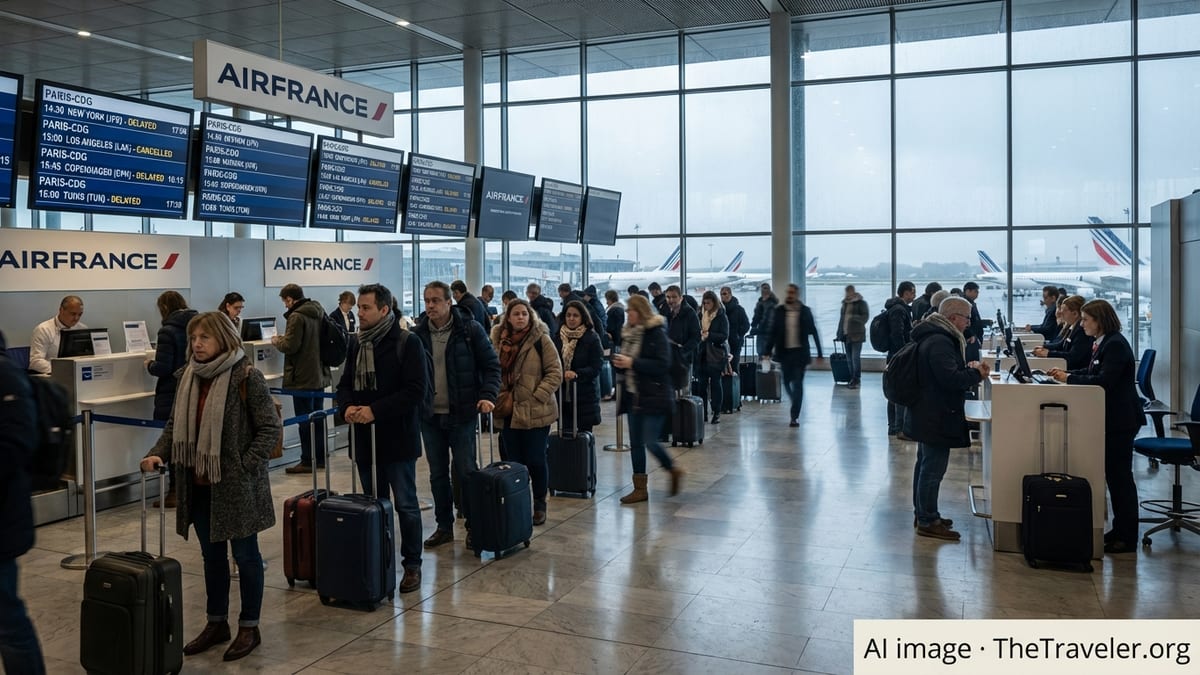
Passengers at Paris Charles de Gaulle Airport on 7 June 2026 faced fresh disruption as publicly available flight-tracking data showed at least 67 delayed departures on European routes, with services operated by Air France, Brussels Airlines, Croatia Airlines, Delta Air Lines, Bulgaria Air and several codeshare partners all affected.
Get the latest news straight to your inbox!
Wave of Delays Hits One of Europe’s Busiest Hubs
Charles de Gaulle Airport, the main international gateway for Paris and the principal hub for Air France, is among Europe’s busiest and most interconnected airports. With more than one hundred airlines serving the hub in recent seasons, even a moderate spike in delays can quickly reverberate across multiple countries and alliances.
On 7 June, monitoring of flight-tracking platforms and airline schedules pointed to a cluster of delayed departures across short and medium haul services. The majority involved flights either operated by Air France or carrying its flight numbers under codeshare agreements with partners including Delta Air Lines, Croatia Airlines and others. While many delays were relatively short, a high volume of affected flights created longer queues at departure gates, check-in counters and rebooking desks.
Reports from passenger forums and schedule portals indicated that services linking Paris with key European cities such as Brussels, London and Amsterdam were among those experiencing disruption. As Charles de Gaulle functions as a major transfer hub, delayed departures on these trunk routes risked missed onward connections and extended journey times for travelers heading to destinations across the continent and beyond.
Although no single clear-cut cause was identified in publicly accessible information, travel-industry commentary has highlighted a combination of factors that commonly contribute to such days of disruption at major hubs, including tight aircraft rotations, air-traffic flow management constraints and seasonal demand pressures at the start of the busy summer period.
Air France and Partners See Knock-on Effects
As the home carrier at Charles de Gaulle, Air France bore the brunt of the disruption. The airline operates an extensive European and long-haul network from the airport, with many flights marketed jointly with alliance and codeshare partners. When primary Air France-operated services are delayed, the impact often extends to partners whose passengers are booked under shared flight numbers.
On routes such as Paris to Madrid, Lisbon and Nice, timetables on 7 June showed dense schedules heavily branded with Air France flight numbers, with many departures also carrying Delta Air Lines designators as part of the transatlantic joint venture. Delays on these services can therefore affect not only point-to-point travelers within Europe but also those connecting to or from North America on joint itineraries.
One example highlighted by real-time trackers was an evening service between Paris and Zagreb. The flight was listed under an Air France code but operated by Croatia Airlines, illustrating the complex web of partnerships at Charles de Gaulle. Even an adjustment of less than half an hour to the scheduled departure time is sufficient to compress already tight connection windows for passengers arriving from or bound for other European cities.
Brussels Airlines and Bulgaria Air are among the foreign carriers that rely on Charles de Gaulle links to feed their own networks. Brussels Airlines makes use of joint operations and interline agreements that connect Brussels with French and transatlantic destinations, while Bulgaria Air uses the Paris hub to support flows between Sofia and Western Europe. On a day when dozens of departures from Charles de Gaulle are running behind schedule, passengers on these carriers may encounter missed connections, gate changes and extended waits for available seats on later services.
Key Routes to Brussels, London and Amsterdam Affected
Connections from Paris to Brussels, London and Amsterdam hold particular importance for both business and leisure travel. These routes link major political and financial centers and provide essential feed into long-haul networks operated by European and overseas airlines. When punctuality falters on these corridors, the impact can quickly extend to long-haul departures later in the day.
Publicly accessible schedules show that Charles de Gaulle maintains frequent services to all three cities, with multiple daily flights marketed by Air France and partner airlines. London, served by several airports, and Amsterdam, the home base of Air France’s SkyTeam partner KLM, are especially critical for connecting traffic. Even short delays on these shuttle-style flights can set off a chain reaction for travelers relying on precise timings to board onward flights within Europe, to North America or to Asia and Africa.
Travel discussion forums and social media posts on 7 June suggested that some passengers on these routes encountered longer-than-expected waits on the ground, as well as warnings from airlines about the risk of missed onward flights. In some cases, travelers reported being advised to rebook to later services or to reroute through alternative hubs if same-day connections could no longer be met.
Disruption on such core European city pairs also places added pressure on rail and road links. With high-speed trains connecting Paris to Brussels, London and Amsterdam, a subset of travelers confronted with flight uncertainty may seek last-minute alternatives by rail, adding strain to already busy weekend services at the start of the summer season.
Passengers Face Missed Connections and Overnight Stays
For many travelers passing through Charles de Gaulle on 7 June, the operational challenges translated into practical problems ranging from tight connections to unexpected overnight stays. Because the airport functions as a major transfer point for Air France and its partners, delays on European feeder flights can leave little room for error when connecting to long-haul departures.
Travel blogs and passenger accounts have repeatedly described Charles de Gaulle as a complex hub where wayfinding, security queues and passport checks can already consume significant time, especially during peak hours. Against this backdrop, even modest schedule slippages increase the risk that travelers will not reach their next gate before boarding closes. Those who miss onward flights often face long waits in service lines to secure hotel vouchers, meal support or rebooking solutions.
Highly connected carriers such as Air France and Delta Air Lines typically provide re-accommodation options within their joint networks, but on busy summer days, spare seats on later flights can be limited. This can result in passengers being shifted to alternative routings through other European hubs, or, in more constrained situations, being rebooked to travel the following day. Similar pressures can apply to regional partners like Croatia Airlines and Bulgaria Air, whose smaller fleets offer less flexibility for last-minute schedule adjustments.
For travelers whose journeys begin or end in Paris, same-day delays may be less disruptive than for transfer passengers, yet they can still lead to missed train connections, shortened business meetings or curtailed holiday plans. The cumulative effect of dozens of delayed flights is a noticeable slowdown in airport operations, from congestion at departure lounges to increased demand for customer service staff across terminals.
Advisories Urge Extra Time and Real-Time Monitoring
In light of the latest disruption at Charles de Gaulle, travel industry advisories and consumer groups continue to emphasize the importance of allowing extra time for connections through major European hubs, particularly during the summer peak. Recommendations commonly include scheduling longer layovers, avoiding tight back-to-back flights where possible and closely monitoring flight status through airline apps and independent tracking services.
Publicly available guidance from passenger-rights organizations also reminds travelers departing from European Union airports that they may be entitled to assistance and, in some circumstances, financial compensation when flights are heavily delayed or canceled. Eligibility varies according to the cause and length of the disruption, the distance of the flight and whether travelers accept rebooking offers, but awareness of these rules can help passengers navigate negotiations with airlines at times of widespread delay.
Analysts observing operations at Charles de Gaulle note that the airport’s high degree of connectivity is both its greatest strength and its primary vulnerability. On days when conditions are favorable, the hub enables seamless transfers between dozens of airlines and hundreds of destinations. When operations come under strain, however, the same interconnectedness allows localized delays to cascade quickly across Europe, as seen in the wave of disruptions affecting routes to Brussels, London, Amsterdam and beyond.
With the main Northern Hemisphere holiday season just beginning, observers suggest that passengers using Charles de Gaulle in the coming weeks should anticipate occasional schedule volatility. Leaving additional buffer time, preparing contingency plans for critical trips and staying informed through real-time information channels may help travelers better absorb potential disruptions if similar patterns of delay emerge again.