


More news on this day
The UK Foreign, Commonwealth and Development Office has issued strengthened travel advice across parts of the Middle East, highlighting what it describes as a significant risk to British nationals from regional missile strikes, political instability and the potential for sudden disruption to air travel.
Get the latest news straight to your inbox!
Heightened concern following Iran-linked attacks
The updated guidance follows a sharp deterioration in regional security connected to the ongoing conflict involving Iran and its adversaries. Publicly available information from the Foreign Office shows that advice for Iran has been raised to its highest level, with the government advising against all travel and warning that British and British-Iranian dual nationals face a particularly high risk of arrest, questioning or detention.
Coverage from UK broadcasters indicates that British diplomatic staff have been temporarily withdrawn from Iran in response to the security situation, leaving only very limited on-the-ground capacity. The official advice notes that, in the event of a serious incident, the UK government is unlikely to be able to provide evacuation or face-to-face consular support, placing greater responsibility on individuals to assess their own risk before travelling.
The Iran warning sits within a broader regional picture in which missile and drone activity has affected multiple countries. Regional travel advice pages repeatedly reference the risk of further strikes and an unpredictable security environment, particularly around military facilities and key infrastructure.
Regional travel advisories expanded across the Gulf
The Foreign Office has also strengthened language on several Gulf states, reflecting the spillover of attacks and retaliatory actions. Updated guidance for Qatar and Saudi Arabia highlights missile and drone strikes since early July against United States military and civilian infrastructure at locations across the region, including within Gulf airspace.
British nationals in Gulf countries are being warned that more attacks and wider escalation cannot be ruled out. The advice stresses that even when interception systems succeed in destroying incoming projectiles, falling debris can present a serious danger, especially in areas close to potential targets. Travellers are urged to monitor local media, follow shelter instructions issued by local authorities and review insurance policies carefully.
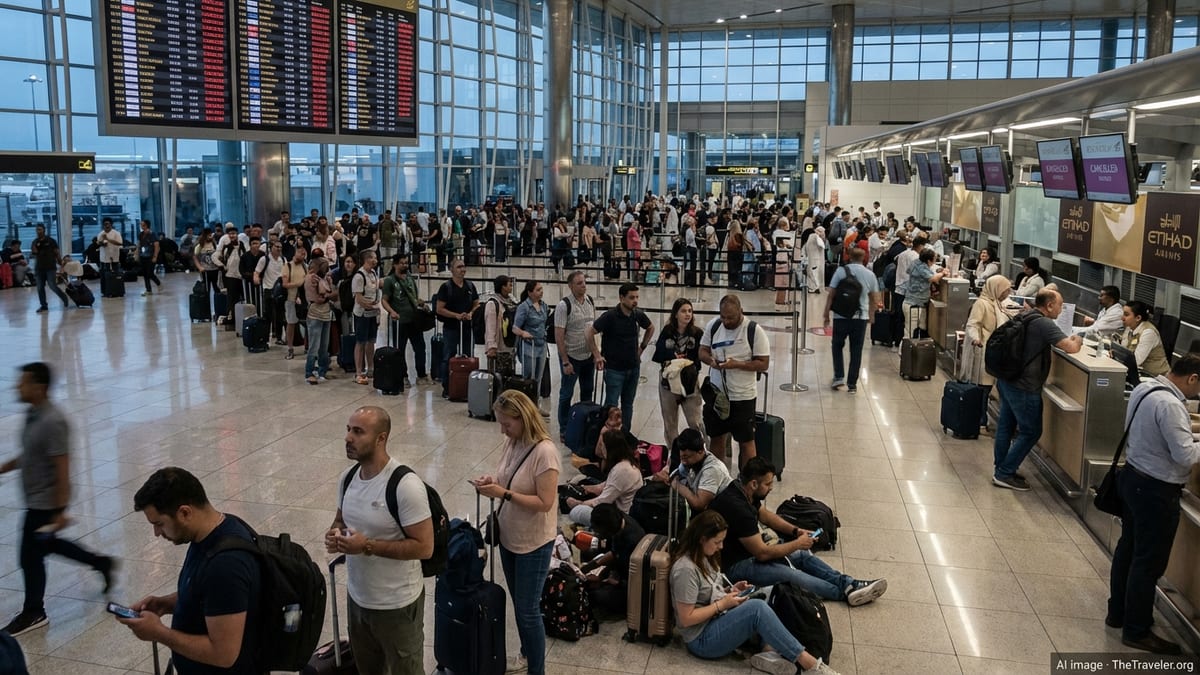
Alongside the direct security threat, the Foreign Office notes a high likelihood of sudden disruption. Guidance for states such as Qatar, Saudi Arabia and the United Arab Emirates underscores the possibility of flight cancellations, airspace closures and rapidly changing entry or transit rules. British nationals passing through major regional hubs are advised to maintain flexible bookings and have contingency plans in case they are unable to depart as scheduled.
Israel, Palestine and Lebanon remain volatile flashpoints
Travel advice for Israel, the Palestinian territories and Lebanon continues to flag a volatile and fast-moving situation. The Palestine guidance points to ongoing risks from missile and drone activity across the region, warning that shrapnel from intercepted missiles may fall over populated areas, including in and around Ben Gurion Airport near Tel Aviv.
Reports indicate that political tension and local triggers such as anniversaries and religious or national events can quickly lead to demonstrations, roadblocks and clashes. The Foreign Office recommends that visitors avoid protest areas, stay alert to announcements that may affect movement and be prepared for changes to security checkpoints and internal travel routes with little notice.
In Lebanon, where the conflict has repeatedly spilled across the border, the travel advice states that the security situation is unpredictable and that travel to or within the country is at each traveller’s own risk. The UK advises against all travel to certain areas, including Palestinian refugee camps and parts of the south, reflecting the continued presence of armed groups and the potential for renewed airstrikes despite previous announcements of ceasefires.
Limited consular support and evacuation options
The reinforcement of travel warnings comes against the backdrop of UK involvement in wider international efforts to manage the crisis. Parliamentary documents and open-source summaries of ministerial statements show that the government has been planning for the possible evacuation of large numbers of British nationals from the Gulf should the situation deteriorate further.
At the same time, Foreign Office travel pages stress clear limits on what assistance can be provided in high-risk environments. In countries such as Iran, official text states that the UK government will not be able to evacuate people or offer in-person consular help if conflict escalates or if airspace is closed. Even in states where embassies remain open, large-scale crises can quickly overwhelm available capacity and make movement difficult or impossible.
The guidance therefore urges British nationals to register for travel advice email alerts, ensure that personal details are up to date and keep family or contacts in the UK informed of their movements. Travellers are also advised to keep essential documents and supplies ready in case they must relocate at short notice within a country or move to an alternative departure point.
Practical steps for British travellers considering the region
The overall tone of the latest updates is cautionary, emphasizing that anyone travelling to the Middle East should carefully weigh the risks against the necessity of their trip. The Foreign Office repeatedly underlines that travel to areas subject to advice against all or all but essential travel may invalidate standard travel insurance, potentially leaving visitors exposed to high medical or evacuation costs.
Prospective travellers are encouraged to regularly check individual country pages before departure and while abroad, as official assessments can change quickly in response to new attacks or political developments. The advice highlights the importance of understanding local security rules, including curfews, movement restrictions and requirements to carry identification, which may be strictly enforced in sensitive areas.
Publicly accessible safety guidance further suggests that British nationals should keep a low profile, avoid discussing sensitive political topics, and stay alert around transport hubs, diplomatic missions and military installations that could be considered potential targets. By combining real-time local information with the Foreign Office’s updated travel advice, travellers can make more informed decisions about whether to proceed with journeys to the region, delay plans or seek alternative destinations.