


More news on this day
Delta Air Lines flight DL1299 from Houston to Salt Lake City diverted to Idaho Falls Regional Airport on July 21, interrupting an evening transcontinental connection and leaving passengers facing unexpected overnight disruption in eastern Idaho.
Get the latest news straight to your inbox!
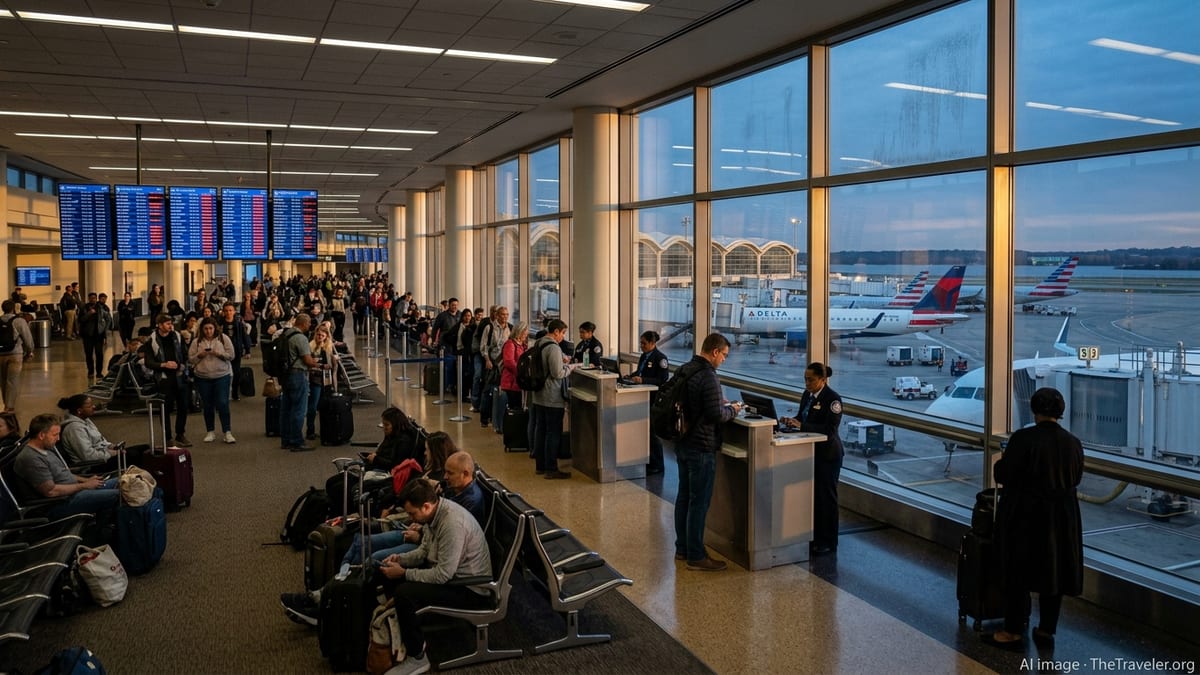
Unexpected Diversion on Houston to Salt Lake City Route
Publicly available flight-tracking data shows that Delta Air Lines flight DL1299, operating from George Bush Intercontinental Airport in Houston to Salt Lake City International Airport on July 21, did not complete its planned route and instead diverted to Idaho Falls Regional Airport. The service is normally scheduled as a mid- to late-afternoon or evening departure from Houston for a roughly three-hour run to Salt Lake City, forming part of Delta’s regular domestic network between Texas and Utah.
The aircraft on the July 21 rotation was reported by multiple aviation-tracking platforms as a Bombardier regional jet configured for the DL1299 service. While the flight departed Houston close to its scheduled evening departure time, en route data indicates that the jet altered course away from its direct track to Salt Lake City and descended toward Idaho Falls, a smaller regional facility in eastern Idaho served by several major U.S. carriers.
According to these tracking feeds, the flight landed safely at Idaho Falls Regional Airport and taxied to the terminal area, where the journey was brought to an unscheduled halt. No injuries or on-board emergencies were reported in publicly accessible summaries, and there were no indications of a runway closure or prolonged airport disruption after the landing.
As is common with diversions of this kind, precise operational reasons were not immediately detailed in open sources. Factors that can trigger such route changes typically include weather conditions along the planned path, air traffic constraints near the destination, or technical concerns requiring a landing at the nearest suitable airport.
Idaho Falls Regional Airport’s Role as an Alternate
Idaho Falls Regional Airport serves as a key commercial gateway for eastern Idaho and western Wyoming and is regularly used as an alternate landing point for flights operating in the northern Rocky Mountain region. Planning material and airport documents describe the facility as capable of handling regional jets from several major U.S. airlines, including aircraft in the Bombardier CRJ family.
The airport already supports scheduled service to Salt Lake City, which means that airlines such as Delta and its regional affiliates are familiar with the route structure, terrain, and navigation procedures between the two cities. For a Houston to Salt Lake City flight that needs to divert in the northern Rockies, Idaho Falls offers both adequate runway length and existing operational support for regional equipment.
Because of this existing connectivity, a diversion to Idaho Falls can simplify onward travel planning. Crews have options to position aircraft onward to Salt Lake City once conditions permit or to arrange for passengers to travel on later flights operating between the two airports. Ground handling, fueling, and basic maintenance capabilities at Idaho Falls also help carriers manage diverted flights without requiring further repositioning to larger hubs.
Weather and air traffic patterns across the Intermountain West in July can be dynamic, with afternoon convective storms, shifting winds, and occasional visibility reductions. These operational considerations, combined with the mountainous terrain en route to Salt Lake City, often make robust alternate planning a routine part of airline dispatch in the region.
Impact on Passengers and Downline Operations
For travelers on DL1299, the unplanned stop in Idaho Falls likely meant missed connections in Salt Lake City and potential overnight stays. The Houston to Salt Lake City link is frequently used as a feeder leg into Delta’s broader network, connecting passengers onward to destinations across the West and Midwest, so any significant delay can cascade into rebookings and itinerary changes.
Publicly available flight-status tools show that the disrupted Houston to Salt Lake City sector was supplemented later in the evening by a separate leg operating between Idaho Falls and Salt Lake City. That pattern suggests that passengers were either re-accommodated on a continuation flight or rerouted on other services, a common approach used by airlines when diversions occur relatively close to the intended destination.
Operational disruptions like this can also affect aircraft utilization. A regional jet scheduled to arrive in Salt Lake City and turn quickly onto another departure may instead arrive late or be out of position, prompting schedule adjustments to protect the broader network. In some cases, airlines may substitute different aircraft or adjust departure times from hub airports to keep the overall schedule running as smoothly as possible.
Travelers across the system on July 21 likely encountered knock-on effects, particularly if they were booked on subsequent flights that relied on the same aircraft or crew. Airline operations centers often respond by prioritizing high-demand routes and ensuring that first-morning departures the next day operate as published, to reset the schedule after an evening disruption.
Bombardier CRJ Family and Use on U.S. Regional Routes
The DL1299 service is typically assigned to a Bombardier-built regional jet in the CRJ family, a workhorse of North American short- and medium-haul operations. These aircraft, which seat roughly 70 to 100 passengers depending on configuration, are frequently used by major carriers and their regional partners on routes linking hubs such as Houston and Salt Lake City with smaller markets.
The CRJ-1000, the largest member of the CRJ series, was developed for high-frequency regional routes where demand exceeds the capacity of smaller 50- or 70-seat jets but does not justify a full-size narrowbody such as the Boeing 737 or Airbus A320. Its range and performance characteristics make it suitable for flights like Houston to Salt Lake City that traverse varied weather patterns and terrain.
In the United States, the CRJ platform has been a mainstay of regional flying for decades, operating into both major hubs and smaller airports like Idaho Falls. These jets are designed to use relatively short runways compared with larger mainline aircraft, which can be an advantage when diverting to regional facilities that may not have the same infrastructure as large international airports.
Events such as the July 21 diversion highlight the role of regional jets in providing operational flexibility. Their ability to access alternate airports quickly and safely gives airlines additional options when conditions change en route, helping crews prioritize safety while still working to maintain connectivity for passengers where possible.
Context in a Busy Summer Travel Period
The diversion of DL1299 occurred during one of the busiest periods of the U.S. summer travel season, when airports across the country see heavy passenger volumes and dense flight schedules. During these peak weeks, a single flight irregularity can have outsized effects, particularly when it involves an aircraft feeding into a hub with tight connection banks.
Published operational summaries for July indicate that carriers, including Delta, have been managing a combination of seasonal thunderstorms, air traffic control flow restrictions, and high demand across key domestic markets. In this environment, even routine diversions and delays can strain rebooking systems and airport resources as airlines work to accommodate affected travelers.
For airports like Idaho Falls Regional Airport, handling a diverted mainline or large regional flight in the midst of the summer peak underscores their role within the national air transportation system. While smaller than neighboring hubs, these facilities provide essential redundancy, enabling flights such as DL1299 to land safely and giving airlines a platform from which to rebuild disrupted schedules.
As schedules continue to operate at near-peak levels through late July, passengers on routes connecting through Salt Lake City and Houston are likely to see airlines emphasize the use of real-time alerts and online tools, allowing travelers to monitor flights like DL1299 closely and adjust plans if operational conditions change.