


More news on this day
Flight disruptions are continuing at Miami International Airport days after an Amazon cargo jet overran a runway and crashed beyond airport property, leaving five people dead and forcing partial runway closures at one of the country’s busiest air hubs.
Get the latest news straight to your inbox!
Runway Overrun Triggers Prolonged Disruptions
The crash occurred on Sunday, September 6, when a Boeing 767-300 freighter operating as a Prime Air cargo flight from San Juan to Miami overran Runway 30 while landing in midafternoon. The aircraft exited the paved surface at speed, crossed a perimeter road and came to rest near warehouse and cargo facilities to the northwest of the airfield, where it caught fire.
Published coverage indicates the aircraft struck multiple vehicles on the road bordering airport property, igniting a large post-crash blaze that sent a column of dark smoke visible across the Miami area. The impact killed five people and injured five others, including occupants of a van used by a cleaning contractor and a sport-utility vehicle traveling near the airport.
The collision and subsequent fire prompted a full ground stop at Miami International Airport on Sunday, halting arrivals and departures for a period while emergency crews responded and air traffic controllers temporarily suspended operations. Local and national coverage describe more than 60 fire-rescue units converging on the scene as crews worked to extinguish the flames, secure leaking fuel and begin documenting the wreckage.
By late Sunday, some operations had resumed, but disruption to the airport’s normal four-runway configuration set in motion a rolling wave of delays and cancellations that continued into Monday and Tuesday.
Two of Four Runways Still Closed
As of Tuesday, September 8, publicly available information shows that two of Miami International Airport’s four runways remain out of service because of the crash and subsequent investigation. Reports indicate that the disabled 767 is still positioned beyond the end of Runway 30, with damaged pavement, scorched ground and fuel-contaminated soil requiring stabilization and cleanup before the area can reopen.
Coverage from aviation and logistics outlets notes that the runway overrun and closure immediately reduced the airport’s capacity at the tail end of the busy Labor Day travel period. With only two runways available, air traffic has been funneled into a more constrained operating pattern, particularly during peak morning and evening banks when banks of domestic and international flights typically arrive and depart.
Investigators are also working in the crash area, and published updates indicate that officials have restricted access in order to preserve evidence and facilitate removal of remaining fuel from the aircraft. The combination of a disabled airframe, ongoing investigative activity and environmental mitigation means the affected runway and some adjacent movement areas remain closed for the time being.
Airport operations updates referenced in local reporting caution that schedules are likely to be impacted until the wreckage can be removed and damaged infrastructure restored, a process that may take several days beyond the initial incident.
Hundreds of Flights Affected and Travelers Urged to Check Status
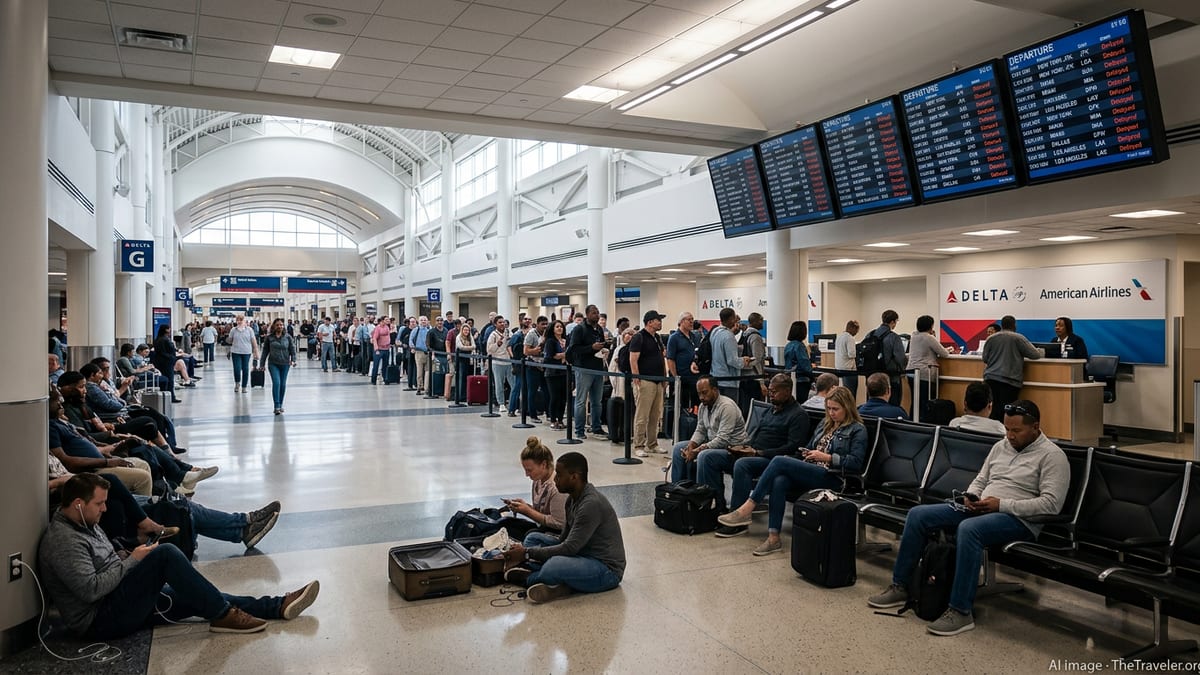
Local television coverage and national wire reports describe hundreds of delayed and canceled flights at Miami International on Monday, September 7, as airlines adjusted to the reduced runway capacity and lingering congestion from Sunday’s ground stop. Some carriers diverted inbound aircraft to alternate airports along the Eastern Seaboard and in central Florida, while others held departures on the ground at origin airports.
Travelers connecting through Miami reported extended waits at gates, long lines at customer service desks and rebookings onto later flights or alternative routings. Some passengers arriving from Latin America and the Caribbean described being held on aircraft awaiting the availability of gates, while others were rerouted through hubs in cities such as Charlotte and Atlanta.
Published guidance from airport communications and airline travel advisories urges anyone flying into or out of Miami in the coming days to monitor flight status closely and to check directly with their carrier before heading to the airport. With runways still out of service and aircraft and crew displaced by earlier cancellations, schedules remain fluid, and further day-of-travel changes are possible.
Travel industry observers note that Miami International serves as a critical connection point between the United States, Latin America and the Caribbean, making operational disruptions there particularly far-reaching for leisure and business travelers alike.
Investigation Focuses on Approach and Landing
The National Transportation Safety Board has opened an investigation into the accident, with initial attention centered on the aircraft’s final approach and landing profile. Flight-tracking data cited in specialist aviation coverage shows the freighter approaching at a higher-than-typical groundspeed compared with prior 767 operations to the same runway, raising questions about landing distance margins and stopping performance.
Early accounts indicate that weather at the time of landing was not a significant factor, with no heavy rain reported on the runway at the moment of touchdown. Investigators are expected to examine factors including aircraft weight, braking system performance, thrust reverser deployment, runway surface conditions and any potential wind shear or microburst activity in the vicinity of the airport.
Publicly available statements from the carrier operating the flight and its client, Amazon’s air cargo arm, describe the companies as devastated by the loss of life and committed to cooperating with investigators. Safety specialists note that cargo operations use many of the same runways and airspace as passenger flights, making the findings from incidents like this one relevant across the commercial aviation sector.
A preliminary report outlining the basic sequence of events is expected in the coming weeks, while a more detailed analysis will likely take many months to complete.
What Passengers Should Expect in the Coming Days
For travelers with upcoming itineraries through Miami, public forecasts from airline operations teams and aviation analysts point to a gradual improvement in punctuality as traffic patterns are adjusted to the temporary runway configuration. Airlines are expected to thin schedules slightly during peak hours, upgauge some flights to larger aircraft to consolidate demand, and continue to rely on diversions and reroutings when necessary.
Passengers with flexible plans may find it beneficial to consider alternate South Florida airports, such as Fort Lauderdale-Hollywood International or Palm Beach International, while Miami works through the disruption. However, many long-haul international services, particularly those serving Latin American capitals, are concentrated at Miami and cannot be easily shifted in the short term.
Travel advisers suggest building extra time into connections, opting for earlier departures when possible and staying alert for flight-status notifications via airline apps or text messages. Given the continuing runway closures and the evolving nature of the investigation and cleanup, same-day schedule changes are likely to remain more common than usual.
As crews continue the difficult work of clearing the crash site and restoring full capacity at Miami International Airport, passengers across the region and beyond are being asked to prepare for ongoing operational ripples from Sunday’s deadly runway overrun.
Local 10 News: Delays continue at Miami International Airport
Associated Press: At least 5 dead after Amazon cargo plane barreled off runway at Miami airport
FreightWaves: Two Miami runways still closed after deadly Amazon cargo jet accident
CBS Miami: Delays, cancellations mount at Miami International Airport