


More news on this day
U.S. travelers heading to Europe this fall are being urged to build in substantial extra time at passport control, as Ryanair-linked travel advisories highlight three-hour biometric fingerprinting queues and missed onward flights at seven major European airports under the European Union’s new Entry/Exit System.
Get the latest news straight to your inbox!
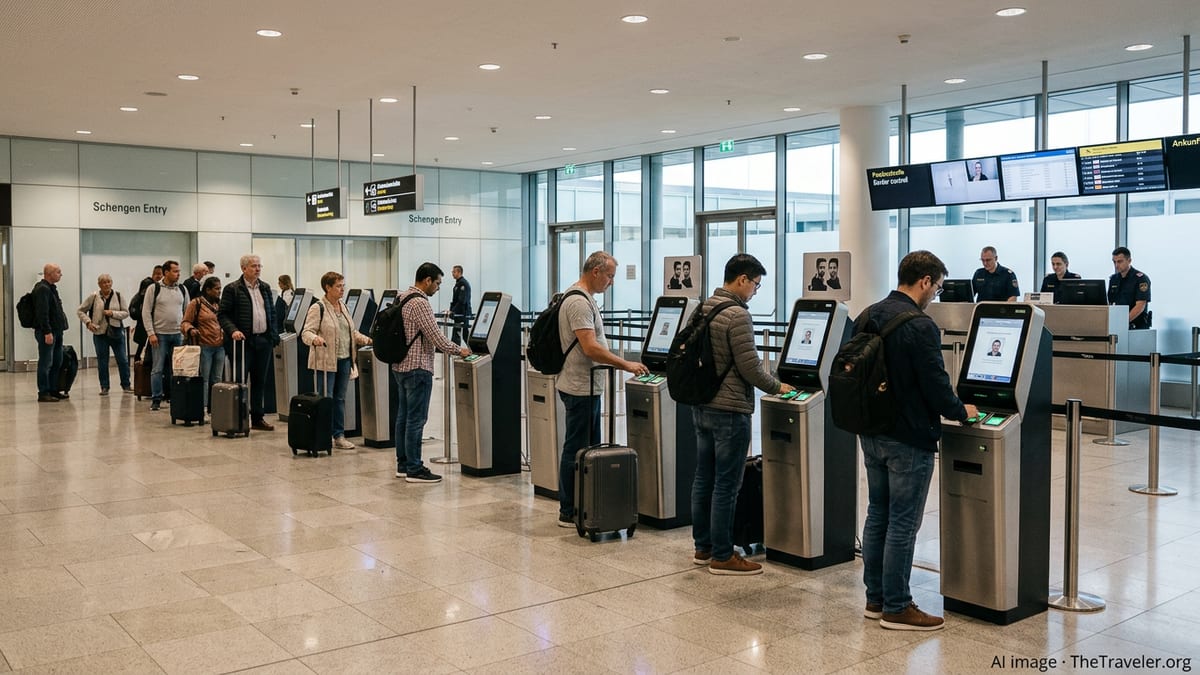
New EU Border Rules Are Reshaping the Airport Experience
The European Union’s Entry/Exit System, a digital border-control scheme now active at external Schengen frontiers, replaces manual passport stamping with electronic records that capture each traveler’s identity details, fingerprints, facial image, and entry and exit data. Publicly available information from the European Commission explains that the system applies to most non-EU nationals entering the Schengen area for short stays, including many U.S. visitors arriving by air this fall.
According to EU briefings on how the new system works, first-time users must complete a full biometric enrollment at the border, which takes longer than a traditional passport stamp and is carried out under the supervision of border officers. Repeat visitors may face quicker checks, but implementation updates show that technical issues and staffing limits can still create long queues for both registration and verification.
Industry analyses released over the past year have consistently warned that the transition would be particularly disruptive at busy holiday hubs where large volumes of non-EU passengers arrive in short time windows. Airports that rely heavily on leisure traffic from North America and the United Kingdom have been cited as especially vulnerable to congestion as EES kiosks and staffed booths struggle to keep pace with peak flows.
In response, airlines and airport groups have appealed for a phased or “progressive” roll-out to prevent a sudden spike in waiting times. A recent agreement at EU level allows member states to introduce the system gradually over several months, but published transport commentary suggests that uneven deployment has created a patchwork of experiences, with some airports seeing relatively smooth processing and others reporting severe delays.
Ryanair Flags Seven EES Hotspots With Three-Hour Queues
Ryanair-focused travel advisories and consumer-rights trackers report that the low-cost carrier has singled out seven European airports where EES-related queues have been particularly disruptive for non-EU passengers this year and are expected to remain a concern into the fall season. These hubs, which include popular Mediterranean leisure gateways and major capital-city airports, have all recorded instances of waiting times approaching or exceeding three hours at passport control during busy periods.
Data collated by independent queue-monitoring projects such as EESQueue and by air-travel performance dashboards points to recurring peaks in biometric-processing times at these airports. Reports describe a pattern of long, slow-moving lines for first-time EES enrollment, combined with bottlenecks when self-service kiosks malfunction and passengers must be redirected to a limited number of staffed booths.
According to these sources, some of the highlighted airports have seen repeated episodes of missed onward flights and tight connections attributed primarily to time spent in EES and passport-control queues rather than airline delays or security screening. Travel-compensation platforms tracking such incidents note that passengers on point-to-point carriers face a particular risk, as they cannot rely on through-checked connections or re-protection across multiple airlines.
Ryanair’s own help-center guidance on EES emphasizes that the airline operates a point-to-point model and does not sell or guarantee connecting itineraries. The documents advise non-EU travelers to proceed directly to border control after security and to allow extra time for the new biometric checks at both entry and exit, especially when transiting through busy European hubs toward a separate onward flight.
Why U.S. Travelers Are Feeling the Impact This Fall
For U.S. travelers, the timing of the EES rollout coincides with a strong rebound in transatlantic leisure demand, meaning more visitors are entering the Schengen area at precisely the moment border procedures have become more complex. Travel-industry coverage notes that many Americans are accustomed to biometric screening on arrival in the United States, but the combination of first-time enrollment, unfamiliar airport layouts, and language barriers in Europe can add to the stress of navigating these new procedures.
Published reports on this summer’s experience point to several specific pain points. At some airports, travelers arriving from long-haul flights have encountered separate queues for different sets of departure gates, which can make it unclear where to line up for EES processing. In other cases, passengers report being directed first to automated kiosks and then to a manual booth for a second fingerprint scan, which effectively doubles the time spent at the border.
Travel forums and news features also highlight that EES is not yet performing consistently across Europe. While certain hubs report average non-EU processing times of under half an hour, others show wide swings from day to day, with relatively short waits off-peak and multi-hour queues during weekend surges. This variability makes it difficult for travelers to estimate how much buffer they need, particularly when planning same-day rail or low-cost onward flights.
For U.S. visitors attempting to connect onto separate intra-Europe services, the consequences can be significant. Once a traveler misses a point-to-point flight because they are still in the passport-control line, subsequent options often involve purchasing a new ticket at the last-minute fare level. Consumer advocates warn that this can add hundreds of dollars to a trip, especially from high-demand holiday airports where alternative flights sell out quickly.
Practical Steps to Reduce the Risk of Missed Connections
Given the current performance of the Entry/Exit System at certain airports, publicly available airline and airport guidance urges non-EU passengers to arrive earlier than they may have done in previous years and to avoid scheduling tight self-connecting itineraries. Several carriers, including Ryanair, now recommend that travelers proceed straight to passport control after clearing security, even if that means skipping duty-free shopping or airport lounges until after border checks are complete.
Travel-planning tools and independent advisories suggest that U.S. travelers building their own connections through EES-affected hubs should allow generous buffers between flights. For itineraries where the first leg lands at a Schengen-border airport and the second leg is a separate ticket on a low-cost carrier, some experts advise leaving at least three to four hours between scheduled arrival and departure, especially at airports known to experience EES bottlenecks.
Publicly available EES FAQs also stress the importance of having all documents ready before reaching the kiosk or booth. Travelers are advised to keep their passport open to the photo page, remove hats and sunglasses for facial-image capture, and be prepared to place each finger on the scanner as directed. Efficient behavior at the counter cannot eliminate systemic delays, but border agencies and airport groups indicate that it can help keep individual processing times closer to the planned targets.
For those with critical onward plans, including cruises, rail departures, or time-sensitive events, travel-insurance policies that specifically cover missed connections and trip interruption may offer an additional layer of protection. Policy summaries from major insurers increasingly reference EES-related disruption among the potential triggers, though coverage terms vary and travelers are encouraged to review conditions carefully before purchase.
What to Watch as Europe Heads Into the Shoulder Season
As the summer peak gives way to the fall shoulder season, industry observers will be watching whether EES queues at the seven Ryanair-highlighted airports moderate or remain unpredictable. Passenger numbers typically dip after August, but school breaks, major events, and cruise turnarounds can still generate sharp spikes in arrivals that stress border-control systems already operating close to capacity.
Recent European Council and Parliament documents on border management policy underline that member states are expected to keep refining their EES operations over the coming months, with more kiosks, targeted staffing, and software updates designed to reduce wait times. Airport associations have welcomed this flexibility but continue to call for additional investment, warning that inconsistent implementation risks undermining traveler confidence.
Travelers from the United States planning trips to Europe between now and the end of the year therefore face a mixed picture. Some gateways may deliver a largely seamless experience, while others continue to struggle on peak days with the combination of first-time biometric enrollment and high passenger volumes. For now, Ryanair’s warning underscores a broader message echoed across airline advisories and passenger forums: non-EU travelers should factor EES into their planning and treat passport control as a potential bottleneck rather than a quick formality.
For up-to-date guidance, U.S. travelers are encouraged to monitor their airline’s EES information pages and to check airport or EU Union resources shortly before departure, as procedures and waiting times remain subject to change while the system beds in.
Ryanair Entry/Exit System information
European Commission overview of the Entry/Exit System