


More news on this day
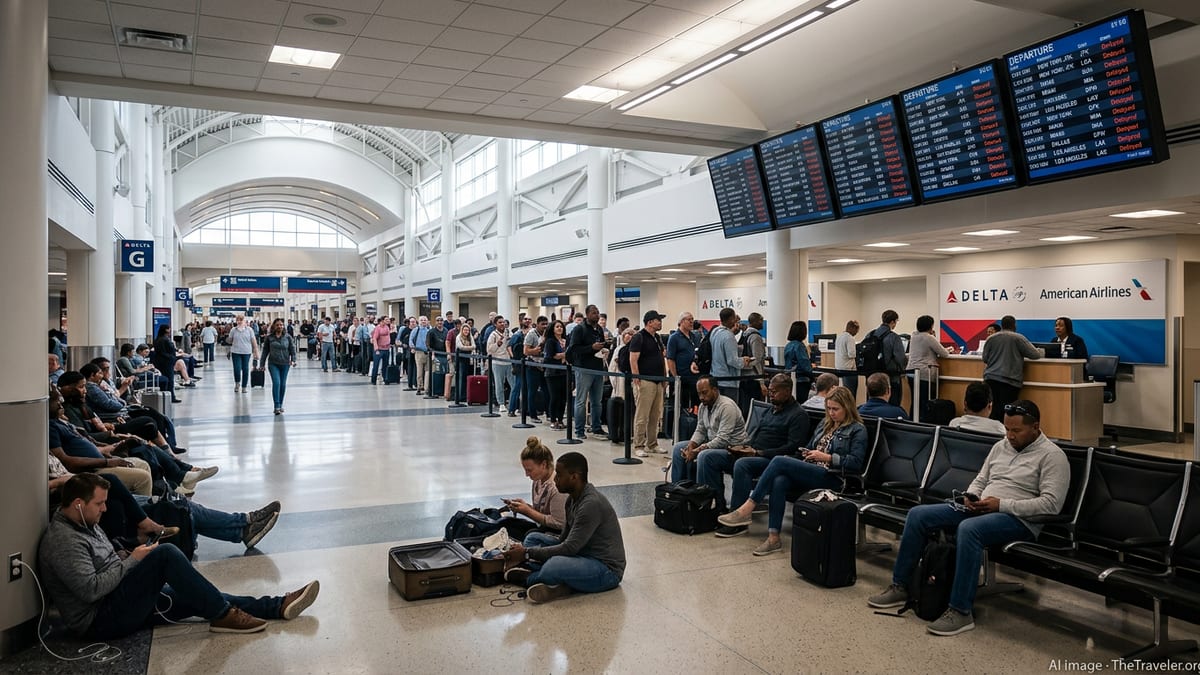
Thousands of travelers were left camped out across Hartsfield-Jackson Atlanta International Airport after a fresh wave of Delta Air Lines disruptions led to 123 flight cancellations and 591 delays, snarling connections to New York City, Houston, Norfolk, Washington, D.C., Munich and numerous other destinations.
Get the latest news straight to your inbox!
Major Hub Meltdown at the World’s Busiest Airport
Atlanta’s Hartsfield-Jackson airport, the world’s busiest and Delta’s largest hub by passenger volume and daily departures, again became the focal point of a widespread operational breakdown as cancellations and rolling delays piled up through the day. Publicly available flight-tracking data showed Atlanta near the top of U.S. airports for both scrubbed departures and late operations, with Delta accounting for the bulk of the disruption.
As the schedule deteriorated, concourses and gate areas filled with stranded passengers sitting on the floor or stretched out across rows of seats, many clutching printed itineraries that had already been reissued multiple times. Social media images and first-hand accounts described long queues at customer service desks and rebooking counters as travelers attempted to salvage connections or secure overnight accommodation.
Because Atlanta functions as a primary connecting hub for Delta, any breakdown there quickly spreads nationwide. Even flights in regions experiencing clear weather reported extensive downstream delays, as aircraft and crews were stuck out of position and turnaround times grew longer. Routes into and out of New York City, Houston and Washington, D.C. were particularly affected, as well as select international services including flights to Munich.
Travel industry analysts note that while Atlanta periodically experiences weather-related slowdowns, the combination of high summer demand, tight aircraft utilization and operational strains at a carrier’s largest hub can quickly escalate from routine delays into a full-scale system disruption.
123 Cancellations, 591 Delays and a Web of Missed Connections
By late evening, aviation tracking platforms showed at least 123 Delta-operated flights cancelled systemwide and more than 590 delayed, with a significant share of those tied in some way to Atlanta operations. The numbers shifted through the day as flights were first delayed, then removed entirely from schedules, but the pattern underscored how a relatively limited set of early issues can balloon across a complex network.
Passengers bound for New York-area airports reported repeated departure time changes followed by abrupt cancellations, while travelers heading to Houston and Norfolk described tight connection windows evaporating as inbound legs from Atlanta failed to depart on time. On some itineraries, a single missed link triggered an unravelling of multi-city journeys, leaving passengers marooned at intermediate hubs overnight.
International travelers connecting through Atlanta faced their own complications. Flights to Munich and other European destinations experienced extended delays amid crew-rest constraints and aircraft rotations that no longer matched the timetable. With transatlantic services operating on once-daily or limited frequencies, missed connections meant travelers risked being rebooked a full day later, if seats were available at all.
Published coverage of recent Delta disruptions has highlighted how the carrier’s tightly scheduled operation leaves little slack during peak periods. When large numbers of aircraft and crews are displaced by cancellations or protracted delays, restoring normal operations can take days, even after the immediate cause of the disruption has eased.
Knock-On Effects Across the Delta Network
The problems in Atlanta quickly radiated outwards across Delta’s domestic and international network. Flights touching the hub, even on relatively short hops, were subject to rolling delays as aircraft arrived late, waited for gates or required new crews because maximum duty times had been reached. Some regional services feeding Atlanta were cancelled outright to relieve pressure on the hub, compounding the effect for smaller cities that depend on those links.
Travelers departing from Washington, D.C., Houston and East Coast cities reported that planes were available and local conditions seemed calm, but departure boards still showed prolonged holds. Aviation data and prior operational analyses indicate that in such cases, flights often wait for connecting passengers, available crews or maintenance clearances that have been delayed elsewhere in the system, rather than for problems at the local airport.
International routes also felt the strain. Long-haul services to Europe and beyond rely on precise sequencing of arriving aircraft, catering, fueling and crew schedules. Once that rhythm is disrupted at a hub like Atlanta, knock-on effects can run for multiple cycles, with one heavily delayed aircraft arriving too late to operate its next planned flight. Carriers then face a choice between cancelling the onward leg or accepting additional hours of delay that ripple across the following day.
Recent histories of airline disruptions show similar patterns when major hubs experience compounded challenges. Even after new flights are added to recover stranded passengers, limited spare aircraft, full peak-season loads and crew-rest limits can make it difficult to quickly clear the backlog, especially on high-demand transcontinental and transatlantic routes.
Passengers Scramble for Alternatives as Support Channels Fill Up
With lines at in-person service desks stretching down concourses, many stranded passengers turned to mobile apps and call centers to rebook. However, reports from recent large-scale disruptions suggest that during heavy traffic, digital tools can lag in reflecting real-time seat availability or updated routings, while phone queues swell as thousands of affected travelers seek help simultaneously.
Some travelers in Atlanta described searching for last-minute hotel rooms across the metro area, only to find limited availability near the airport as demand surged. Others opted to sleep in terminals rather than venture far from early-morning rebooked flights, a scene that has become familiar during major operational meltdowns at large U.S. hubs.
Across social platforms and consumer forums, travelers trading advice emphasized strategies such as requesting reroutes through alternative hubs, considering one-way tickets on other carriers when practical, or exploring rail and rental car options for medium-distance journeys such as Atlanta to Norfolk or certain East Coast cities. However, with high-season demand and same-day inventory limited, not all passengers were able to secure prompt alternatives.
Travel experts observing the situation pointed out that passengers with flexible travel dates or nonessential trips were sometimes better served by accepting refunds and rebooking on future days rather than waiting out extended disruptions at the airport. For those with time-sensitive commitments, however, even complex itineraries pieced together across multiple carriers were sometimes preferable to remaining in place.
Persistent Strains Highlight Broader Questions About Airline Resilience
The latest wave of cancellations at Atlanta comes against a backdrop of heightened scrutiny of U.S. airline reliability following a series of high-profile operational breakdowns over the past several years. Previous incidents at Delta and other carriers have involved IT outages, staffing shortfalls, severe weather systems and air traffic control constraints, each revealing different vulnerabilities in modern hub-and-spoke networks.
Analysts note that when disruptions unfold at the nation’s busiest hub, the impact can mirror that of a regional storm system, affecting travelers far from the original problem point. With Atlanta sitting within a short flight of a large portion of the U.S. population, any extended slowdown there can disproportionately disrupt domestic connectivity and international links.
As summer and holiday travel periods bring record passenger volumes, questions are likely to intensify about how much reserve capacity airlines maintain in terms of spare aircraft, backup crews and operational flexibility. Industry observers have warned that tightly optimized schedules, while efficient in normal conditions, leave passengers exposed when irregular operations strike at scale.
For now, travelers passing through Atlanta and other major Delta stations are being advised by publicly available guidance and travel experts to monitor flight status frequently, allow generous connection times, and prepare contingency plans in case of rolling delays or last-minute cancellations. With thousands already stranded at the hub following the latest disruption, the pace of recovery in the coming days will be closely watched by both passengers and regulators.