


More news on this day
Delta Air Lines flight DL1477, a regularly scheduled Boeing 737-900 service from Chicago O’Hare to Atlanta, diverted to Charlotte Douglas International Airport on July 18 after an unexpected mid-flight route change, prompting questions from passengers and close watchers of U.S. domestic operations about what led to the unscheduled stop and what it means for travelers on this busy corridor.
Get the latest news straight to your inbox!
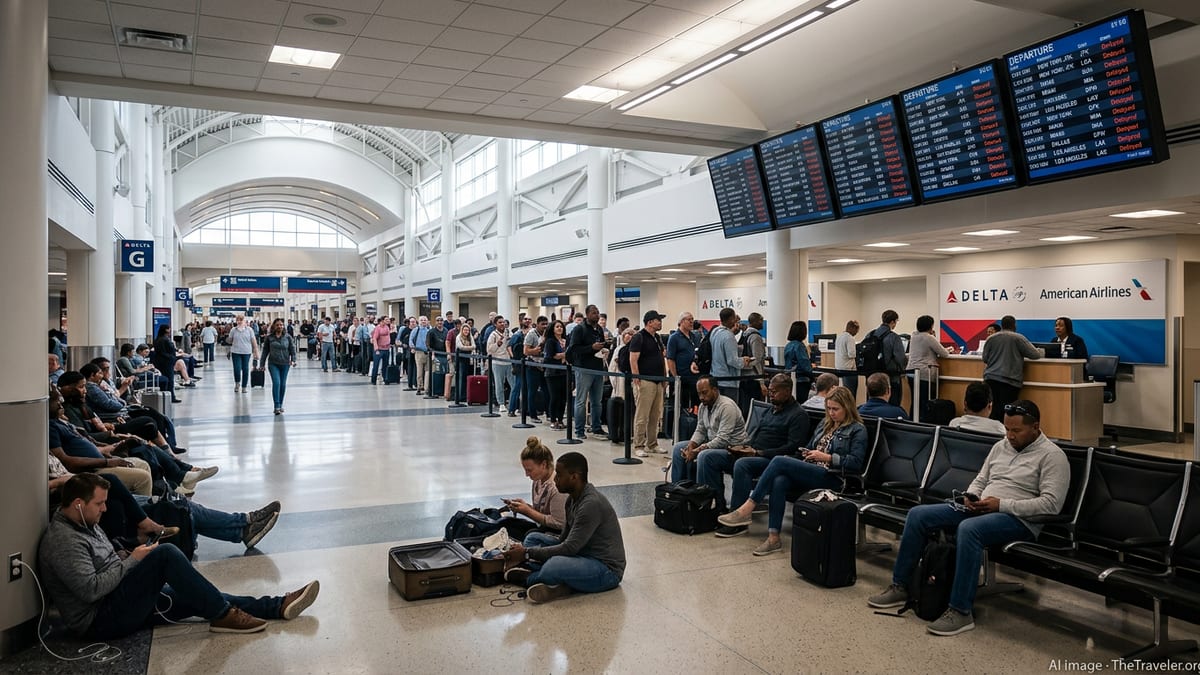
What Is Known About Flight DL1477 on July 18
Publicly available schedule data shows that DL1477 is a daily Delta Air Lines service linking Chicago O’Hare International Airport and Hartsfield-Jackson Atlanta International Airport, operated with Boeing 737 aircraft. The July 2026 domestic schedule lists the flight departing O’Hare in the mid-afternoon and arriving in Atlanta in the early evening, consistent with its role as one of several Delta frequencies on this high-demand route.
On July 18, tracking information indicates that a DL1477 rotation involving a Boeing 737-900 did not follow the typical nonstop profile between Chicago and Atlanta. Instead, the aircraft left its planned routing and diverted to Charlotte Douglas International Airport, a major airport in the southeastern United States that commonly serves as a diversion point when congestion, weather or other factors complicate operations at hubs such as Atlanta.
Data from flight-history and schedule aggregators shows DL1477 operating multiple legs involving Atlanta, Chicago and Charlotte over the July 18 to July 19 period, with the aircraft assigned to the flight number later operating a short segment between Charlotte and Atlanta. While specific reasons for the initial route change have not been detailed in public statements, the pattern is consistent with an operational diversion followed by repositioning the aircraft and passengers toward their planned destination.
There are no indications in publicly accessible aviation safety databases that the July 18 DL1477 diversion was associated with a reportable accident or serious incident. The flight is instead being treated within tracking services as a disruption of schedule rather than a safety event, which is common in the domestic U.S. network during busy summer travel periods.
Possible Factors Behind the Mid-Flight Route Change
At the time of the diversion, airline operations across portions of the eastern United States were facing typical mid-summer challenges, including thunderstorms, air-traffic flow constraints and congestion at major hubs. Historical research on the Chicago O’Hare to Atlanta corridor highlights that this route is particularly sensitive to weather and airspace restrictions along its north-south track, which can quickly translate into airborne holding, reroutes or diversion decisions.
When a flight such as DL1477 diverts from its intended Atlanta arrival to an alternate like Charlotte, the underlying drivers can range from weather-related arrival saturation in Atlanta to onboard medical issues, technical concerns with the aircraft, or fuel and crew duty-time considerations after extended delays. Public tracking tools generally record the outcome but do not specify which operational factor prompted the crew and airline operations center to select Charlotte as the diversion airport.
Charlotte Douglas International Airport is a frequent alternate for flights in the southeastern region because of its multiple runways, extensive ground infrastructure and relative proximity to other large hubs. A Chicago-originating Boeing 737-900 bound for Atlanta can reach Charlotte with comfortable fuel margins, and the airport typically offers sufficient gate space and service facilities to manage deplaning, refueling, maintenance checks and re-accommodation of passengers onto onward services.
Available information for the July 18 event suggests that the aircraft later continued from Charlotte to Atlanta under the DL1477 flight number, aligning with the common industry practice of resuming the original routing once the immediate issue has been resolved. For passengers, this usually translates into a delay of several hours rather than an outright cancellation, though connection plans can still be significantly affected.
Impact on Passengers Traveling Between Chicago and Atlanta
The unplanned stop in Charlotte would likely have led to delays and missed connections for travelers who expected to arrive directly in Atlanta from Chicago in the late afternoon or early evening. The O’Hare to Atlanta route is heavily used by both business and leisure passengers, and the flight’s scheduled mid-afternoon departure is designed to feed a broad wave of evening departures from Atlanta to destinations across the United States and beyond.
When a diversion occurs, passengers are often required to remain on board until the aircraft is parked at a gate and cleared for deplaning. After that point, standard airline procedures typically include assessing whether the same aircraft can continue, arranging crew if needed and, where necessary, rebooking customers on later flights. For a diversion city like Charlotte that already has substantial domestic connectivity, there may also be options for passengers to connect onward from the diversion point rather than continuing to Atlanta first.
Publicly accessible schedule references show that Delta operates a dense network between Chicago, Atlanta and other southeastern destinations, which usually provides some flexibility in re-accommodating disrupted travelers. However, during peak July demand, spare seat capacity can be limited, meaning some passengers from DL1477 may have experienced extended waits before reaching their final destinations.
Travelers affected by such diversions are generally advised in airline policies and consumer guidance materials to preserve boarding passes and receipts, monitor updates in the carrier’s mobile application, and review eligibility for meal vouchers, hotel accommodation or compensation under the airline’s published customer commitment where disruptions are within the carrier’s control.
DL1477 in the Context of Summer Operations and Safety
The diversion of DL1477 highlights the complexity of summer airline operations across the U.S. domestic network rather than signaling an isolated safety concern. Industry studies and operational analyses consistently show that high traffic volumes, convective weather and tight scheduling can interact to produce cascading delays, reroutes and diversions, particularly on trunk routes linking large hubs such as Chicago O’Hare and Atlanta.
For Boeing 737-900 operations, diversions for precautionary or operational reasons are built into standard planning assumptions, including fuel reserves and alternate-airport strategies. Crew training emphasizes conservative decision-making when conditions at the destination deteriorate or when onboard situations arise that are better handled on the ground. In many cases, what passengers experience as an abrupt change in course reflects pre-planned contingency options being executed in real time.
Review of recent summaries of Delta’s safety record and notable incidents shows that diversions on individual flights rarely escalate into formally categorized accidents or serious incidents. Most are managed within routine operational frameworks, with regulatory reporting focused on events that involve significant damage, injuries or system failures. The absence of such listings related to DL1477 on July 18 supports the view that the episode belongs to the broader pattern of weather and congestion-related disruption typical of the busy summer travel season.
For travelers, the key takeaway is that unscheduled stops such as the DL1477 diversion to Charlotte, while frustrating, are a recognized part of modern airline operations and are usually handled within existing safety margins and customer-service policies. Understanding how and why these decisions are made can help set expectations when itineraries between major hubs do not proceed exactly as planned.