


More news on this day
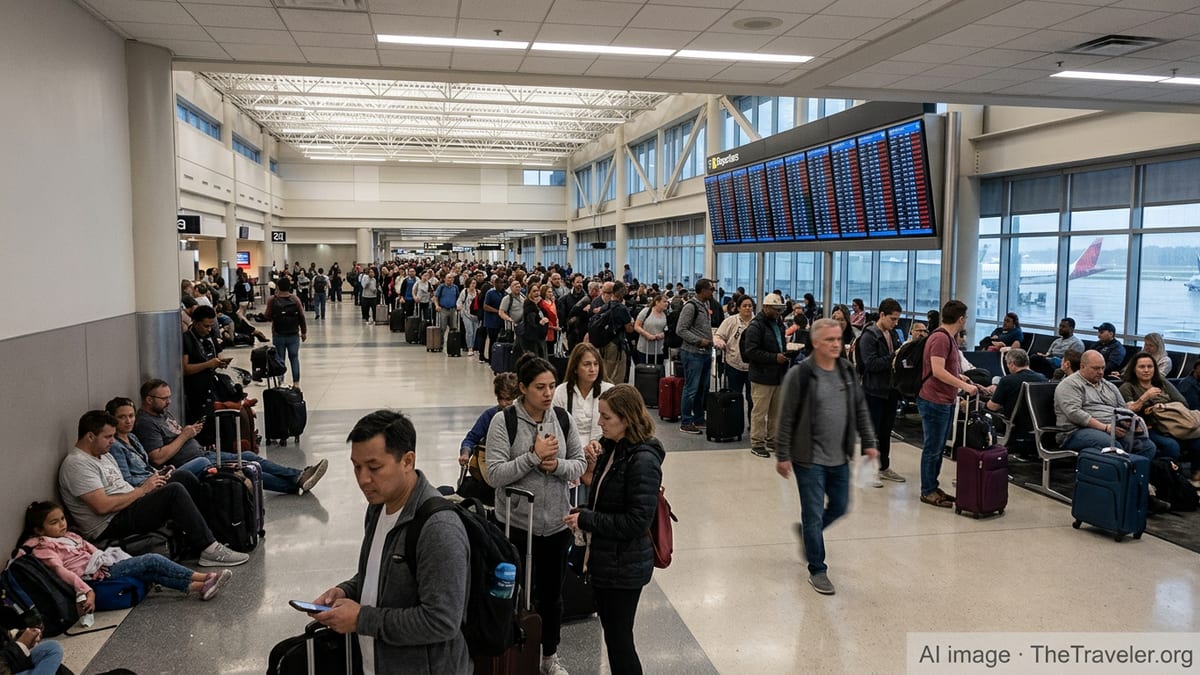
Delta Air Lines is confronting another day of heavy disruption at its Atlanta megahub, with severe weather alerts and mounting cancellations raising concern that a formal ground stop could again bring one of the world’s busiest passenger airports to a standstill.
Get the latest news straight to your inbox!
Weather Alerts Put Atlanta Operations Under Pressure
Fresh severe weather advisories for Atlanta have put renewed strain on Delta’s largest hub just as peak summer travel demand reaches its height. Publicly available alerts indicate that thunderstorms over the region in late July have already triggered schedule adjustments and waivers for affected travelers, with disruptions radiating across Delta’s domestic and international network.
Atlanta’s location in the U.S. Southeast leaves it exposed to fast‑developing storm systems in the warm months, and those systems can quickly restrict runway capacity and force air traffic managers to meter arrivals and departures. When that happens at Delta’s primary hub, even short weather events can result in long lines, missed connections, and crews and aircraft falling out of position.
The latest advisories follow a series of weather episodes earlier in July that led to brief slowdowns and localized ground stops at major U.S. airports. For Delta, any new round of storms over Atlanta increases the risk that traffic managers could again limit takeoffs and landings to protect safety, putting more pressure on an already stretched operation.
While a formal, systemwide ground stop for all Delta flights has not been declared, airline and airport status boards show clusters of cancellations and lengthy delays tied to flights into and out of Atlanta, suggesting that gate holds and flow restrictions are already being used to manage the volume of traffic.
Atlanta’s Central Role Means Disruptions Spread Quickly
Hartsfield‑Jackson Atlanta International Airport functions as Delta’s primary connecting hub, linking hundreds of daily departures across the United States with long‑haul services to Europe, Latin America, and beyond. The carrier’s hub‑and‑spoke model concentrates passengers and aircraft in Atlanta, which is efficient in normal conditions but leaves the network vulnerable when operations slow.
When weather or air traffic control constraints force a cut in the number of arrivals and departures, Delta’s tightly timed “banks” of connecting flights cannot operate as scheduled. Even a short suspension of takeoffs can cause later flights to depart without full connecting loads, or to be canceled outright if aircraft or crew cannot arrive in time to operate the next leg.
Flight‑tracking data for recent days show that Atlanta has led the way among major U.S. airports in total cancellations, reflecting its outsized role in the national air system. Travelers connecting through the hub report long queues at service counters and difficulty securing same‑day alternatives, particularly on popular leisure routes where remaining seats sell out quickly once disruptions begin to cascade.
Because so much of Delta’s domestic schedule is routed through Atlanta, problems there can quickly impact airports far from the Southeast. Flights from smaller cities often rely on a single daily connection to the hub, so one cancellation can strand passengers for 24 hours or more if substitute options are limited.
Lingering Effects From Past System Shocks
The current strain comes roughly two years after a CrowdStrike‑linked IT outage in July 2024 triggered an unprecedented global disruption for Delta and other major carriers. In that event, a widespread systems failure led Delta to halt departures, and the airline later struggled to bring its operation back to normal as crews and aircraft were left scattered across its network.
Public records and industry analysis of that earlier disruption showed that the aftermath lasted several days, with Delta canceling large numbers of flights and facing intense scrutiny over its recovery. The episode exposed how dependent modern airline operations are on complex technology and tight crew scheduling, and how quickly those systems can become overwhelmed when large hubs seize up.
Aviation analysts now point to that history when assessing Delta’s current vulnerabilities at Atlanta. Even when the initial trigger is localized weather rather than a technology failure, the underlying mechanics are similar: once enough flights are delayed or canceled, the resulting crew time limits, maintenance requirements, and passenger rebooking demands can slow recovery and increase the risk of further cancellations.
In the years since, Delta has signaled investments in technology and operational resilience, but published accounts of repeated weather‑related slowdowns at its hubs suggest that the margin for handling peak‑season disruptions remains narrow, particularly when several busy airports face constraints at the same time.
Travelers See Rising Cancellation Risks Across the Network
For passengers, the immediate impact of the latest Atlanta disruptions is visible in a growing number of canceled or significantly delayed flights. Online flight‑tracking tools and airline apps show clusters of scrubbed departures on some days, particularly during afternoon and evening peaks when thunderstorms are most common and when connections are tightly timed.
Reports from recent weeks describe travelers missing weddings, cruises, and international connections after initial delays in Atlanta or at other Delta hubs turned into last‑minute cancellations. In many cases, passengers have been rebooked on next‑day services or rerouted via secondary hubs, stretching journeys that would normally take hours into multi‑day odysseys.
The pressure is magnified during the height of the summer travel season, when most flights are already operating near full capacity. Even when a cancellation is announced several hours in advance, alternative itineraries may be scarce or require long layovers and overnight stays, especially for travelers starting from smaller airports that depend on a single daily Delta connection.
Industry observers note that high cancellation days at any major carrier tend to recur in clusters once weather systems settle over key hubs. With severe storms in the forecast for Atlanta and other busy Southeast airports, Delta customers are being urged by public travel advisories and consumer advocates to maintain flexible plans and to monitor flight status closely in the days ahead.
How Delta Is Managing Customer Fallout
Delta’s publicly posted customer guidance outlines a series of measures for passengers affected by cancellations and significant delays, including automatic rebooking where seats are available and the option to adjust travel dates when formal waivers are issued. For qualifying disruptions within the airline’s control, the carrier indicates that it may reimburse reasonable hotel and meal expenses for stranded travelers away from home.
During recent weather events around Atlanta, Delta has promoted its mobile app and website as primary channels for same‑day rebooking, seat changes, and digital boarding passes. Those tools aim to reduce pressure on airport agents and call centers, which often see surging wait times when thunderstorms or air traffic control constraints begin to snarl operations.
In practice, however, passengers report that digital tools can struggle on days when large portions of the schedule are affected, as remaining seats disappear quickly and the system cycles through multiple failed rebooking options before presenting viable alternatives. When severe disruptions hit a major hub, travelers frequently turn to airport customer‑service desks despite long lines, seeking personalized routing solutions that automated tools may overlook.
Consumer advocates suggest that travelers transiting Atlanta during periods of heightened disruption build additional buffer time into their itineraries, consider early‑morning departures that are less exposed to afternoon storms, and proactively review Delta’s published reimbursement rules to understand what support may be available if cancellations escalate or a ground stop at the hub is formally declared.