


More news on this day
Delta Air Lines is recording the highest number of cancellations among major U.S. carriers for a second consecutive day, as a mix of staffing shortfalls, aircraft availability issues and air traffic control ground stops continues to snarl the airline’s busy summer schedule.
Get the latest news straight to your inbox!
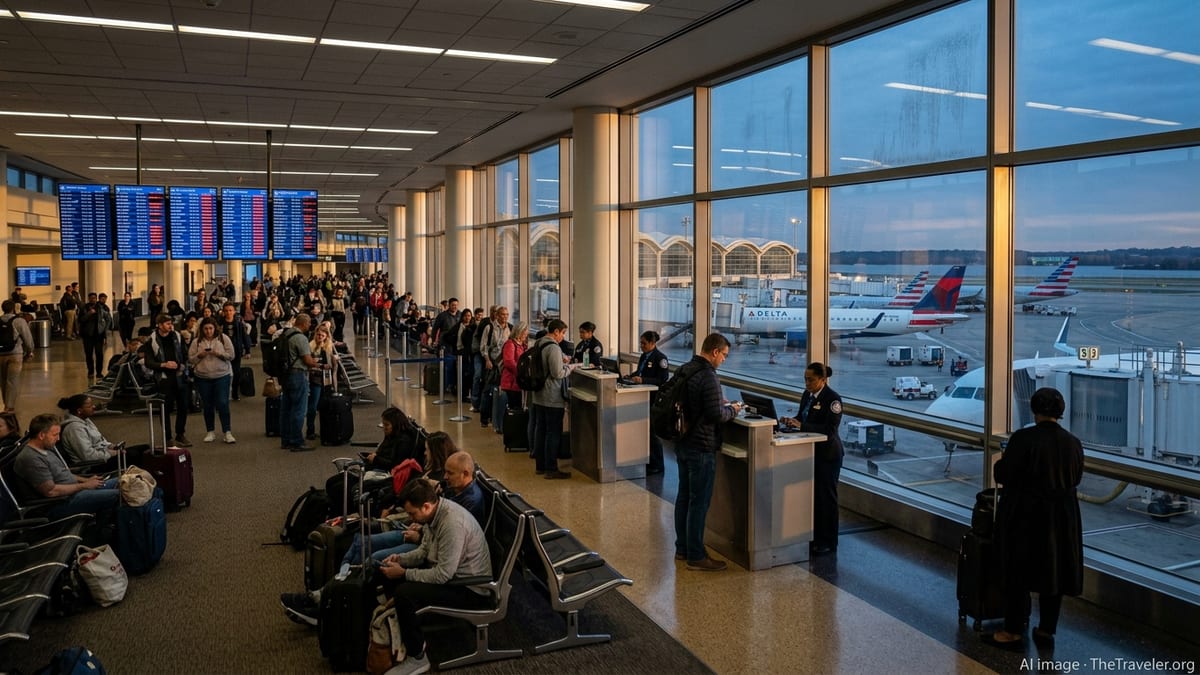
Delta Leads U.S. Carriers in Fresh Wave of Disruptions
Tracking data from multiple flight-monitoring platforms indicates that Delta has canceled more flights than any other large U.S. airline for a second straight day, underscoring the carrier’s struggle to stabilize its operation during one of the peak travel periods of the year. Hundreds of departures and arrivals have been scrubbed across its network, affecting hubs such as Atlanta, Detroit and New York, as well as key transcontinental and international routes.
Publicly available information shows that many of the cancellations are concentrated in already busy afternoon and evening banks, when aircraft and crews are tightly scheduled and the system has little slack to absorb additional shocks. As a result, relatively localized problems at one airport or within one crew base are rippling outward, triggering last-minute schedule cuts and extensive rebooking.
Travelers have taken to social media and online forums to document being rebooked days later, rerouted through secondary hubs or shifted to other airlines when capacity allows. In several cases, passengers report same-day cancellations after multiple rolling delays, a pattern that often points to unresolved staffing or maintenance constraints behind the scenes rather than a single weather event.
The latest disruption follows a year in which Delta’s reliability has come under increased scrutiny, particularly after a 2024 technology outage tied to a third-party software provider led to thousands of cancellations over several days and set back the airline’s reputation for operational resilience.
Staffing Strains Push Crews Past Legal Limits
Operational analyses and passenger accounts suggest that staffing is one of the key pressure points behind Delta’s current wave of cancellations. Like other airlines, Delta is operating near or at full capacity with tight crew utilization, leaving little margin when schedules are disrupted by storms, air traffic control delays or maintenance issues.
Reports indicate that pilots and flight attendants are timing out under federal duty and rest rules before flights can depart, particularly on longer domestic and international segments. When crews exceed their legal working hours because of extended delays on the ground or in the air, flights must be canceled or rescheduled, even if aircraft and passengers are ready to go.
Industry explainers and internal training materials made public in recent months describe how one canceled or heavily delayed early-morning departure can cascade throughout the day, leaving flight crews and aircraft in the wrong cities for subsequent legs. When this pattern repeats across multiple hubs, staffing imbalances multiply, and dispatchers are forced to make difficult choices about which flights to operate and which to drop from the schedule.
Labor dynamics are also adding complexity. Delta’s workers are in various stages of contract negotiations and unionization drives in departments such as ground operations, ramp services and cargo. While the airline has continued hiring and training, observers note that integrating new employees into a complex network and restoring full staffing levels across all bases remains a prolonged process.
Ground Stops and Weather Amplify Network Fragility
The latest cancellations are unfolding against a backdrop of intermittent ground stops and flow-control measures issued by the Federal Aviation Administration at several high-traffic airports. Recent advisories have cited a combination of thunderstorms, low visibility and staffing constraints at regional air traffic control facilities, particularly in the Northeast and along key transcontinental corridors.
A ground stop temporarily holds some or all departing flights at their origin until conditions improve or staffing levels recover. While these measures are designed to keep the skies safe and prevent gridlock near constrained airports, they also compress departures into narrower windows once restrictions lift, creating surges that can overwhelm gate operations and crew schedules.
In practice, this means that a Delta flight can appear ready to board, only to be hit with a sequence of short delays as air traffic managers adjust departure slots. Each incremental delay pushes crews closer to duty limits and can cause downstream legs to miss their scheduled turn times. When the dominoes fall at multiple airports at once, airlines with dense hub operations, like Delta, may see disproportionate impacts.
Recent weather patterns have added another layer of unpredictability, from fast-moving storms in the South and Midwest to low clouds and visibility constraints in the Northeast. On days when convective weather intersects with reduced controller staffing, cancellations can pile up quickly, especially for carriers already operating with thin buffers in their schedules.
Passengers Face Scramble for Seats and Limited Remedies
For travelers caught in the middle of Delta’s latest operational crunch, the practical effects are immediate and often costly. Many passengers report being offered rebookings one or two days later due to limited spare seats on alternative flights, particularly on popular business routes and weekend leisure departures.
Public-facing guidance from airlines and consumer advocates emphasizes that rebooking options through mobile apps and websites may not always show all possible routings, especially when partner airlines are involved or when seats must be manually authorized. However, even when additional options exist, full flights and constrained staffing at call centers and airport counters can slow the process of securing new itineraries.
Travel experts advise building extra buffer time into itineraries on carriers that are currently experiencing higher cancellation rates, especially when connecting to cruises, tours or major events. In the current environment, some frequent flyers report booking backup flights on different airlines, purchasing flexible or refundable fares, or adding extra hotel nights at their origin or destination to hedge against last-minute disruptions.
Compensation and accommodation policies vary depending on whether a cancellation is attributed to controllable factors such as crew or maintenance, or to external causes like severe weather or air traffic control decisions. Passengers are increasingly turning to travel insurance and credit card protections to recoup costs when airline-issued vouchers or hotel offers fall short of covering out-of-pocket expenses.
Delta’s Reliability Brand Tested as Peak Season Continues
The fresh wave of cancellations poses a test for Delta’s long-cultivated image as a reliability leader among U.S. airlines. For years, the carrier marketed its comparatively low cancellation rates and on-time performance as key differentiators, particularly for high-value corporate travelers who prize schedule certainty.
Recent financial disclosures highlight that demand for air travel remains robust, with full planes and strong revenue trends across domestic and international networks. Yet those same full planes make it more difficult to absorb disruptions without stranding large numbers of travelers, and they reduce the airline’s flexibility to reposition aircraft or hold spare capacity in reserve.
Analysts note that sustained operational turbulence could eventually influence business travel contracts and elite loyalty behavior, as corporate travel managers and frequent flyers reassess the trade-off between Delta’s onboard product and its current day-of-travel reliability. While there is no immediate sign of a large-scale shift, online discussions indicate a growing willingness among some long-time loyal customers to experiment with rival carriers.
As the summer peak continues, attention is likely to focus on whether Delta can quickly rebalance its staffing, fine-tune schedules to add more cushion around vulnerable banks and coordinate more closely with air traffic control to anticipate ground stops and flow restrictions. The coming weeks will reveal whether the latest two-day spike in cancellations proves to be a short-lived flare-up or a sign of deeper structural strain in one of the world’s largest airline networks.