


More news on this day
A freight train derailment on the outskirts of Calgary sent several rail cars into a storm water pond, disrupting service and drawing renewed attention to how rail traffic intersects with the city’s growing network of wetlands and suburban neighborhoods.
Get the latest news straight to your inbox!
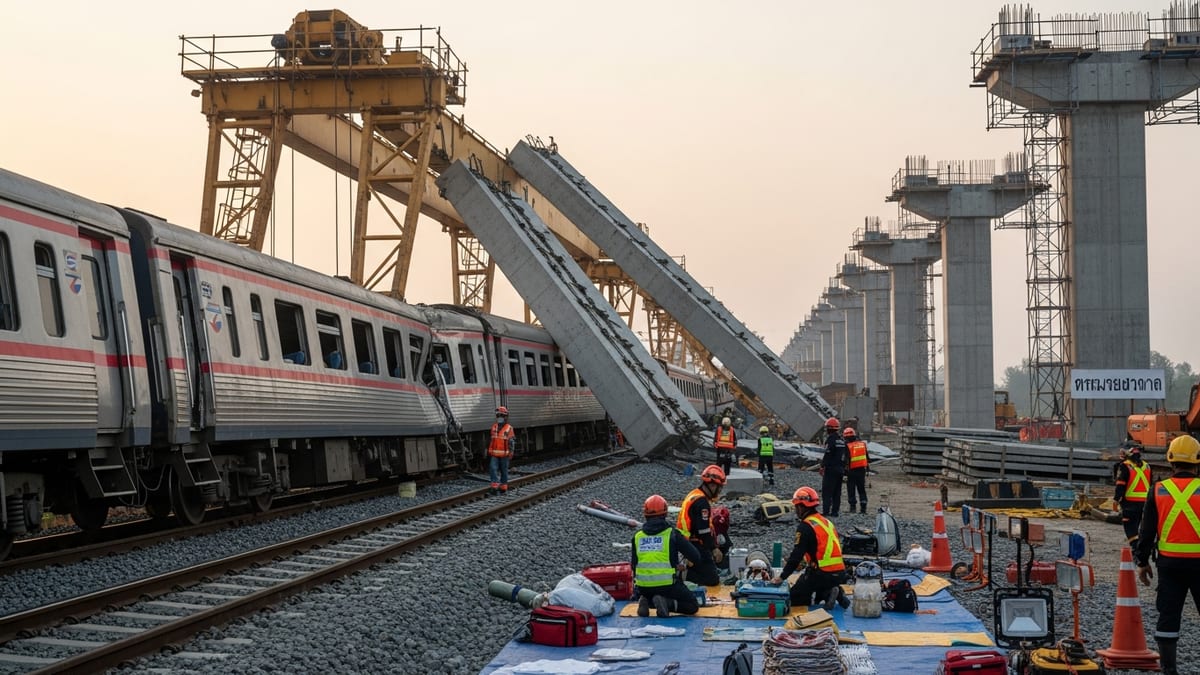
Cars leave the tracks beside Priddis Slough
Reports from local media and social channels indicate the derailment occurred near Priddis Slough, a wetland area on Calgary’s southwest edge that sits close to both rail infrastructure and popular walking paths. Images circulating publicly show a string of freight cars off the tracks, with at least some partially in the water of an adjacent storm pond.
Early descriptions suggest the affected train was moving through an established freight corridor at the time of the incident. The line skirts nearby residential communities and natural areas used by walkers and birdwatchers, underscoring how close heavy rail operations run to everyday recreational spaces around Calgary.
As of the latest available coverage, there were no widespread reports of fire, visible spills, or noticeable odors from the site. Commentary from residents who visited viewpoints near the slough described a damaged but largely contained scene, with derailed cars resting at the water’s edge and on the embankment.
Formal details about train speed, cargo type, and the precise sequence leading to the derailment have not yet been fully disclosed in public reporting. The event nonetheless fits into a broader pattern of rail disruptions that periodically affect corridors in and around Calgary and other Canadian cities.
Storm ponds, safety and Calgary’s expanding suburbs
The location of the derailment beside a storm pond highlights the complex overlap between transportation infrastructure and the storm water systems that frame many of Calgary’s newer communities. These engineered ponds are designed to capture runoff and manage flood risk, but they also sit close to roads, pathways, and in some cases, rail lines.
Urban planners increasingly view these ponds and wetlands as dual-purpose assets that provide both functional storm water management and valued public green space. When an incident such as a derailment occurs nearby, it raises questions about how resilient these areas are to contamination, bank erosion, or longer term disturbance of plant and wildlife habitat.
Publicly available information from the City of Calgary outlines extensive work underway on flood mitigation, riverbank stabilization, and storm pond maintenance across the metropolitan area. The derailment near Priddis Slough adds a new dimension to those efforts by drawing attention to risks that originate from rail traffic rather than from river flooding or storm events.
In the immediate term, water testing and shoreline inspections are likely to be central to understanding whether the pond or surrounding wetland has been affected. Even when freight cars are not carrying hazardous materials, derailments can disturb embankments, release diesel fuel or lubricants, and deposit debris into sensitive areas.
Rail reliability and perceptions of safety
Calgary is home to major rail operators and a dense web of freight and commuter lines that move goods and people across the region. While serious derailments remain relatively rare compared with the overall volume of train traffic, recent Canadian and international rail incidents have kept public attention focused on rail safety, particularly where tracks cross populated or environmentally sensitive zones.
National safety boards and transport regulators have repeatedly flagged track condition, train handling practices, and extreme weather as recurring factors in derailments across Canada. Recent investigation reports from federal agencies emphasize the importance of rigorous inspection regimes, speed management on key routes, and ongoing upgrades to signaling and track infrastructure.
Events like the Calgary pond derailment also influence public perceptions of everyday reliability. Commuters and residents who rely on nearby rail services, or who live along rail corridors, often view each new incident through the lens of accumulated frustrations about delays, service disruptions, and visible wear on aging infrastructure.
Travelers passing through Calgary by rail may encounter temporary schedule changes or re-routing while the affected segment is secured and repaired. For visitors unfamiliar with the area, the sight of derailed cars near water can be unsettling, even when official assessments later categorize the incident as contained and non hazardous.
Response, cleanup and environmental checks
According to open reporting, rail company response teams and contractors typically move quickly in similar Canadian incidents to stabilize derailed cars, remove damaged equipment, and inspect the track bed. Standard procedures include isolating the area, assessing whether any material has entered nearby waterways, and preparing to re-lay damaged sections of track.
In past derailments elsewhere in Canada, publicly released investigation summaries have highlighted the importance of drainage patterns, culverts, and embankment stability when tracks run close to ponds, sloughs, or rivers. Even relatively small shifts in the supporting ground can contribute to track deformation, especially during periods of heavy rain or freeze thaw cycles.
For wetlands such as Priddis Slough, environmental checks are a critical part of the post incident process. These areas can serve as habitat for birds, amphibians, and native vegetation, and they also function as filtration systems for urban runoff. Any contaminants introduced by a derailment, whether from cargo or from rail equipment itself, need to be identified and, if necessary, remediated.
Once derailed cars are removed, crews typically restore the embankment and shoreline, stabilize slopes, and monitor for residual sheen or other signs of contamination. Observers in Calgary will be watching for updates on whether additional measures, such as sediment removal or longer term water quality monitoring, are recommended for the affected pond.
What this means for travelers and nearby communities
For people visiting or moving through Calgary, the derailment serves as a reminder that the city’s extensive rail network operates alongside a rapidly expanding suburban fringe. Many of the same corridors that bring visitors into the region also run through or beside wetlands, storm ponds, and parks that are promoted as amenities for residents and tourists.
Short term impacts for travelers may include altered freight schedules, localized traffic delays near the site, and occasional noise from heavy equipment as cleanup and track repairs progress. In some cases, adjacent pathways or informal viewpoints around the slough may be temporarily restricted for safety reasons while work is underway.
For nearby neighborhoods, the event may prompt renewed interest in how emergency plans account for rail incidents near water, and how information is shared with residents and visitors when something goes wrong. Publicly accessible resources about storm pond safety, wildlife protection, and flood readiness may be updated or spotlighted as part of broader outreach.
As rail operations resume through the affected area, attention is likely to turn to what can be done to reduce the likelihood and impact of similar incidents. For a city that markets its proximity to nature and outdoor recreation, balancing efficient rail movement with the protection of ponds, sloughs, and green spaces will remain an important challenge long after the derailed cars near Priddis Slough are cleared away.