


More news on this day
Delta Air Lines flight DL800 from Fort Lauderdale to Los Angeles diverted to the carrier’s Atlanta hub following a mid-flight route amendment, turning a routine transcontinental trip into an unexpected detour for passengers on board.
Get the latest news straight to your inbox!
Transcontinental Service Interrupted by Unscheduled Stop
Publicly available flight tracking data shows that Delta Air Lines DL800, a regularly scheduled domestic service between Fort Lauderdale–Hollywood International Airport in Florida and Los Angeles International Airport in California, did not continue directly to its planned West Coast destination after departure. Instead, the aircraft altered course en route and landed at Hartsfield–Jackson Atlanta International Airport, Delta’s primary hub, before continuing arrangements for onward travel.
The flight, typically operated as a nonstop transcontinental service, forms part of a busy corridor linking South Florida with Southern California. Schedule information for DL800 indicates that the route is normally flown multiple times per week as a point-to-point service between Fort Lauderdale and Los Angeles, making the diversion to Atlanta a notable departure from routine operations.
Data from flight status and schedule platforms indicates that the change of routing occurred after the aircraft was already airborne, rather than being reflected as a pre-planned change prior to departure. The result was a mid-journey shift that effectively converted what is usually a nonstop flight into an indirect routing via Atlanta.
While the aircraft landed safely in Atlanta, the revised routing meant passengers headed to Los Angeles faced additional flight time and the potential for missed onward connections from LAX that had been planned around an originally nonstop itinerary.
Passenger Experience and Operational Ripple Effects
Accounts shared on social media and aviation-focused discussion forums describe a mixture of confusion and frustration among travelers as DL800’s track deviated from the expected transcontinental path and turned toward Atlanta. Many passengers on such long domestic flights plan tightly timed connections, hotel reservations, or ground transportation in Los Angeles, which can be disrupted when a diversion occurs mid-flight.
Publicly accessible airline customer guidance notes that diversions can lead to passengers being rebooked on later connecting flights or, in some cases, accommodated on alternative routings altogether. For a popular route such as Fort Lauderdale to Los Angeles, rebooking a full narrowbody aircraft of passengers onto later flights can quickly consume remaining seat availability, particularly during peak travel periods.
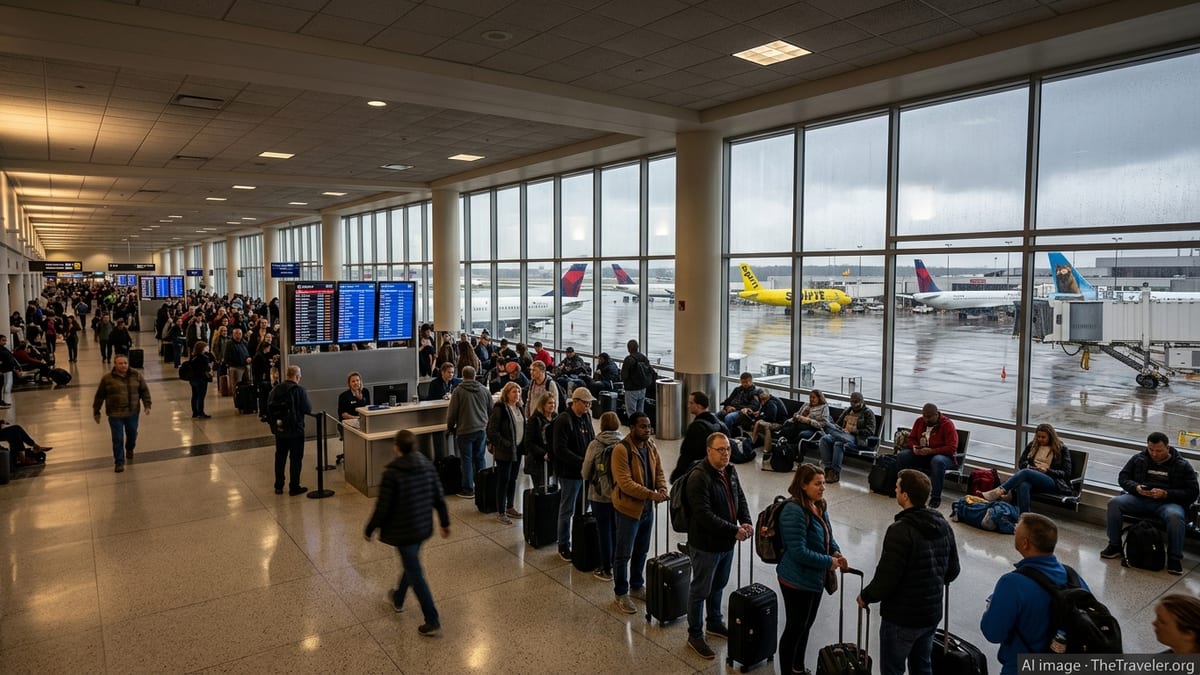
Travelers affected by diversions often report challenges such as long lines at customer service desks, delays in receiving updated itineraries, and uncertainty around baggage handling when an intermediate stop not printed on the original ticket is introduced. In hub airports like Atlanta, these challenges are partially offset by the large volume of onward options, but they can still translate into extended total journey times.
Consumer advocates frequently advise passengers on diverted flights to monitor their reservations via airline apps, confirm the status of checked bags, and keep records of additional expenses in case they later seek reimbursement or goodwill compensation, depending on the circumstances of the disruption.
Why Flights Divert: Safety, Logistics and Network Management
While specific reasons for an individual diversion are not always publicly disclosed in detail, industry observers point to a range of common drivers, including onboard medical events, disruptive passenger behavior, technical concerns, weather, and broader air traffic constraints. Reports from recent months involving the same Fort Lauderdale to Los Angeles flight number have highlighted passenger misconduct as a factor in at least one previous diversion to Atlanta, underscoring how cabin incidents can rapidly alter flight plans.
Delta’s published contract of carriage explains that the airline reserves the right to modify routings, including diversions to alternative airports, when necessary to address safety, security, or operational needs. This framework is standard in commercial aviation and reflects the wide variety of circumstances that can unfold after departure, from changing weather patterns at the destination to evolving conditions on board the aircraft.
For a hub-and-spoke carrier such as Delta, diverting a flight into its primary hub can also simplify logistics once an unplanned stop becomes necessary. Atlanta offers maintenance resources, additional crew options, and a dense schedule of onward flights, providing more flexibility to re-accommodate travelers when a nonstop service is disrupted mid-route.
Aviation analysts note that diversions, while highly disruptive for those on the affected flight, can sometimes reduce the broader network impact. By bringing an aircraft into a major hub, airlines may be better able to manage crew duty limits, perform inspections if needed, and reposition aircraft with less cascading disruption to subsequent flights across the system.
Implications for Travelers on the FLL–LAX Corridor
The diversion of DL800 highlights how even well-established domestic routes can be subject to rapid changes once a flight is underway. The Fort Lauderdale to Los Angeles market is served by multiple carriers and a substantial number of weekly frequencies, yet individual flights remain vulnerable to the same operational realities that affect the wider U.S. aviation network.
Travel data platforms show that nonstop services between South Florida and Southern California are commonly scheduled to maximize aircraft utilization and meet heavy leisure and visiting-friends-and-relatives demand. When a nonstop flight is rerouted via a hub, total travel time can increase significantly, reshaping a journey that passengers expected to be straightforward.
For those planning trips on routes like FLL–LAX, travel experts often recommend building in additional time when same-day commitments await at the destination, particularly during seasons prone to storms or heavy congestion. Flexible hotel check-in policies, refundable ground transport bookings, and travel insurance that covers disruptions can soften the impact if a flight such as DL800 is forced to deviate from its planned path.
At the same time, observers point out that diversions remain relatively rare when set against the total number of transcontinental flights operating each day. For most passengers on the corridor between Fort Lauderdale and Los Angeles, the experience continues to be that of a routine nonstop journey, even as isolated incidents such as the DL800 Atlanta diversion serve as reminders of the many variables that shape air travel.
Regulatory Context and Passenger Rights
The DL800 diversion also sits within a broader regulatory and consumer protection framework in the United States. The Department of Transportation publishes data on delays, cancellations, and diversions and has, in recent years, increased its attention on how airlines manage disruptions that are within their control versus those driven by weather or air traffic conditions.
Guidance from aviation consumer protection resources notes that, in cases of diversions, airlines are generally required to transport passengers to their ticketed destination, though not necessarily on the originally scheduled flight or via the original routing. Financial compensation obligations in the U.S. are more limited than in some other regions, but carriers commonly provide meal vouchers, hotel stays, or rebooking assistance as a matter of policy or goodwill when disruptions are prolonged and attributable to factors under the airline’s management.
As travel demand remains strong and airline networks operate at high utilization levels, diversions such as that experienced by Delta flight DL800 from Fort Lauderdale to Los Angeles underscore the continuing importance of clear communication, reliable rebooking tools, and transparent policies so that travelers can better navigate unexpected changes mid-journey.