


More news on this day
U.S. travelers are being urged to think twice before heading to much of the Middle East, as a series of updated advisories and security alerts highlight the growing risk of regional hostilities and sudden unrest.
Get the latest news straight to your inbox!
New security alert highlights regional volatility
Recent communications from U.S. officials, reflected in public advisories and security alerts, underline the view that the security environment across the Middle East is highly unpredictable and can deteriorate with little warning. A message circulated in June emphasized that tensions remain elevated and that the potential for rapid escalation, including armed clashes and attacks on infrastructure, continues to shape risk assessments for American travelers.
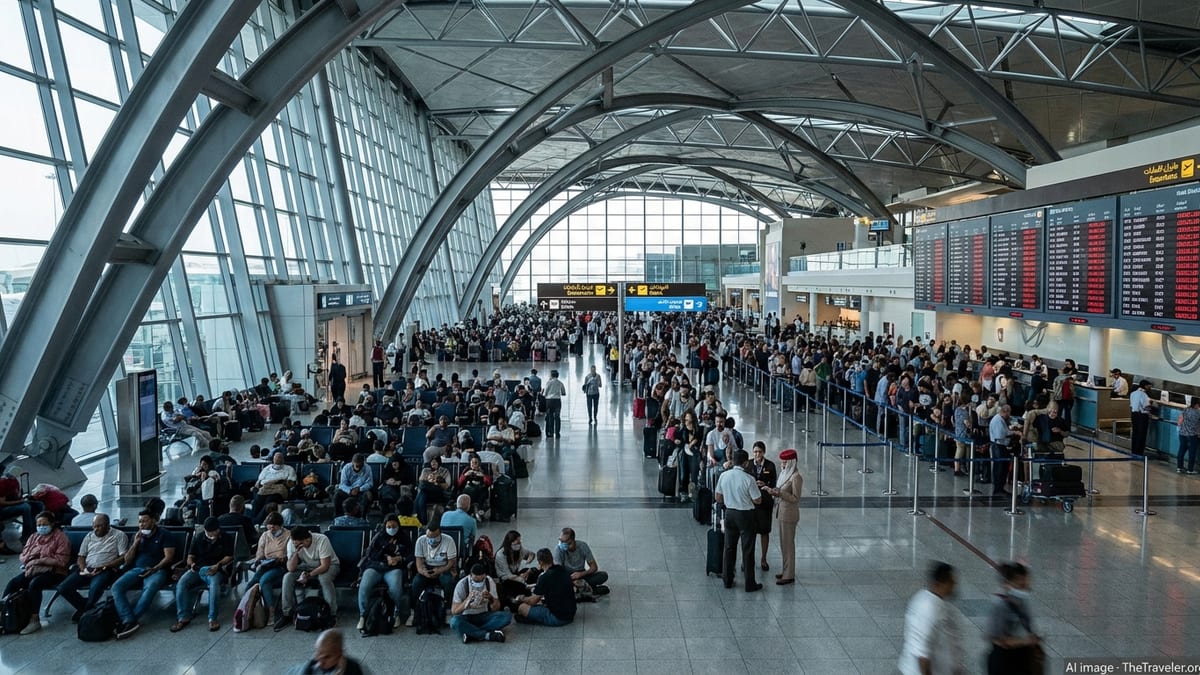
Publicly available information shows that Americans already in the region are being encouraged to exercise increased caution, identify shelter locations, follow local news closely and be prepared for abrupt changes to transportation and airspace. Security alerts describe scenarios in which airports may close with little notice, commercial flights could be disrupted and overland routes might become unsafe, complicating any effort to leave on short notice.
The alert language also stresses that U.S. government assistance may be limited or delayed in the event of a crisis. Travelers are being reminded that consular services can be constrained by local conditions, including active conflict, curfews, damaged infrastructure or restrictions imposed by host governments.
Level 3 and Level 4 advisories reshape travel map
The latest State Department advisory list shows a dense cluster of Level 3 "Reconsider Travel" and Level 4 "Do Not Travel" assessments spanning much of the Middle East. Country pages and regional notices describe heightened concerns related to armed conflict, terrorism, civil unrest, arbitrary detention and the risk of missile or drone attacks that can reach major cities and transport hubs.
According to the official advisory system, Level 3 signals that nonessential travel should generally be deferred, while Level 4 reflects a judgment that the risk to personal safety is severe enough that U.S. citizens should avoid travel entirely. Multiple destinations in the region are now covered by one of these two categories, creating a patchwork of warnings that affect business trips, tourism and family visits alike.
In several Gulf and Levant countries, recent updates have elevated overall risk levels from traditional "increased caution" to "reconsider travel" as cross‑border tensions and the threat of wider conflict have intensified. At the same time, long‑standing Level 4 notices remain in place for states where active fighting, militia activity or state repression make routine travel particularly hazardous.
Americans already in the region urged to prepare
For U.S. citizens who are currently living, working or traveling in the Middle East, public guidance now places greater emphasis on contingency planning. Advisories encourage individuals to maintain a low profile, avoid demonstrations and large gatherings, and keep communication devices charged and backed up. Travelers are also urged to secure essential documents, maintain supplies for several days and map out alternative routes in case primary roads or airports become inaccessible.
Registration in the Smart Traveler Enrollment Program, a long‑standing voluntary tool, is being highlighted as one way for Americans abroad to receive security updates and assist consular staff in reaching them during emergencies. Recent messaging notes that in fast‑moving crises, such as abrupt escalations between regional rivals or attacks on energy infrastructure, timely alerts can help travelers make faster decisions about sheltering in place or seeking to depart.
Published coverage of past evacuations illustrates how quickly conditions can shift. In previous flare‑ups, commercial flights have been suspended, while ports and border crossings have seen unpredictable closures. The current advisories draw on those experiences to caution that those who wait for a clear break in tensions may find that exit options narrow rapidly once a crisis peaks.
Implications for airlines, tour operators and business trips
The heightened risk posture is already influencing decisions by airlines, tour providers and multinational companies, according to industry reporting. Some carriers have adjusted flight paths to avoid certain airspace, while others have reduced frequencies or suspended routes when tensions spike near major hubs. Tour operators that once promoted multi‑country itineraries across the Gulf and Levant now face a landscape in which itineraries must be redesigned or postponed in line with evolving advisories.
Business travel planners are reassessing which trips are essential and what additional safeguards are needed. Companies with staff in high‑risk locations are reviewing evacuation plans, communication protocols and insurance coverage, taking into account the possibility that local authorities could impose sudden curfews, restrict movement or temporarily close airports. The latest U.S. advisories explicitly encourage organizations to factor in the limited capacity of foreign governments and consular services to provide assistance during large‑scale emergencies.
Travel insurance providers, meanwhile, are scrutinizing policy language as war‑related exclusions and government warning clauses become more relevant. Analysts note that some policies may not cover losses if travelers choose to visit destinations that are already under Level 4 "Do Not Travel" advisories, underscoring the importance of checking terms before departure.
What prospective travelers should consider now
For Americans contemplating trips to the Middle East in the months ahead, the evolving advisory landscape points to a more complex planning process. Prospective visitors are being encouraged, in public guidance, to consult the latest country‑specific advisories, monitor reputable news outlets and stay alert to new security alerts that may be issued as regional events unfold.
Risk experts cited in recent media analysis recommend evaluating not only the country‑level rating but also the situation in specific regions and cities, as well as the traveler’s own risk tolerance and purpose of travel. Journeys for essential family or humanitarian reasons may still proceed, but with additional precautions, while discretionary leisure trips are more likely to be postponed until the security picture stabilizes.
Ultimately, the current U.S. messaging frames travel to much of the Middle East as an activity that requires close monitoring, flexible plans and an awareness that conditions can change faster than flight schedules and tour brochures. For now, Americans are being asked to reconsider whether their trips are truly necessary and, if they go, to be prepared for a more uncertain journey than in years past.