


More news on this day
Kuwait International Airport is experiencing a fresh wave of disruption, with nine cancellations and 48 delayed flights reported across regional and long-haul routes, underscoring the fragility of air travel in the Gulf amid an unsettled security backdrop.
Get the latest news straight to your inbox!
Schedule Instability Hits Key Regional and Long-Haul Services
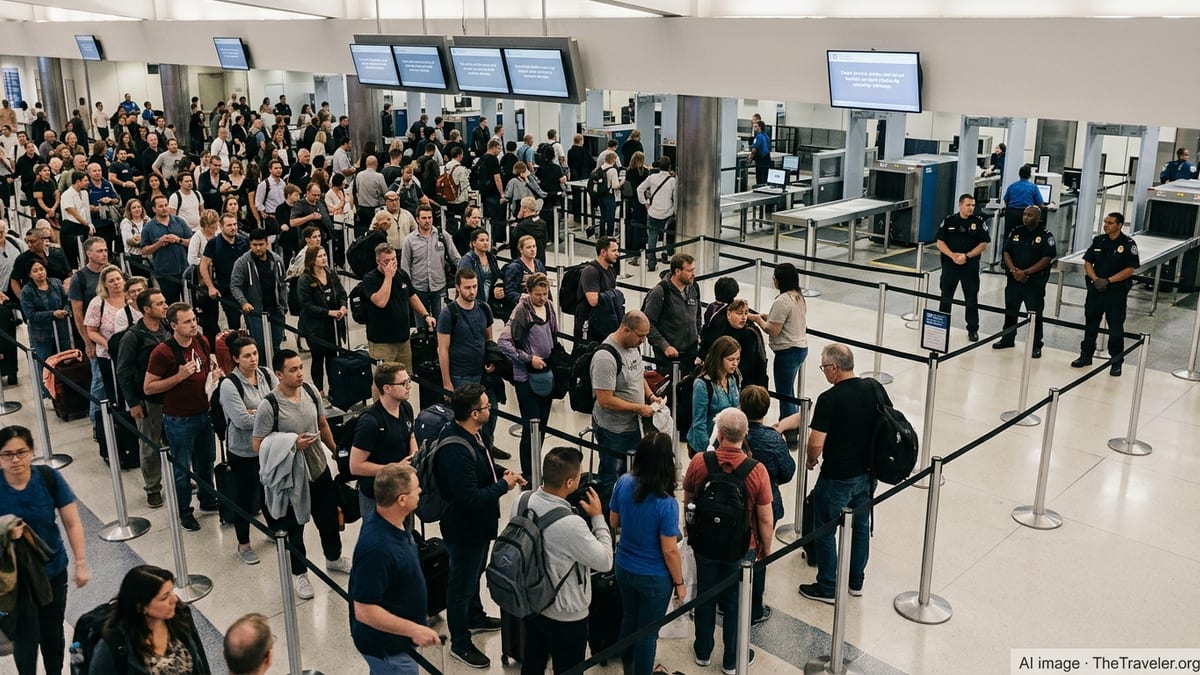
Publicly available operational data on 18 July 2026 indicates that Kuwait International Airport has logged nine cancellations and 48 delays within a single operating window, affecting a mix of regional connections to the Gulf and wider Middle East, as well as long-haul services to Europe and South Asia. The disruption is concentrated around departures and arrivals at Terminals 4 and 5, currently the main passenger facilities while the older Terminal 1 remains out of service.
The pattern of disruption is not restricted to a single carrier or route, suggesting that airport-wide constraints are playing a role in addition to airline-specific schedule adjustments. Delayed rotations on services linking Kuwait City with major hubs such as Istanbul, Abu Dhabi and Hyderabad, as highlighted in regional travel coverage over recent days, have continued to ripple through the timetable, contributing to knock-on delays on onward sectors.
While many flights continue to operate, the elevated rate of late departures and arrivals is creating uncertainty for passengers with tight connections or fixed onward ground transport. Some long-haul routes are still operating near scheduled times, but the overall level of variability remains significantly higher than typical for the pre-crisis period.
For transit passengers, the effect is particularly acute. Long-haul itineraries that route via Kuwait City to destinations in Europe, North America and Asia are exposed both to day-of-operations changes and to earlier strategic decisions by some airlines to pare back or suspend connecting traffic through the airport.
Security Backdrop Continues to Shape Airport Operations
The current bout of disruption comes against a broader regional security backdrop that has affected Kuwait’s airspace since late February 2026. International reporting on aviation in the region describes repeated missile and drone activity targeting infrastructure in Kuwait, prompting an extended closure of Kuwaiti airspace earlier in the year and a phased restart of commercial operations.
In recent days, regional media have described further aerial threats across the Gulf, including activity directed toward areas near Kuwait International Airport. On 16 July, several inbound services to Kuwait from Istanbul, Abu Dhabi and Hyderabad were reported as significantly delayed after military responses to drone activity in Kuwaiti airspace. Those delays appear to have fed into subsequent rotations, adding to the congestion now visible in the airport’s departure and arrival boards.
Government travel advisories issued by foreign ministries in North America and Europe continue to flag the possibility of sudden changes in flight operations to and from Kuwait. These advisories stress that airspace restrictions or renewed security incidents could lead to abrupt cancellations, diversions or extended delays, even after passengers have checked in.
Industry bulletins focused on logistics and cargo movements in the Middle East similarly warn that Kuwait’s airport and airspace remain subject to rapid operational changes. While the airport is open and handling commercial traffic, the wider context means airlines are calibrating schedules cautiously and may alter services on short notice in response to risk assessments.
Terminal Constraints and Gradual Reopening Complicate Recovery
The airport’s infrastructure situation is another factor behind the uneven operating picture. According to updated foreign travel advice, Kuwait International Airport is currently channeling passenger traffic primarily through Terminals 4 and 5, which host Kuwait Airways and Jazeera Airways, while the main Terminal 1 remains closed following earlier damage and refurbishment work.
This constrained terminal configuration follows an extended suspension of flights earlier in 2026 and a gradual reopening sequence for both Kuwaiti and foreign carriers. Aviation sector updates in recent weeks describe a phased return of airlines and routes, with some international services resuming while others remain paused or are operating at reduced frequency. The result is a patchwork network in which certain city pairs see relatively stable operations, while others are still adjusting to new slot patterns and ground-handling capacities.
With parts of the terminal infrastructure offline and a major new Terminal 2 still under development, the airport’s ability to absorb irregular operations remains limited. Even modest disruptions such as minor ground holds, turnaround delays or airspace flow restrictions can cascade into a larger volume of late flights, particularly at peak travel times.
These structural constraints help explain why a single day’s tally of nine cancellations and 48 delays can materialize even without a direct incident at the airport itself. The system is operating with less slack than before, and routine operational challenges are more likely to translate into visible schedule instability for passengers.
Passenger Impact: Missed Connections, Refunds and Rebooking Challenges
For travelers, the operational picture is translating into a range of practical difficulties. Recent online discussions among passengers flying with Kuwait-based carriers describe last-minute cancellations, significant departure delays and challenges securing timely information about rebooking options. In several cases, travelers report that cancellations were communicated less than two days before departure, complicating efforts to rearrange multi-sector itineraries.
Particularly affected are itineraries using Kuwait as a connecting point between Europe, Asia and North America. In light of capacity limits in the terminals and evolving security considerations, some airlines have restricted transit traffic through the airport or temporarily halted certain connecting flows. Passengers who had booked through-tickets involving Kuwait as a hub have reported receiving cancellation notices or being offered refunds rather than straightforward re-routing alternatives.
Published information from airline customer updates indicates that many carriers are emphasizing flexible cancellation and refund policies for affected services, extending the timeframe in which unused tickets can be reimbursed or rebooked. Nevertheless, travelers attempting to replan journeys during the busy summer season are encountering higher fares and limited availability on alternative routings through other Gulf or European hubs.
Travel advisories and independent consumer guidance currently encourage passengers transiting Kuwait to monitor their bookings closely, verify flight status directly with airlines within 24 to 48 hours of departure, and allow additional time for potential security checks or terminal congestion. Those with non-refundable accommodation or tour arrangements at their final destination are being urged to review insurance coverage in case disruptions out of Kuwait trigger missed services elsewhere.
Wider Gulf Aviation Network Feeling the Strain
The disruption in Kuwait is part of a broader pattern affecting air travel across the Gulf since the onset of the current regional conflict. Analytical overviews of the economic and transport impact describe extensive airspace closures, rerouted corridors and thousands of cancellations across multiple states, with Kuwait among the locations experiencing direct infrastructure impacts.
Neighboring hubs have absorbed some of the displaced traffic, but they too are operating with limited flexibility. Recent reporting on airports in the wider region, including Cairo and major Gulf hubs, notes elevated levels of delays and selective cancellations as airlines reconfigure networks and ground operations to accommodate security measures and airspace constraints.
Supply chain and logistics updates for Middle East operations highlight that while passenger flights are gradually resuming, the environment remains highly dynamic. Airport operators and carriers across the region are recalibrating schedules in response to evolving risk assessments, regulatory directives and infrastructure readiness, making long-range planning difficult for both travelers and cargo customers.
For Kuwait International Airport, the tally of nine cancellations and 48 delays in a single snapshot illustrates both the progress and the fragility of its recovery. Commercial operations have resumed and key regional and international connections are back on the map, but the combination of security uncertainty, infrastructure limitations and tight operating margins continues to expose passengers to an elevated risk of last-minute schedule changes.