


More news on this day
Commercial aviation in the Gulf is entering a cautious stabilisation phase after seven days of heightened US–Iran hostilities, with Emirates and Etihad now issuing updated guidance for passengers traveling through the United Arab Emirates.
Get the latest news straight to your inbox!
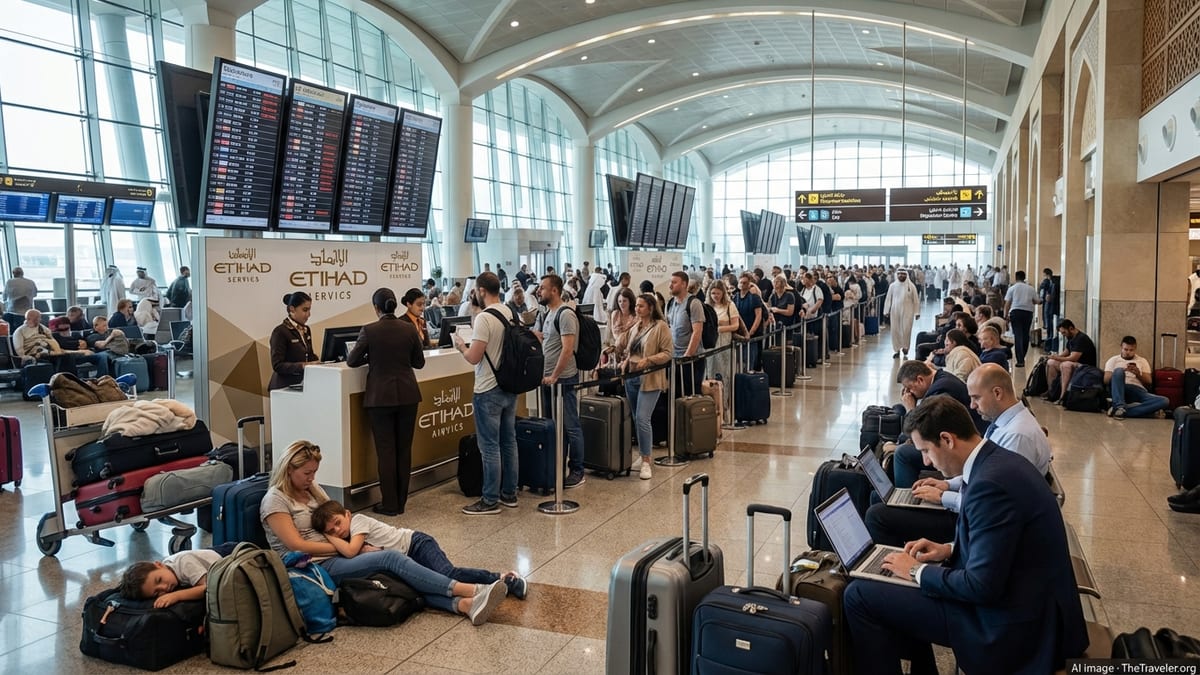
Flight operations stabilise but targeted disruptions persist
Published coverage indicates that flights into and out of the UAE are largely operating again, although the past week has brought a patchwork of suspensions, delays and reroutings across the wider region. After initial airspace restrictions affected multiple Gulf states, services through Dubai and Abu Dhabi have resumed on a more regular basis, supported by local air defence measures and close coordination between carriers and aviation authorities.
Reports on regional aviation show that Emirates is flying the bulk of its global network, with most long haul services operating broadly in line with schedule. Some routes have experienced extended flight times as aircraft skirt sensitive airspace, while occasional delays continue to be reported as congestion builds on alternative corridors over the Arabian Sea and Oman.
For Etihad, the situation has been more fluid on short haul regional sectors. Information carried by Gulf-based media describes how the Abu Dhabi airline has cancelled or rerouted select flights after temporary disruptions at neighbouring airports, while maintaining core long haul links to Europe, Asia and North America. Passengers are being urged, via airline and airport channels, to monitor flight status up to departure.
Travel advisories from several governments continue to flag an elevated risk environment following the US–Iran confrontation and subsequent missile and drone activity. These notices emphasise that while UAE airports remain operational, the wider regional picture can change quickly, and travellers should be prepared for last minute schedule adjustments.
Emirates keeps network largely intact with flexible options
Emirates’ latest travel updates outline a network that is close to full scale, even as the carrier navigates ongoing geopolitical uncertainty. Publicly available information shows the Dubai based airline operating to more than 130 destinations, with only a small number of routes subject to continuing disruption linked to the recent conflict.
The airline’s advisory pages highlight a continued focus on flexibility for affected customers. Travellers holding tickets on services impacted by conflict related airspace issues are being offered the option to rebook within a defined window or seek refunds, depending on fare conditions. Some regional media coverage notes that Emirates has accommodated passengers on alternative dates where capacity allows, although specific policies can vary by route and booking channel.
Operationally, flight tracking data and airport reports indicate that Emirates has at times adjusted routings on journeys that would normally overfly Iran or neighbouring conflict zones. These changes, designed to maintain separation from sensitive areas, have added extra flying time on some services but allowed the airline to keep key long haul corridors open between Europe, Asia, Africa and the Americas.
Despite the turbulence of the past week, Emirates continues to position Dubai International Airport as a primary transit hub for travellers seeking to avoid less stable parts of the region. Industry analysis describes Dubai as one of the fastest airports in the Gulf to restore scheduled operations after each wave of tension, lending a degree of predictability for onward connections.
Etihad fine-tunes Middle East network after short haul disruption
Etihad Airways has issued its own set of updates reflecting a more complex picture on its shorter regional routes. Coverage by UAE based outlets details how a recent escalation led to intermittent disruption at several Gulf airports, prompting the Abu Dhabi carrier to cancel or turn back selected flights, particularly on high frequency sectors such as Bahrain.
In response, Etihad has been refining its schedule across the Middle East, temporarily trimming frequencies on some routes while protecting long haul connectivity through Zayed International Airport. According to airline communications and trade bulletins, Etihad has been consolidating passengers from cancelled flights onto remaining services where seats are available, and in some cases rerouting travellers via alternative gateways in the region.
The airline has also implemented flexible booking measures for customers directly affected by the conflict related changes. Publicly available notices describe options to modify travel dates or request refunds for journeys falling within specified travel periods, especially for tickets issued before the latest spike in tensions. Travellers are being encouraged to use digital channels to manage bookings, in order to reduce crowding at airport ticket desks during peak disruption windows.
While Etihad’s overall network remains significantly active, analysts observe that the carrier is taking a more conservative approach than some peers on flights that traverse or approach the most contested airspace. This has resulted in a small but visible reduction in regional capacity compared with schedules published before the current phase of the US–Iran confrontation.
Government advisories highlight changing risk calculations
International travel advisories issued over recent days underline the extent to which geopolitical risk has become a central factor in trip planning to and through the UAE. Updated guidance from several Western governments now references the possibility of further missile or drone activity following the US–Iran confrontation, even as diplomatic channels work to prevent a broader escalation.
These notices generally stop short of advising against all travel to the UAE, instead urging heightened situational awareness and emphasising that the regional security situation could deteriorate with limited warning. They also stress the importance of registering contact details with consular services, monitoring local media and following instructions from airport and airline staff in the event of renewed strikes that could affect airspace availability.
For airlines such as Emirates and Etihad, these advisories translate into additional obligations to inform passengers about evolving risks while maintaining smooth operations wherever possible. Industry commentators note that carriers are having to balance commercial imperatives with conservative routing and scheduling decisions, particularly on flights that might otherwise pass near Iranian territory or other potential flashpoints.
Travel insurance providers have likewise been revisiting coverage terms related to war and conflict disruption, an area that has grown more complex as aviation corridors in the Gulf are periodically affected by missile alerts. Travellers are being advised in public guidance to review policy wording carefully to understand what is covered in the event of cancellations or lengthy delays linked to the current tensions.
Advice for travellers transiting Dubai and Abu Dhabi
For passengers considering travel through Dubai or Abu Dhabi in the aftermath of the seven day flare up, the broad message from published information is one of cautious confidence, coupled with practical preparation. Flights are operating in significant numbers, but schedules remain more susceptible than usual to late changes as the regional security picture evolves.
Travel experts and aviation analysts suggest that passengers build in longer connection times, especially when piecing together itineraries involving separate tickets. Choosing through tickets on a single carrier, such as Emirates via Dubai or Etihad via Abu Dhabi, can reduce the risk of missed onward flights during disruption, since airlines are more likely to rebook affected customers on the next available service.
Passengers are also being encouraged, via airline and airport communications, to check in online, verify flight status repeatedly before departure and arrive earlier than usual at the airport to account for possible security or document checks. Flexibility in planning, including a willingness to adjust travel dates by a day or two if conditions change, is being framed as a key advantage in navigating this period.
With international diplomacy seeking to cement a more lasting reduction in hostilities between the United States and Iran, aviation observers describe the current phase as a test of resilience for Gulf hub carriers. How Emirates and Etihad manage their networks over the coming weeks is expected to shape not only passenger confidence in the UAE as a transit hub but also broader perceptions of the region’s reliability as a crossroads for global air travel.