


More news on this day
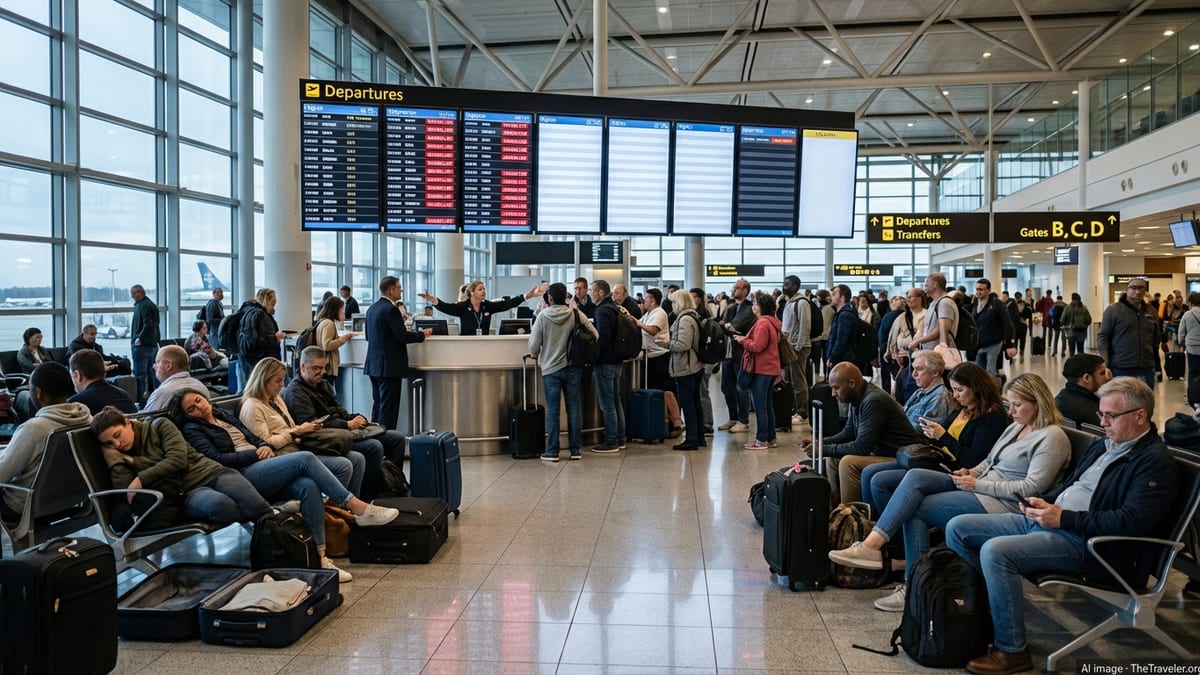
Kuwait Airways has rescheduled most of its flights after Kuwaiti airspace was closed on Saturday, July 18, 2026, prompting urgent travel alerts and leaving thousands of passengers facing delays, missed connections, and rapidly changing departure times at Kuwait International Airport.
Get the latest news straight to your inbox!
Airspace Closure Triggers Rapid Network Overhaul
According to publicly available information from regional media and airline statements, Kuwait airspace was closed on July 18 for security and operational reasons, forcing a sudden halt and subsequent reshaping of Kuwait Airways’ flight program. The carrier announced that most of its scheduled services for the day would be moved to alternative times, rather than outright cancelled, as it worked to keep aircraft and crews positioned across its network.
Coverage in regional outlets indicates that the airline described the situation as a broad rescheduling exercise, affecting the majority of flights departing from and arriving into Kuwait International Airport. The updated timings were loaded progressively into reservation systems as the carrier coordinated with airport authorities and air traffic management to secure new slots once the airspace began to reopen.
Operational data for Kuwait International Airport on July 18 shows irregular departure and arrival patterns for Kuwait Airways, with several services pushed back by multiple hours. Industry observers note that such large scale same day retiming typically reflects constraints on both airspace capacity and ground infrastructure as airlines seek to recover across interconnected routes.
The disruption comes in the context of an already fragile operating environment for Kuwait’s main gateway following earlier closures and security incidents in 2026. Travel advisories and previous capacity reductions had already led to tighter schedules, leaving airlines with less flexibility to absorb further shocks.
Urgent Travel Alerts and Passenger Guidance
Publicly shared messages from Kuwait Airways emphasize that passengers should not proceed to the airport before confirming that their flight is operating on the updated schedule. The carrier has urged travelers to check their latest departure and arrival times through official customer service channels and digital platforms, highlighting that previously issued itineraries may no longer be valid.
Reports indicate that Kuwait Airways has framed the disruption as a safety driven response to the airspace closure, while encouraging passengers to remain alert to further changes as the situation stabilizes. Travelers are being advised to monitor their bookings frequently on the day of departure and to allow additional time at the airport once their flights are reconfirmed.
In addition to schedule checks, passengers are being directed toward call centers and local ticket offices for rebooking and clarification on onward journeys. For many travelers, especially those on multi leg itineraries, the principal challenge is not only leaving Kuwait but also safeguarding connections in Europe, Asia and other parts of the Middle East that depend on tightly timed transfers.
Consumer forums and social media posts show that some passengers have received short notice notifications about revised departure times or aircraft changes. Others report uncertainty over luggage handling and minimum connection times where downstream flights on partner or non partner airlines may not have been adjusted in line with Kuwait Airways’ revised operations.
Major Disruption at Kuwait International Airport
Kuwait International Airport has been operating under constrained conditions for much of 2026 due to the broader regional security situation and earlier damage to airport facilities. Recent government travel advice notes that the airport is currently handling reduced schedules and that only certain terminals are open, concentrating traffic for Kuwait Airways and other local carriers.
The latest airspace closure compounded those pressures, as aircraft already on the ground could not depart as planned and inbound flights faced delays, diversions, or last minute route adjustments. Published flight tracking data shows irregular arrival waves into Kuwait on days surrounding the closure, with knock on effects including congested check in areas and longer waits at security and immigration when operations resume.
Airline scheduling specialists point out that when an airport is already running a thinned but tightly packed timetable, even a few hours of unexpected closure can displace entire rotations of aircraft. Crews may time out, aircraft may not reach maintenance bases as planned, and overnight positioning flights can be lost, creating a multi day recovery challenge rather than a disruption limited to a single afternoon.
Travel industry analysts following the Gulf region say that Kuwait’s hub has become particularly vulnerable to such shocks in 2026 because of overlapping constraints: airspace restrictions linked to the wider conflict, physical damage and repairs at airport infrastructure, and a reliance on complex connecting traffic that leaves little redundancy in the system.
Impact on Connecting Journeys and Regional Networks
The airspace closure and resulting rescheduling have been especially disruptive for passengers using Kuwait as a connecting hub. Public discussion on travel forums in recent weeks already highlighted limitations on transit traffic through Kuwait International Airport, including reduced or suspended options for same day onward connections on certain routes.
With most flights on July 18 retimed rather than fully cancelled, many travelers now face misaligned connections where onward flights on other airlines are operating to the original schedule. That dynamic particularly affects itineraries linking South and Southeast Asia with Europe and North Africa, where Kuwait Airways has marketed one stop connections that depend on narrow transfer windows.
Regional media coverage and recent advisories indicate that other Gulf and Middle Eastern hubs have also been adjusting operations because of shifting airspace restrictions and security considerations. The latest Kuwait disruption therefore adds to a broader pattern of detours, longer routings, and irregular schedules throughout the region, complicating rebooking options for passengers who need alternative paths to their destinations.
Industry observers stress that travelers with imminent journeys touching Kuwait should verify not only their Kuwait Airways segments but also any connecting services, hotel reservations, and ground transport. Because schedule changes can cascade through an entire trip, passengers may need to contact multiple providers to realign bookings once their primary flights are rescheduled.
What Travelers Can Do Next
Publicly available guidance from airlines, airports, and diplomatic travel advisories suggests several practical steps for those affected by the Kuwait airspace closure and subsequent rescheduling. Passengers are encouraged to rely only on official airline channels for confirmation of new timings, and to keep contact details up to date so that automated notifications can reach them quickly.
Travel experts advise that passengers who no longer wish to travel, or whose trips are no longer viable because of missed connections, should review the applicable fare rules and any temporary policies introduced after recent closures. Earlier phases of disruption in 2026 prompted Kuwait Airways and other carriers in the region to offer fee waivers or expanded refund options in certain circumstances, and similar measures may apply depending on the date of ticket issuance and the extent of schedule changes.
Given the evolving regional security context, travelers with flights scheduled in the coming days and weeks are also being urged by various governments to keep overall travel plans under review. That includes monitoring official advisories for Kuwait and neighboring countries and considering flexible arrangements for accommodation and onward travel where possible.
For now, Kuwait Airways’ large scale rescheduling on July 18 underlines how sensitive air travel through the Gulf remains to sudden operational restrictions. While the carrier is working to operate as many flights as possible under revised timings, passengers transiting or departing from Kuwait face a period of heightened uncertainty and are likely to experience longer journeys, altered routings, and busier airport processes as the network recovers.