


More news on this day
A Florida-based evangelist who preached to fellow passengers during a ground delay has been removed from an Alaska Airlines flight and temporarily barred from flying with the carrier’s brands, according to multiple reports and viral videos circulating online.
Get the latest news straight to your inbox!
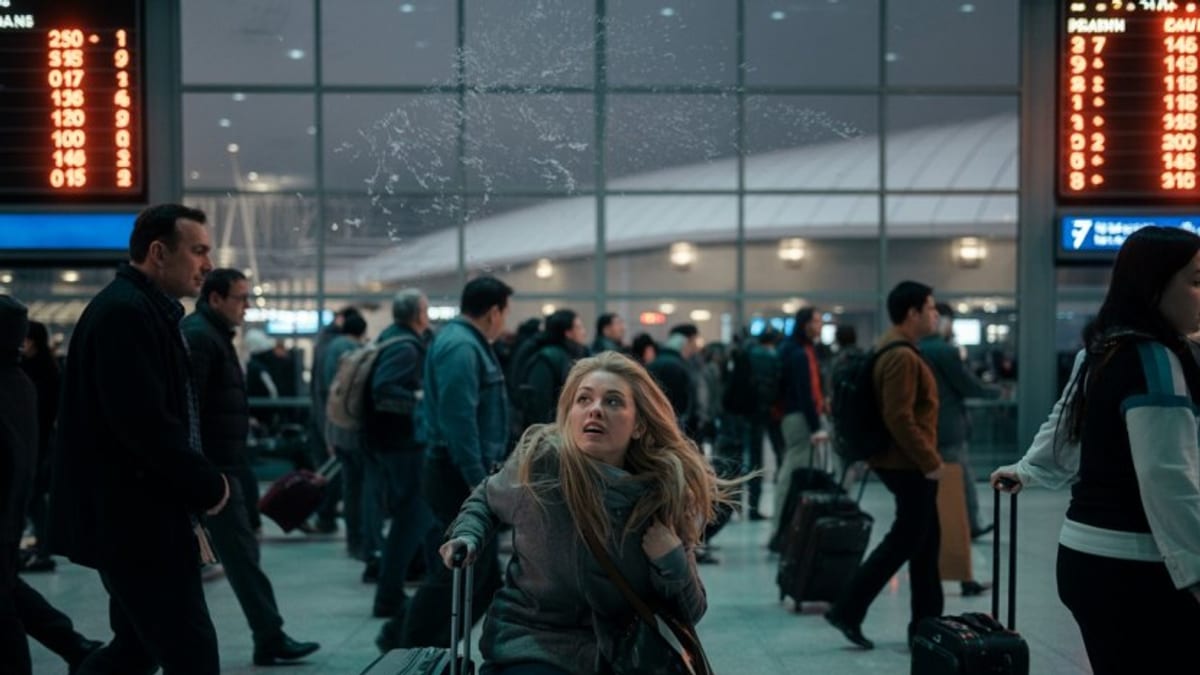
Viral video shows tense exchange before removal
Video clips circulating on social media show the woman, identified in reports as a Florida evangelist and online content creator, standing in the aisle of an Alaska Airlines aircraft and addressing passengers about her faith while the plane was still on the ground. The cabin appears full, with overhead bins closed and travelers seated, suggesting boarding had been completed and departure was delayed.
In the footage, the woman speaks in a raised voice and refers to herself as a preacher while urging passengers to listen. Some travelers look away or put on headphones, while others record the scene on their phones. Flight attendants can be seen moving toward her and calmly asking her to sit down so the aircraft can prepare for departure.
Additional clips show the situation escalating as crew members instruct the passenger to stop preaching and comply with their directions. When she continues to speak, uniformed personnel return and inform her she will need to leave the aircraft. Passengers are heard reacting in the background as she collects her belongings and walks up the aisle, continuing to frame the incident as religious persecution.
Once off the plane, the woman records herself at the gate area, telling viewers she has been removed from the flight because she “shared the gospel” during a delay. She portrays the experience as evidence of discrimination and encourages supporters to speak out against the airline’s response.
Airline cites disruption and safety rules
Publicly available information about airline policies indicates that carriers, including Alaska Airlines, reserve broad discretion to remove passengers whose behavior is considered disruptive, unsafe or noncompliant with crew instructions. Standard conditions of carriage generally give flight captains and cabin crew final authority over what is permitted in the cabin before departure.
Reports summarizing the incident state that the woman was told several times to sit down and stop addressing the cabin so that pre-departure procedures could continue. When she declined, crew members treated the behavior as disruptive to the operation of the flight rather than as protected religious expression, and ground staff arranged for her removal.
Alaska Airlines has not issued a detailed public statement specific to this passenger’s case, according to coverage reviewed by TheTraveler.org. However, previous policy explanations from the carrier emphasize that any activity, religious or otherwise, may be curtailed if it interferes with safety briefings, announcements, crew instructions or the comfort of other passengers in a confined space.
Reports also indicate that, following the incident, the woman received notice that she would not be allowed to travel on Alaska Airlines, Hawaiian Airlines or regional affiliate Horizon Air while the company reviews recent events involving her flights. Travel bans of this kind are typically handled internally by airline security and customer relations departments and are not part of any government no-fly list.
Debate over faith, free speech and captive audiences
The confrontation has ignited a wider debate over what constitutes acceptable expression on commercial flights, where passengers cannot easily walk away from unwanted interactions. Supporters of the evangelist argue that she spoke briefly, did not threaten anyone and should have been allowed to express her beliefs, especially during a delay when many travelers are already frustrated.
Critics counter that unsolicited preaching inside an enclosed cabin places a captive audience under pressure, particularly when delivered at a raised volume and framed in confrontational terms. They point out that flight attendants are tasked with maintaining order, de-escalating conflicts and ensuring that everyone is able to hear safety instructions and operational updates from the crew.
Legal analysts quoted in previous aviation and civil liberties coverage note that airlines are private companies with their own codes of conduct, and that the cabin of a commercial aircraft is typically treated as a controlled workplace environment rather than a public forum. In practice, that means speech of many kinds, including political campaigning, aggressive solicitation and proselytizing, may be limited if staff believe it could lead to conflict or compromise safety.
Social media reaction has underscored this divide. Some commenters praise Alaska Airlines for backing its crew and say they would feel uncomfortable if any passenger, regardless of faith or ideology, took control of the cabin to deliver a message. Others accuse the airline of hostility to religion and call for boycotts, arguing that the removal reflects a broader cultural tension around open religious expression in shared spaces.
Flight delays add pressure inside the cabin
The episode unfolded during a ground delay, a period that can heighten tensions for both crews and passengers. Aviation studies and federal data on U.S. flight operations show that delays, whether caused by weather, congestion or maintenance, are common and can significantly affect traveler stress levels and airline operations.
When an aircraft is loaded but unable to depart, crews must balance regulatory requirements, such as time limits on tarmac delays, with passenger expectations and operational constraints. The cabin environment can become particularly sensitive as travelers worry about missed connections, late arrivals and limited access to food or fresh air. In that context, behavior that might be tolerated more easily in a terminal can feel more intrusive at the gate or on a sealed aircraft.
Industry observers say this environment can amplify conflicts around personal space, noise and etiquette. Disputes over seat reclining, phone calls, overhead bin use and mask wearing in recent years have all led to high-profile incidents and, in some cases, permanent bans from particular airlines. The Florida evangelist’s case fits into that broader pattern of everyday disagreements becoming flashpoints in crowded cabins already strained by delays.
For carriers, each disruption has operational and financial implications, from potential departure delays to the cost of rebooking removed passengers and repositioning aircraft and crews. As airlines continue to rebuild schedules and manage tight staffing, many have signaled that they will back employees who take action when they feel order on board is at risk.
Implications for travelers and airline policies
Travelers watching the latest video-driven controversy may be left wondering what is and is not allowed on board. While exact wording differs by company, most U.S. carriers specify that passengers must follow crew instructions at all times and avoid behavior that could be considered harassing, threatening, excessively loud or otherwise disruptive to others.
Experts in aviation and passenger rights often stress that context matters. Casual conversations about religion, politics or personal beliefs between willing participants are generally not an issue. Problems tend to arise when one person addresses the entire cabin, blocks aisles, refuses to sit, ignores repeated requests from the crew or continues an activity after other passengers or staff have clearly objected.
The Alaska Airlines case also highlights how quickly such disputes can move from an in-flight disagreement to a wider reputational battle. Within hours, clips of the incident were circulating widely online, with viewers forming judgments based on short, edited segments rather than full accounts from everyone involved. That dynamic places additional pressure on airlines to document their decisions and on travelers to understand that behavior on board is likely to be recorded and shared.
For now, the Florida evangelist at the center of this story appears focused on framing the experience as a test of faith and a rallying point for supporters. Alaska Airlines, for its part, is reported to be conducting an internal review while maintaining a temporary bar on her travel with its brands. As air travel demand remains strong and cabins stay full, similar clashes over expression, etiquette and safety are likely to continue surfacing at the intersection of faith and flight.