


More news on this day
Consecutive cancellations on Delta Air Lines’ Lagos-Atlanta service in late August have stranded scores of travelers at Murtala Muhammed International Airport, exposing ongoing challenges around disruption management and passenger protections on one of West Africa’s key transatlantic routes.
Get the latest news straight to your inbox!
Back-to-back Lagos-Atlanta Cancellations Disrupt Travel
Published reports from Nigerian media indicate that Delta’s Lagos-Atlanta operations were hit by two closely spaced disruptions affecting flight DL9895, which was scheduled to depart Murtala Muhammed International Airport for Hartsfield–Jackson Atlanta International Airport on Sunday, August 23, 2026. The flight was cancelled, leaving passengers unable to depart as planned.
According to subsequent coverage, many of the same travelers were rebooked on another Lagos-Atlanta service set for Tuesday, August 25. That flight was also disrupted, with reports describing either a further cancellation or significant delay that again prevented timely departure. Some passengers described being effectively stranded at the airport for days while seeking alternative options to reach the United States.
Separate operational data compiled by independent flight-tracking platforms show that Delta typically operates near-daily nonstop services between Atlanta and Lagos, indicating that the affected flights occurred on a route that is an important transatlantic link for Nigerian, US, and connecting passengers. The consecutive disruptions therefore had outsized impact, concentrating a large number of travelers onto a limited number of alternative seats.
Confusion Over Rebooking, Delays and Operational Explanations
Accounts compiled by local outlets describe a period of uncertainty for Lagos-based passengers after the first cancellation. Travelers reportedly received notifications that they had been moved to a new departure date, only to later learn that the replacement service would not operate as originally planned. Some passengers stated that this sequence left them reliant on on-the-day updates at the airport, rather than clear advance communication.
Information shared with Nigerian media attributes one of the disruptions to crew-availability constraints, a scenario that can arise when pilots or flight attendants reach regulated duty limits or are displaced by earlier delays. Additional reporting points to an earlier maintenance-related issue on the Lagos-Atlanta aircraft around the same period, suggesting that operational reliability on the route had already been under pressure.
At the same time, independent schedule and on-time-performance data for Delta’s regular Lagos–Atlanta flight numbers around late August show a mix of near-on-time operations and significant delays, including one arrival from Lagos into Atlanta delayed by more than five hours. While not directly tied to the DL9895 cancellations, those figures provide context for a route that, during that week, experienced multiple forms of disruption.
Stranded Passengers Highlight Questions on Support and Care
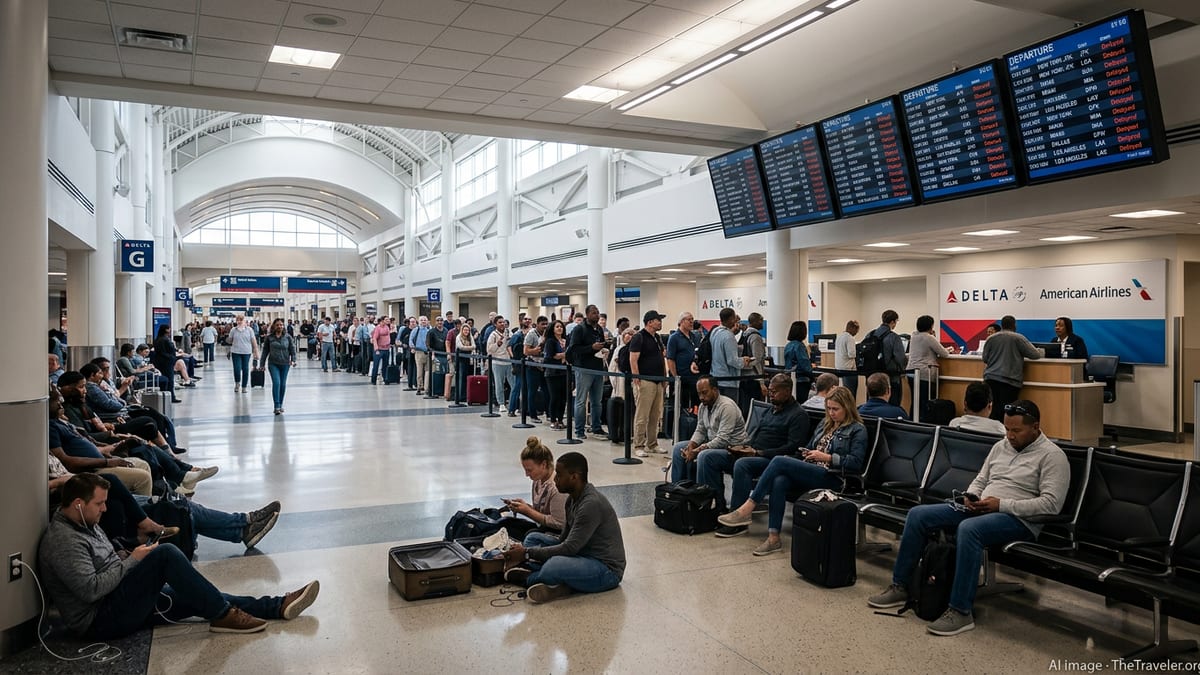
Coverage in Nigerian newspapers notes that some stranded passengers reported not receiving hotel accommodation from the airline after the cancellations, despite being unable to depart on their original or rebooked dates. Travelers described sleeping in airport seating areas and relying on personal funds for meals while waiting for new travel arrangements, deepening frustration over the handling of the incident.
Publicly available customer-service documentation from Delta outlines that in the United States and certain other jurisdictions, the airline may provide hotel, meal, and transportation vouchers when disruptions are considered within the carrier’s control. However, the application of these commitments can vary by region and by the precise cause of the cancellation, and published guidance encourages affected passengers to submit reimbursement requests for review when they believe they incurred out-of-pocket expenses due to a controllable disruption.
The Lagos-Atlanta situation illustrates how complex that distinction can be in practice. While one communication to customers cited crew-availability constraints, reports from aviation-focused outlets referenced operational and technical factors in the same period. For passengers stranded far from home, determining whether a disruption is categorized as controllable, and what support is available as a result, can be difficult without detailed written explanations from the carrier.
Passenger Rights Under International and Nigerian Rules
Legal and aviation commentators in Nigeria have used the Lagos-Atlanta cancellations to revisit the issue of passenger compensation on international flights. Analysis published in local business media points out that, in many jurisdictions, travelers are entitled to specific remedies when airlines cancel flights without sufficient notice and when the reasons are not classified as extraordinary circumstances, such as severe weather or airspace closures.
Nigeria’s own Civil Aviation Regulations include provisions on compensation and care for passengers affected by cancellations and long delays on international services from Nigerian airports. These rules address entitlements such as meals, hotel accommodation, and refunds or rerouting, depending on the length of delay and distance of the flight. Commentaries referencing the late-August Lagos-Atlanta disruptions suggest that affected passengers may have scope to pursue formal claims if they believe the support provided fell short of those standards.
Industry observers add that resolving such disputes often requires travelers to retain boarding passes, booking confirmations, and any written notices of cancellation or delay. These documents can be important when submitting claims to airlines or, if necessary, escalating cases to regulators or consumer-protection bodies. In the Lagos case, reports indicate that some passengers have begun compiling documentation with a view to seeking redress.
Pressure on Delta’s Reliability and Lagos-Atlanta Connectivity
The events in Lagos come at a time when Delta’s broader operational reliability has been under increased scrutiny from frequent flyers and travel commentators. Recent months have seen heightened online discussion of cancellations, rolling delays, and crew-availability challenges across parts of the airline’s network, with social-media users and forum contributors documenting missed connections and extended airport stays on a range of routes.
Despite that backdrop, schedule data show that Delta continues to operate approximately seven weekly nonstop services between Atlanta and Lagos, underscoring the strategic importance of the Nigerian market in its Africa network. For many travelers, especially those connecting to US domestic destinations via Atlanta, the direct Lagos flight is a key link that avoids additional connections through European hubs.
Aviation analysts note that maintaining confidence in this corridor will likely require a focus on consistent operations and clearer communication during disruptions. The consecutive cancellations that left Lagos-Atlanta passengers stranded in late August have become a focal example of how quickly traveler trust can be tested when contingency plans, on-the-ground support, and transparent explanations do not keep pace with operational challenges.