


More news on this day
The United States has reissued a Level 4 “Do Not Travel” advisory for Iraq, warning American citizens against visiting the country under any circumstances as security risks intensify and regional tensions raise the prospect of sudden disruption to air travel and essential services.
Get the latest news straight to your inbox!
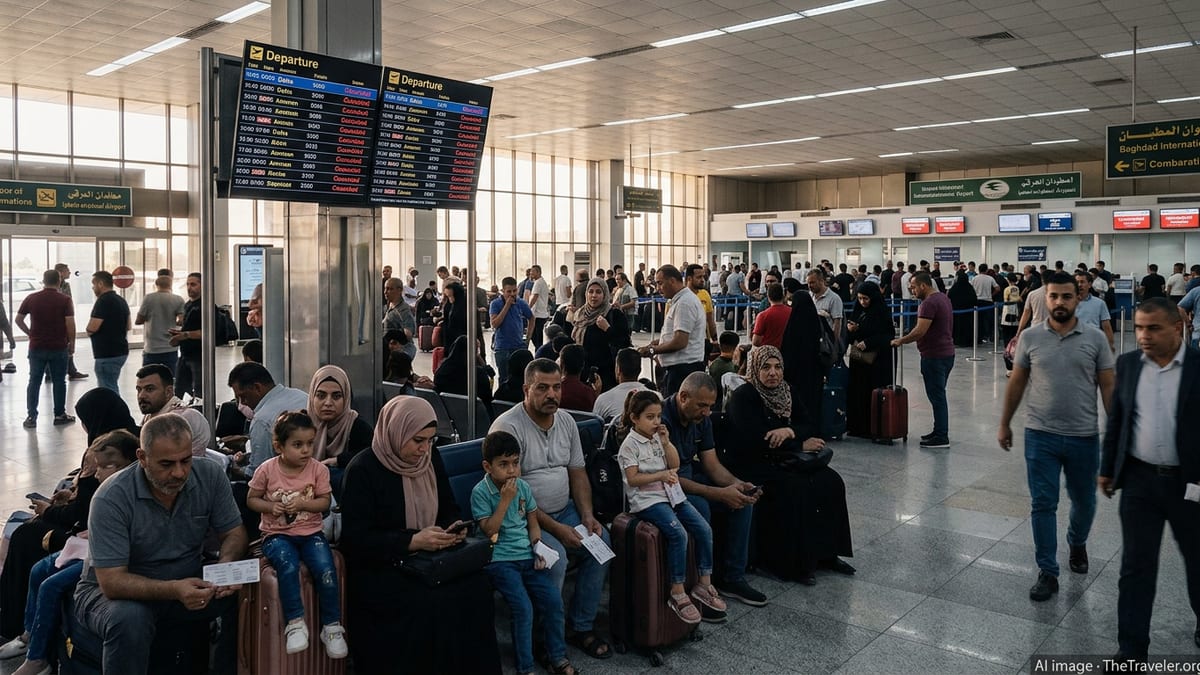
Advisory Raised Amid Intensifying Security Threats
According to publicly available information on the U.S. State Department’s travel advisory system, Iraq is now listed at Level 4, the highest warning level, with a notice dated October 23, 2026. The advisory urges U.S. citizens not to travel to Iraq at all, highlighting terrorism, kidnapping, armed conflict, civil unrest, and the U.S. government’s limited ability to provide emergency services as key concerns.
Recent media coverage reports that the updated guidance stresses that individuals should not travel to Iraq “for any reason” and underscores that those already in the country face elevated personal-security risks. The alert follows a series of incidents linked to militant groups and ongoing instability, including attacks on Iraqi security forces and infrastructure in 2026, which analysts say illustrate the persistence of insurgent and extremist activity.
Regional developments have also contributed to the renewed warning. Travel-risk bulletins from several governments describe a volatile environment influenced by broader tensions between Iran and the United States and by missile and drone incidents affecting U.S. interests in the wider Middle East. These trends, observers note, increase the likelihood of sudden escalations that can affect foreign travelers with little notice.
Key Risks: Terrorism, Kidnapping and Civil Unrest
Public State Department material and allied government advisories characterize the threat landscape in Iraq as a combination of terrorism, violent extremism, organized crime, and intermittent armed clashes. Islamic State cells remain active in parts of the country, particularly in rural and disputed areas, where they have mounted lethal attacks against Iraqi police and security forces in 2026. Such incidents, while often geographically targeted, demonstrate that insurgent capability has not fully receded.
The risk of kidnapping for ransom or political leverage is singled out as a major concern. U.S. and other Western nationals, as well as dual citizens and aid workers, are described in open reporting as potential targets, particularly outside heavily protected zones. Non-state armed groups, some aligned with regional powers, retain significant presence and mobility, complicating any security response.
Civil unrest and protests add another layer of unpredictability. Demonstrations linked to political disputes, economic grievances, and foreign policy issues have periodically flared in Baghdad and other urban centers in recent years. Travel advisories note that such events can turn violent with little warning, bringing road closures, clashes with security forces, and localized curfews that could leave travelers stranded or cut off from services.
Limited Consular Support and Movement Restrictions
Publicly available guidance emphasizes that the U.S. government’s capacity to assist its citizens inside Iraq is significantly constrained. Embassy and consulate operations have long been subject to strict security rules, and official U.S. personnel in-country are required to live and work under tightly controlled conditions, with travel often restricted and subject to special authorization.
The advisory language explains that in the event of a crisis, there may be limited or no ability to provide on-the-ground emergency support, including medical evacuation or secure transportation out of affected areas. In practical terms, this means that U.S. citizens who choose to remain in or travel to Iraq may not be able to rely on rapid consular intervention if the security situation deteriorates.
Regional security alerts distributed through official channels also urge Americans across the Middle East to anticipate possible flight cancellations, airspace closures, and disruptions to commercial routes. For travelers in Iraq, this raises the prospect that exit options could narrow quickly during a sudden escalation, complicating any attempt to depart the country on short notice.
Impact on Air Travel, Tourism and Business Trips
The renewed “Do Not Travel” classification effectively halts most leisure travel by U.S. citizens to Iraq. Specialized tourism operations that had been marketing historical and cultural itineraries, particularly to sites in the Kurdistan Region, now face an environment in which American travelers are officially advised to stay away, and insurers may decline coverage or attach stringent conditions.
Business travel is also affected. Industry risk assessments shared publicly in recent months note that multinational firms are reviewing movements of staff into Iraq and, in some cases, shifting meetings and project work to neighboring countries with lower advisory levels. Corporate travel-security managers are reported to be recalibrating risk thresholds, with some organizations requiring senior-level approval and dedicated protective arrangements for any unavoidable visits.
Airline networks into Iraq have already been under pressure from regional instability. Aviation-tracking and industry reports show that several carriers have periodically suspended or adjusted routes to Baghdad and Erbil in 2026 amid concerns over missile and drone activity and broader Middle East tensions. The latest U.S. warning reinforces expectations that flight schedules may remain fluid and subject to last-minute change.
Guidance for U.S. Citizens Currently in Iraq
For U.S. citizens who are already in Iraq, recent coverage of the advisory indicates that they are strongly urged to reassess the necessity of remaining in-country and to prepare plans that do not depend on U.S. government assistance. Travelers are encouraged to ensure that their travel documents remain valid, maintain access to funds, and identify multiple exit routes by air and, where feasible, overland through neighboring states whose borders are open.
Public guidance recommends that individuals enrolled in official traveler-notification programs monitor security alerts closely, stay in regular contact with family or employers, and coordinate security measures with host organizations. Employers and nongovernmental groups with staff in Iraq are being advised in risk bulletins to review contingency and evacuation planning, confirm communication protocols, and verify that staff understand shelter-in-place and relocation procedures.
Security agencies and consular advisories from other governments, including partners such as Australia and New Zealand, currently echo many of the same themes, describing Iraq as an environment where the security situation can deteriorate rapidly and advising against travel. For American travelers weighing future plans, the consistent message across multiple national travel-advice systems is that Iraq remains a high-risk destination where non-essential trips should be deferred and existing stays carefully reconsidered.