


More news on this day
Etihad Airways’ long-awaited nonstop route between Calgary and Abu Dhabi has officially taken off, but its debut comes just as fresh federal travel advisories refocus attention on security, airspace disruptions and legal risks in the United Arab Emirates and the wider Middle East.
Get the latest news straight to your inbox!
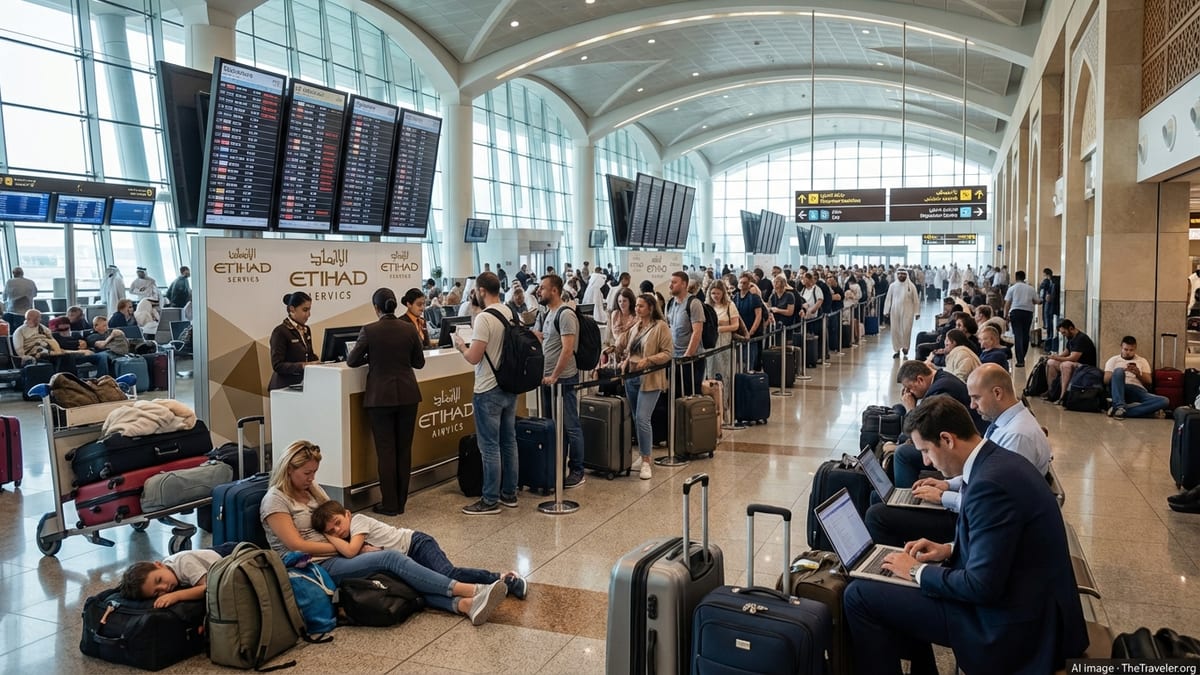
Historic Gulf–Calgary link lifts Western Canada’s connectivity
The first Etihad Airways service between Abu Dhabi and Calgary landed at Calgary International Airport on October 25, 2026, marking the start of Western Canada’s only direct link to the United Arab Emirates. The route had originally been announced for early November but was moved forward by about a week in a recent schedule update, underscoring the carrier’s confidence in demand between Alberta and the Gulf.
According to Etihad’s published schedule information and network updates, the Abu Dhabi–Calgary service is being launched as a four-times-weekly operation, providing new one-stop options from Western Canada to South Asia, the Middle East and parts of Africa. Publicly available route maps show Calgary joining Toronto and Montreal in Etihad’s Canadian network, but as the first destination in Western Canada with nonstop service to the UAE.
Airport communications and aviation industry coverage describe the new flight as a strategic win for Calgary, which has sought more long-haul international links following previous withdrawals of some Middle East and Asia services. The Etihad route is expected to tap both visiting-friends-and-relatives traffic to destinations such as India and Pakistan and premium demand from Alberta’s energy and engineering sectors, which maintain business ties with the Gulf.
Canadian tourism and trade agencies have also highlighted the route’s role in connecting Western Canada to Abu Dhabi’s growing tourism offer, including new cultural districts and resort developments. At the same time, travel specialists note that the route’s success will depend partly on how confident travellers feel about transiting or visiting the Gulf amid evolving geopolitical risks.
U.S. and Canadian advisories highlight evolving security picture
The new Calgary–Abu Dhabi link launches against the backdrop of updated federal travel advisories for the United Arab Emirates. On October 23, 2026, the United States Department of State issued a revised advisory for the UAE, retaining a moderate overall level while drawing renewed attention to risks related to regional tensions, restrictions on movement near military facilities and the potential for missile or drone activity affecting airspace.
In Canada, Global Affairs Canada refreshed its UAE travel advice on October 14, 2026. The country is currently listed at the “exercise a high degree of caution” level, with additional regional notes related to nearby conflict zones, the potential for sudden flight disruptions and heightened security measures. Earlier guidance from Global Affairs this year warned Canadian travellers that the broader Middle East situation could lead to short-notice airspace closures and re-routings even for countries not directly involved in hostilities.
Publicly accessible summaries from other foreign ministries, including those of the United Kingdom and Australia, echo similar themes. Advisories encourage travellers to stay alert to regional developments, avoid sensitive locations such as military sites, government facilities and critical energy infrastructure, and be prepared for changes in flight schedules. While the overall advisory levels differ between countries and have in some cases been reduced from earlier peaks, the messaging remains cautious about the potential for rapid escalation.
Travel risk analysts point out that these advisories are not targeted at any single airline or route but can influence traveller sentiment, particularly for leisure and family trips that are more easily postponed. The timing of Etihad’s Calgary launch, within days of the latest U.S. advisory update and in the same month as Canada’s revision, places the new service squarely in the middle of that policy conversation.
What the advisory means for passengers booking the new route
For travellers considering Etihad’s new Calgary–Abu Dhabi service, the federal advisories do not prohibit travel but emphasise preparation and awareness. Both Canadian and U.S. guidance urges citizens heading to the UAE to register their trips with consular services where available, closely follow local news and airline communications, and ensure they have flexible bookings or insurance that covers schedule disruptions linked to security situations.
Advisories from Canada and the United States stress that airspace and airport operations in the region could be affected with limited notice by military activity or regional tensions. In practical terms, this means that even flights operating as normal today could face rerouting, extended flight times or temporary cancellations if circumstances change. Passengers planning tight onward connections via Abu Dhabi to destinations in South Asia or Africa are being encouraged by travel agents to allow longer buffers or to consider fare types that allow changes without substantial penalties.
Legal and regulatory notes in the advisories also draw attention to local laws in the UAE that differ significantly from those in Canada and the United States. Travellers are directed to review official country information pages for details on social media use, public conduct, prescription medications and alcohol rules before departure. On a new, high-profile route such as Calgary–Abu Dhabi, airlines and airports are expected to face more questions from first-time visitors unfamiliar with the Gulf’s legal environment.
Insurance providers are monitoring the situation as well. Publicly available policy documents from major firms indicate that coverage for events linked to war or political unrest is often limited, particularly once a formal advisory reaches certain thresholds. While current Canadian and U.S. levels for the UAE generally fall short of the most severe classifications, some insurers may treat claims differently for incidents deemed to be related to regional conflict, making it important for travellers to verify conditions before they fly.
Balancing growth ambitions with risk perceptions
The juxtaposition of Etihad’s expansion into Calgary with renewed federal advisories illustrates the wider challenge facing Gulf carriers and destination marketers. On one hand, Abu Dhabi and Dubai continue to position themselves as major global hubs with extensive onward connectivity, modern infrastructure and aggressive route growth into under-served markets such as Western Canada. On the other, the broader Middle East security environment periodically triggers government warnings that can dampen demand, even when day-to-day operations at Gulf airports remain relatively stable.
Aviation analysts observing the Calgary development note that airlines have become more adept at adjusting routings and schedules to avoid active conflict zones, drawing on precedents from previous crises in the region. Etihad’s decision to accelerate the launch date of its Calgary service, rather than delay it, is being interpreted in industry commentary as a sign that the carrier sees sufficient resilience in demand and operational planning to manage current risks.
For Calgary, the route represents both an opportunity and a test. If the service maintains solid load factors despite the advisory backdrop, it may bolster the case for additional long-haul connections from Western Canada, including potential links to other Middle Eastern or Asian hubs. If travellers prove more cautious, aviation planners may need to rely more heavily on business contracts, cargo and connecting itineraries to sustain the route until the regional security narrative improves.
Travel industry observers suggest that the way information is presented to the public will be crucial. Clear, measured explanations of advisory language, coupled with transparent communication about operational changes, may help reassure travellers who are weighing the convenience of the new nonstop flight against headline-driven concerns about the Middle East. In that sense, Etihad’s new Calgary link is emerging as an early test case of how federal advisories and airline expansion strategies intersect in a more volatile global environment.