


More news on this day
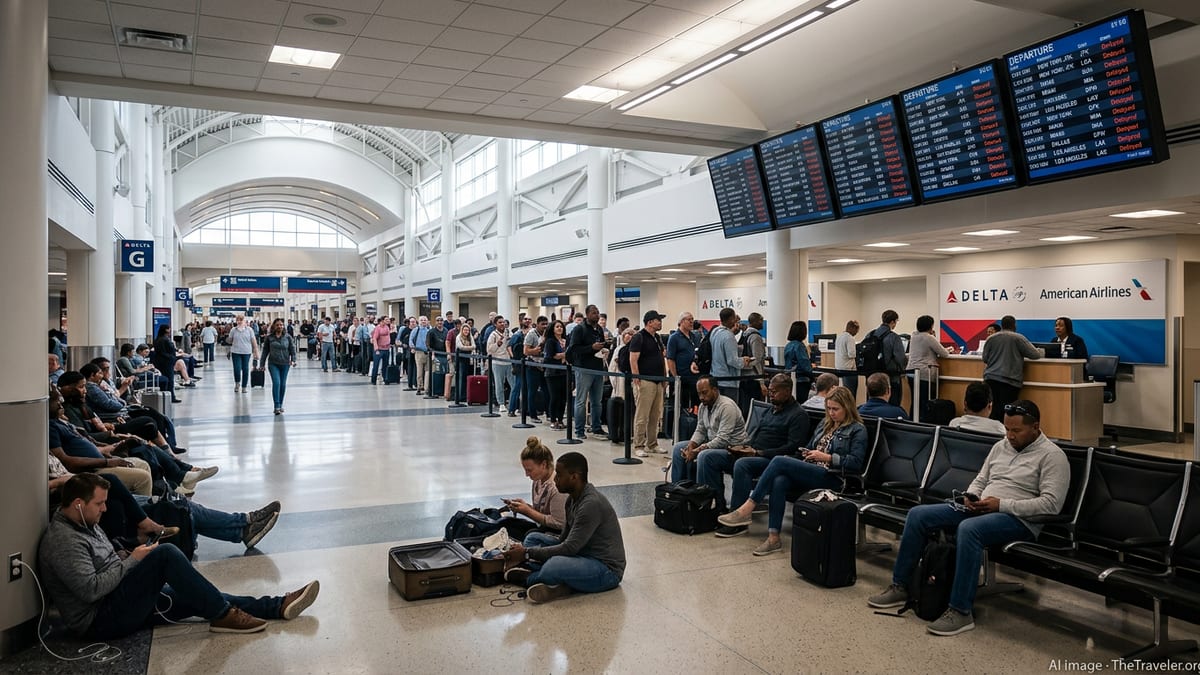
Back-to-back cancellations on Delta Air Lines’ Lagos–Atlanta service in late August 2026 left scores of passengers stranded at Murtala Muhammed International Airport, intensifying scrutiny of one of West Africa’s key transatlantic routes.
Get the latest news straight to your inbox!
Two Lagos–Atlanta Flights Disrupted in Three Days
Recent reports from Lagos indicate that Delta’s nonstop link to Atlanta suffered two serious disruptions in quick succession, affecting travelers scheduled to depart on August 23 and August 25, 2026. Nigerian outlet Vanguard described how passengers booked on a Lagos–Atlanta service identified as DL9895 on August 23 were informed that the flight would not operate, leaving many stuck at the airport and scrambling for alternatives.
According to that coverage, a number of those affected were rebooked on another Lagos–Atlanta flight two days later, only to see that service disrupted as well. Passengers expressed frustration at being left in limbo for extended periods, with some reporting repeated changes to departure times before cancellations or major schedule shifts were confirmed.
Independent flight-tracking data shows that a Delta-operated Lagos–Atlanta service scheduled for the early hours of August 25 was marked as canceled, underscoring the operational turbulence on the route in the final week of August. Publicly available schedules identify the Lagos–Atlanta connection as one of the main long-haul links out of Nigeria, so any interruption has an outsized impact on travelers who often rely on the flight to connect to the wider United States.
Confusion Over Flight Numbers and Changing Status
One notable feature of the disruption has been confusion around flight numbers and status updates. Vanguard’s report referenced DL9895 as the affected Lagos–Atlanta service on August 23, while Delta’s regular daily operation on the route commonly appears in systems under the designation DL55. Flight-tracking services for late August show a mix of irregular operations, including a canceled Lagos–Atlanta segment and an Atlanta–Lagos service that arrived many hours behind schedule.
For the August 25 rotation, some databases list a Lagos–Atlanta departure that did not operate at its planned time, while others record a heavily delayed Delta flight leaving Lagos that same day and reaching Atlanta later than scheduled. These discrepancies illustrate how travelers attempting to monitor their journeys through online tools can encounter conflicting information when airlines adjust equipment, change flight numbers, or consolidate services at short notice.
Despite the variations in how flights are labeled, publicly accessible data and local media coverage both point to a pattern of disruption that left passengers uncertain about when they would finally depart. The situation in Lagos has been described as crowded and tense, with stranded passengers trying to secure rebookings, transit visas, or accommodation while awaiting clearer guidance.
Crew and Operational Constraints Highlight Wider Strains
In notifications shared with passengers and cited in Nigerian media, Delta attributed at least one of the Lagos–Atlanta cancellations to crew availability constraints. Such wording aligns with broader industry challenges in recent years, where airlines have struggled at times to position pilots and cabin crew in the right place and within legal duty-time limits, especially on long-haul routes that require augmented staffing and rest periods.
Global coverage of airline disruptions has repeatedly pointed to a combination of factors behind cancellations, including maintenance needs that arise close to departure, weather-related diversions, and knock-on effects from earlier delays in an aircraft’s routing. Delta’s own network has faced these kinds of pressures before, with large-scale interruptions documented during major technology outages and periods of intense summer travel.
For travelers out of Lagos, the explanation of crew constraints offers only partial comfort, as the practical effect is the same: missed connections in Atlanta, lost hotel bookings, and uncertainty over when replacement flights will be available. Industry guidance generally notes that long-haul cancellations can be especially difficult to resolve quickly because spare widebody aircraft and rested crews are not always on hand to step in.
Passenger Experience at Lagos’ Murtala Muhammed International Airport
The back-to-back disruptions have turned the spotlight once again on passenger experiences at Lagos’ Murtala Muhammed International Airport, a critical aviation hub for Nigeria and the wider West African region. When a major long-haul service encounters problems, the limited number of alternative nonstop options to North America can leave travelers with few immediate choices.
Accounts from affected passengers cited in local reporting describe extended waits in terminal areas and long queues at service desks as travelers sought rebooking information and assistance with accommodation. Some reported that replacement options involved multi-stop routings through European or Middle Eastern hubs, often departing days later than originally planned.
Travel advisories and airport guidance typically encourage international passengers departing Lagos to arrive several hours early to clear check-in, security, and exit formalities. In disruption scenarios, this early arrival can translate into exceptionally long days at the airport when departures repeatedly slide or are called off outright, further heightening stress for families, business travelers, and those on time-sensitive trips.
Reliability Concerns on a Strategic Transatlantic Route
Delta’s Lagos–Atlanta service is regarded as a strategic link, connecting Nigeria’s commercial capital directly with one of the world’s busiest hubs and offering one-stop access to dozens of U.S. cities. Repeated cancellations or severe delays on such a route can reverberate far beyond the immediate departure city, affecting onward travel plans, cargo schedules, and confidence among frequent flyers.
Recent coverage and schedule data suggest that while Delta continues to operate its Lagos–Atlanta flights, the late August disruptions have revived questions about resilience on the route. Travelers are increasingly turning to flight-tracking tools and independent schedule aggregators to monitor performance and to gauge whether to build longer connection times into itineraries that rely on the Lagos–Atlanta leg.
Regulators and consumer advocates in various jurisdictions have previously underscored the importance of clear communication when flights are canceled or significantly delayed, particularly on international routes where visa rules, limited hotel availability, and tight personal schedules can add layers of complexity. For passengers stranded in Lagos after the August cancellations, the focus now shifts to how quickly operations stabilize and whether additional safeguards will be implemented to reduce the risk of a similar episode in the coming months.
https://www.vanguardngr.com/2026/08/delta-disrupts-two-lagos-atlanta-flights/
https://www.airportia.com/flights/dl9895/lagos/atlanta/