


More news on this day
Passengers flying from the UAE on August 27, 2026 are being urged to keep a close eye on their flight status, as Emirates, Etihad, Air Arabia and flydubai adjust schedules, reroute services and in some cases cancel flights in response to ongoing regional tensions and changing airspace restrictions.
Get the latest news straight to your inbox!
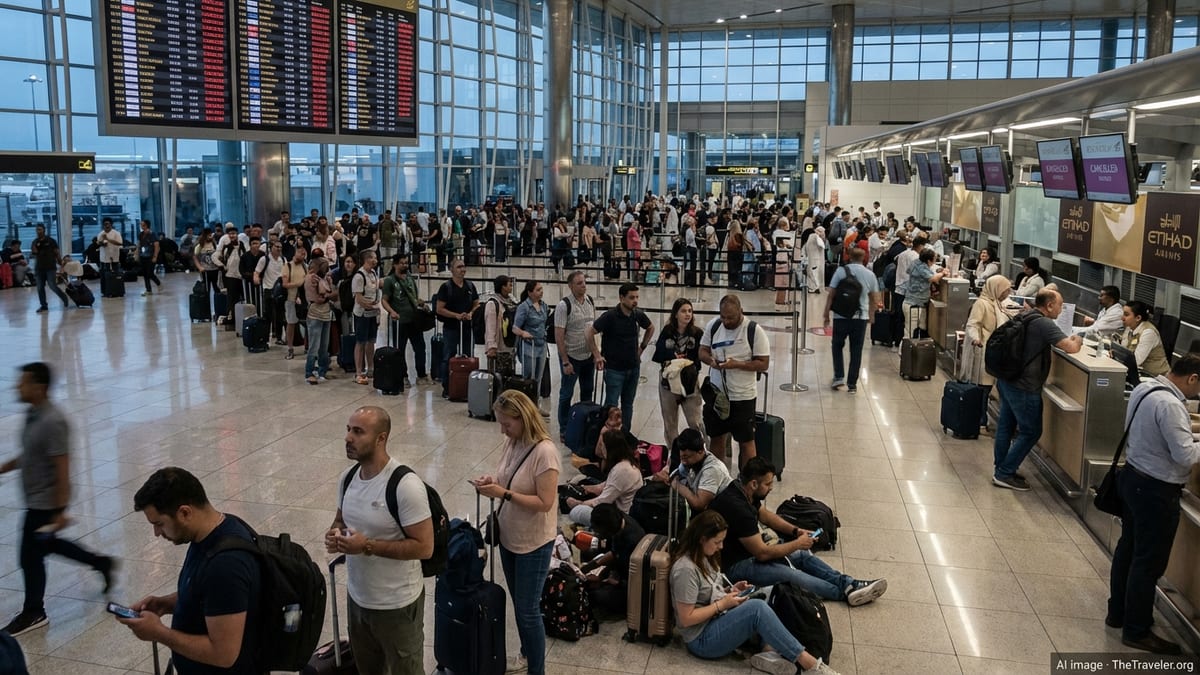
Mixed picture for UAE departures amid airspace constraints
Publicly available flight information shows that major UAE carriers are largely maintaining their networks, but with pockets of disruption on routes most exposed to the current security situation in parts of the Middle East. Recent coverage of UAE operations indicates that services to Bahrain, Kuwait and selected Levant and Gulf destinations have seen cancellations and delays over the past week as airlines respond to shifting risk assessments and temporary airspace closures.
Emirates continues to operate a broad long haul schedule from Dubai International, supported by a dedicated flight status portal where passengers can check real time departure and arrival information by route or flight number. The carrier’s disruption FAQ, last updated in late June, notes that schedules are being adjusted as conditions evolve, and advises customers to review their flights on the day of travel rather than relying on older itineraries.
Etihad Airways is following a similar approach from its Abu Dhabi hub, using timetable changes and equipment swaps to keep key routes operating where possible while trimming frequencies on others. Industry analysis of the current Iran related conflict and its impact on Gulf carriers highlights that hub focused airlines such as Etihad and Emirates are particularly exposed to regional airspace constraints, which can lengthen flight times and raise operating costs even when services are not cancelled.
Low cost operators Air Arabia and flydubai, which rely heavily on short and medium haul links across the Middle East, North Africa and South Asia, are also adjusting individual services rather than implementing blanket suspensions. Schedules on higher risk routes are being closely monitored, and passengers are being directed to airline websites and apps for the latest operational updates.
Flydubai urges early airport arrival and status checks
Flydubai has issued several advisories in recent weeks reminding passengers that operations remain subject to change due to both regional tensions and broader operational factors. An operational update published at the end of March outlines that the airline is running a reduced schedule across parts of its network, with some flights rerouted and sector times extended as a result of temporary airspace restrictions.
More recent guidance aimed at summer travellers notes that Dubai International can be busier than usual and encourages customers to arrive at the airport at least four hours before departure, complete online check in where possible and allow extra time to reach the terminal. The airline repeatedly directs passengers to its flight status tool and operational updates page for the latest information before leaving for the airport, underlining that schedules may change at short notice.
Real time tracking data for individual flydubai services this week reflects a mix of on time operations and moderate delays rather than widespread cancellations. Several regional flights from Dubai to destinations in Saudi Arabia and Europe have arrived close to schedule, while others have experienced departure time changes as routings are adjusted. The pattern points to a carrier focused on preserving connectivity while maintaining flexibility to react quickly to any further deterioration in the regional security environment.
Travel industry platforms monitoring flydubai flights also report same day schedule adjustments on some Dubai departures, with revised departure and arrival times communicated shortly before take off. Passengers are therefore being advised not to assume that flights booked weeks or months ago will operate at the originally advertised times.
Emirates and Etihad maintain global links with selective cuts
Dubai based Emirates, the largest of the UAE carriers, continues to serve more than 130 destinations worldwide, according to its most recently updated route information. However, notices circulated to trade partners earlier this year confirm that the airline has been operating a reduced schedule at various points in 2026 in response to regional airspace closures, particularly during periods of heightened tension affecting routes over and around Iran.
These trade advisories emphasize that customers on cancelled or significantly changed flights are being offered rebooking or refund options under specific disruption policies. They also stress that passengers should keep checking the Emirates flight status page, even after completing online check in, because late operational decisions may still be required if the security situation shifts.
Etihad’s network out of Abu Dhabi appears broadly intact, supported by incremental growth into selected markets such as new services to Tbilisi in Georgia. At the same time, sector durations on some westbound and northbound routes have lengthened compared with historical norms as aircraft are routed around sensitive airspace. Industry assessments suggest that carriers such as Etihad, which rely on connecting traffic, are contending with higher insurance premiums and operating costs linked to the conflict, increasing the commercial pressure to fine tune schedules.
For travellers, the practical impact is most visible in occasional day of departure delays, last minute aircraft swaps and, on certain routes, rolling cancellations over defined date ranges. Passengers booked on multi leg journeys through Abu Dhabi are being encouraged by publicly available guidance to leave ample connection time and to monitor both sectors of their itinerary for changes.
Air Arabia focuses on regional resilience and schedule discipline
Sharjah based Air Arabia, which positions itself as a value focused carrier, has faced the challenge of maintaining dense regional connectivity while managing exposure to geopolitical hotspots. Company reporting for 2024 and 2025 notes that the airline delivered record financial results despite substantial geopolitical tension in its core markets, highlighting an emphasis on flexible capacity deployment and close monitoring of demand and risk across different corridors.
The current period of heightened tension is testing that strategy. While detailed day by day disruption data is not publicly consolidated, the airline’s booking engine shows continued availability on most short haul routes from the UAE, including services across the Gulf, Levant and North Africa. Normalised pricing on many dates suggests that the carrier is trying to sustain regular operations where safety assessments permit, even as some flights are trimmed or rerouted.
Reports from regional travel agents indicate that Air Arabia passengers have experienced isolated cancellations and timing changes on routes most exposed to the security situation, particularly where overflight permissions have shifted with little notice. However, widespread suspension of services has so far been avoided, with the airline’s multi hub structure across Sharjah and other regional bases helping to spread operational risk.
Customers flying with Air Arabia today are being advised to double check their departure and arrival times on the carrier’s website or app, ensure contact details are up to date in their bookings, and remain alert to email or SMS notifications that may signal schedule adjustments.
Global advisories call for vigilance from Middle East travellers
The cautious stance of UAE airlines is set against a broader backdrop of international travel warnings. A worldwide caution issued by the United States Department of State in late July explicitly refers to the heightened risk environment linked to tensions in the Middle East and advises travellers to be prepared for flight cancellations, periodic airspace closures and other travel disruptions affecting routes to, from and through the region.
That alert underscores the possibility of unforeseen escalation and notes that some airlines have postponed plans to restore pre conflict schedules, while others have opted to cancel particular routes altogether. Travellers are urged to monitor airport and airline operations closely and to verify that flights are still scheduled before setting out.
For passengers departing the UAE, these advisories reinforce the core messages echoed by Emirates, Etihad, Air Arabia and flydubai. The most important steps remain checking flight status repeatedly on the day of travel, using online and mobile tools to stay informed about changes, arriving at the airport earlier than usual, and building extra flexibility into travel plans in case onward connections are disrupted.
With the regional security situation still fluid, airline schedules are likely to remain subject to change over the coming days and weeks. While most flights from the UAE continue to operate, the experience of passengers will depend heavily on route, timing and the evolving pattern of airspace restrictions, making real time information the key tool for anyone flying today.
Latest UAE flight disruption overview – Gulf News
flydubai operational updates and travel advisories