


More news on this day
Delta Air Lines, long marketed as the gold standard for reliability in U.S. aviation, is facing renewed turbulence in its Atlanta home base as a wave of cancellations and delays collides with a high-profile debate over pilot pay, staffing and the airline’s once-vaunted operational edge.
Get the latest news straight to your inbox!
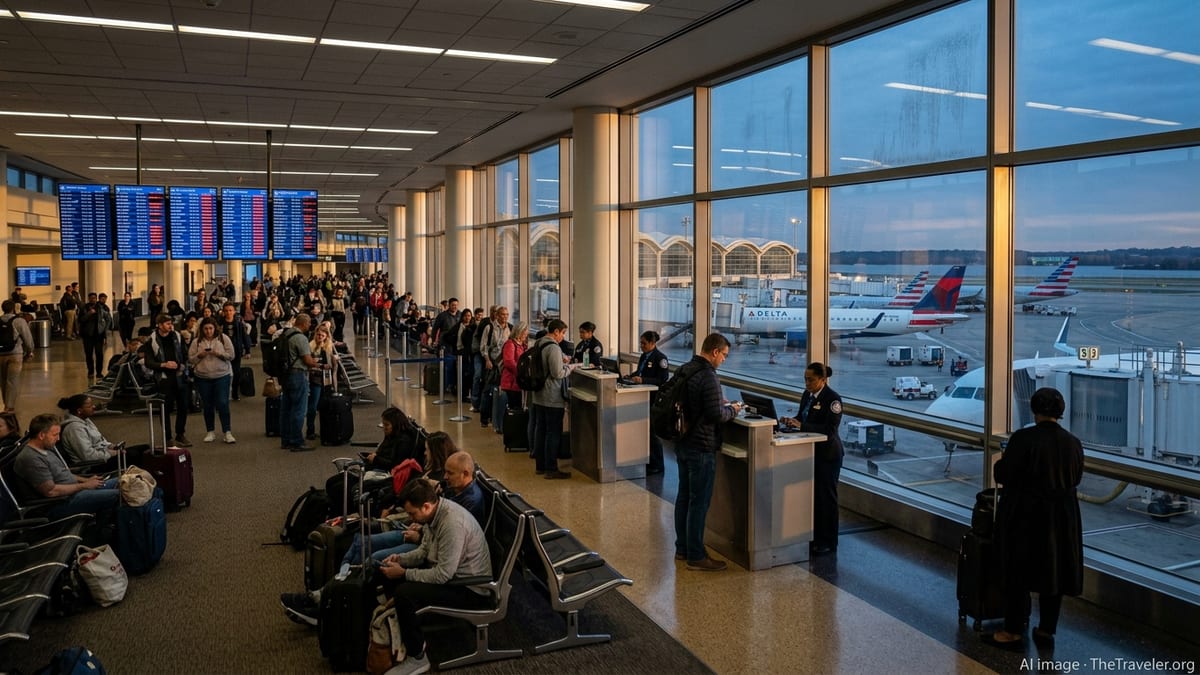
How Delta Went From Reliability Darling To Disruption Target
For much of the past decade, Delta built its brand around running on time. Industry rankings regularly placed the carrier at or near the top for punctuality and completion, and company filings emphasized a strategy of winning high-yield business travelers by being more reliable than rivals. Even after the global technology outage in July 2024 that crippled airlines worldwide, Delta’s public reporting for late 2024 and 2025 still highlighted strong annual on-time performance and industry awards for operational excellence.
Beneath those headline metrics, however, a different narrative has been unfolding in Atlanta. The CrowdStrike-related systems crash in July 2024 hit Delta harder than any other U.S. carrier, exposing heavy dependence on Windows-based systems and crew-tracking tools that struggled to reboot. More than 7,000 flights were canceled over five days, affecting well over a million travelers. Regulators later described the resulting delays and cancellations as largely controllable, putting a spotlight on Delta’s internal decision-making and recovery capability rather than just the originating software bug.
The fallout continued well beyond that week. Investigations and public reporting pointed to what analysts described as an aging and complex IT backbone, tight staffing in crew scheduling and dispatch, and an aggressive schedule aimed at maximizing revenue from Delta’s strong post-pandemic demand. That combination helped transform an external shock into a multi-day meltdown and left the carrier with a lingering reliability question that has now resurfaced in newer bouts of disruption.
By 2025, Delta was again touting awards for being the most on-time among large network rivals and noting zero involuntary bumping in some federal data. Yet those aggregate figures have not fully reassured travelers in Atlanta and other hubs who experienced winter operational problems and, more recently, a string of cancellations that reignited anger and confusion about what is really behind the airline’s volatility.
Pilot Pay Raises, Record Profits And A New Labor Flashpoint
At the center of the latest blame game is the role of pilot pay and scheduling. Delta’s 15,000 pilots secured a new contract in early 2023 that delivered roughly 34 percent in pay increases over four years along with improved benefits and work rules. The deal, which runs through the end of 2026, was widely viewed as setting a rich benchmark for the industry and helped cement Delta’s reputation as a top destination for cockpit careers.
Since then, Delta has reported billions in annual profits and strong free cash flow while continuing to invest in aircraft, airport facilities and training centers. Management has argued in public materials that premium demand, particularly from corporate and high-spend leisure travelers, supports both higher wages and capital spending. The airline has opened additional pilot training capacity and points to strong hiring as proof it can sustain its growth trajectory.
Yet as delays and cancellations mounted again in late 2025 and into 2026, the issue of how pilot labor is used, rather than how much it is paid, has moved to the foreground. Industry newsletters and union communications describe an increasingly strained system in which intricate work rules, chronic tight staffing on certain fleets and bases, and aggressive scheduling leave little buffer when weather, air traffic control constraints or technology failures occur.
Negotiations are also shifting back into view. Pilots, represented by the Air Line Pilots Association, have initiated the early stages of the formal bargaining process that will succeed the current agreement once it becomes amendable at the end of 2026. That timing, coupled with a spate of disruptions and corporate messaging focused on cost discipline, has fueled speculation that operational friction could become leverage in the next round of talks, even as both sides publicly emphasize safety and customer service.
The May 2026 Meltdown: Scheduling Mechanics Under Pressure
The turning point in the current debate came in early May 2026, when Delta canceled more than 500 flights over a single weekend. While competitors reported relatively smooth operations during the same period, tracking data showed Delta’s cancellation rate spiking far above the rest of the large U.S. carriers. The spotlight quickly fell on Atlanta, the airline’s primary hub and its most important connecting complex.
According to trade press coverage and internal company communications described in that reporting, the disruption was not triggered by a major storm or a third-party technology failure. Instead, it grew out of what one internal memo characterized as “a failed staffing mechanism” inside Delta’s crew-scheduling system. The memo, attributed to a senior flight operations executive, described a sudden breakdown in the tools and incentives used to cover open flying, including a sharp drop in pilots’ willingness to pick up additional, unscheduled trips.
The result was a structural shortfall of available crews across multiple fleets and bases. When individual flights went uncovered, ripple effects cascaded through already tight rotations, forcing cancellations that stranded travelers and left long lines at customer service desks in Atlanta and other airports. The episode suggested that, despite years of post-pandemic hiring and new training capacity, the margin for error in Delta’s pilot staffing remained narrow.
What is notable for travelers is that the May 2026 meltdown appears to have unfolded largely independent of headline pilot pay rates. Reports indicate that the core problem was a misalignment between the complexity of the schedule, the tools used to allocate open trips, and the incentives that determine whether pilots volunteer for extra flying on short notice. In other words, reliability was constrained less by how much pilots were paid than by how their time was managed.
Inside The Blame Game: IT, Staffing And Strategic Choices
Public commentary in and around Atlanta now reflects a three-way blame game. One camp points to generous labor contracts and suggests that higher pilot pay has made the airline less flexible, more conservative in scheduling overtime, or more exposed to sick calls and fatigue rules. Another emphasizes Delta’s technology debt, arguing that legacy systems in crew tracking, scheduling and airport operations have repeatedly turned routine disruptions into full-blown crises. A third highlights management’s strategic choice to run a complex, banked hub structure with dense schedules that leave little slack.
Each of those explanations captures part of the picture, but together they suggest a more nuanced reality. Pilot compensation at Delta is high by historical standards, yet so are the expectations placed on the airline by both investors and travelers. Costly disruptions threaten that business model far more than any incremental wage increase. At the same time, even the best-paid pilots cannot overcome structural fragilities in IT systems or network design when those elements are stretched beyond their limits.
What often gets overlooked is how these factors interact. Richer work rules can constrain how many hours a pilot can be reassigned in irregular operations, which means any delay requires more sophisticated software and more staffing to resolve. Older IT architectures may not integrate cleanly with newer optimization tools, making it harder to automate crew swaps at scale. And a schedule built to maximize connections through hubs like Atlanta amplifies the consequences when one bank of flights falls apart.
For passengers, the practical effect is that blaming pilots, or blaming software, tells only part of the story. The recurring pattern is that Delta’s reliability falters when the combined load of contract complexity, technology limitations and tight staffing exceeds the buffer designed into its operation. That pattern can be masked in periods of calm, yet it becomes highly visible during peak travel weekends, severe storms or system outages.
What Travelers Should Watch Next In Atlanta
Looking ahead, several signals will indicate whether Delta can restore its reliability reputation in Atlanta and across its network. One is the pace and scope of technology upgrades. After the 2024 outage, public filings and regulatory correspondence referenced efforts to modernize mission-critical applications and reduce dependence on the most vulnerable legacy systems. How quickly those projects translate into fewer large-scale disruptions will be closely watched by analysts and consumer advocates.
A second signal is staffing resilience, particularly in crew scheduling and day-of-operations control centers. Reports highlighting dispatcher and scheduler workloads suggest these roles have become pressure points. Any sustained uptick in cancellations attributed to crew availability could indicate that hiring and retention in these less-visible positions have not kept up with Delta’s flying schedule, even as cockpit and cabin ranks have grown.
The upcoming cycle of pilot contract negotiations is another key variable. If operational reliability becomes a major theme in those talks, travelers may see an emphasis on provisions that trade pure pay raises for more predictable schedules, larger staffing buffers or new incentive structures for irregular operations. That outcome could reduce the chances of a repeat of the May 2026 scenario, where a sudden shift in pilot behavior around open flying helped trigger widespread cancellations.
Finally, Delta’s competitive posture in Atlanta will shape how aggressively it is willing to trim schedules or add slack. The carrier dominates its hometown hub and faces limited direct competition on many routes, which can reduce the immediate pressure to cut flights in favor of operational breathing room. Yet as federal scrutiny of disruptions intensifies and alternative carriers improve their own reliability, the cost of another high-profile meltdown may outweigh the revenue lost from a slightly more conservative schedule. For travelers passing through Atlanta, the question is not just whether Delta can pay its pilots well, but whether it can align that pay, its technology and its network design to deliver the steady, predictable operation it once made its calling card.