


More news on this day
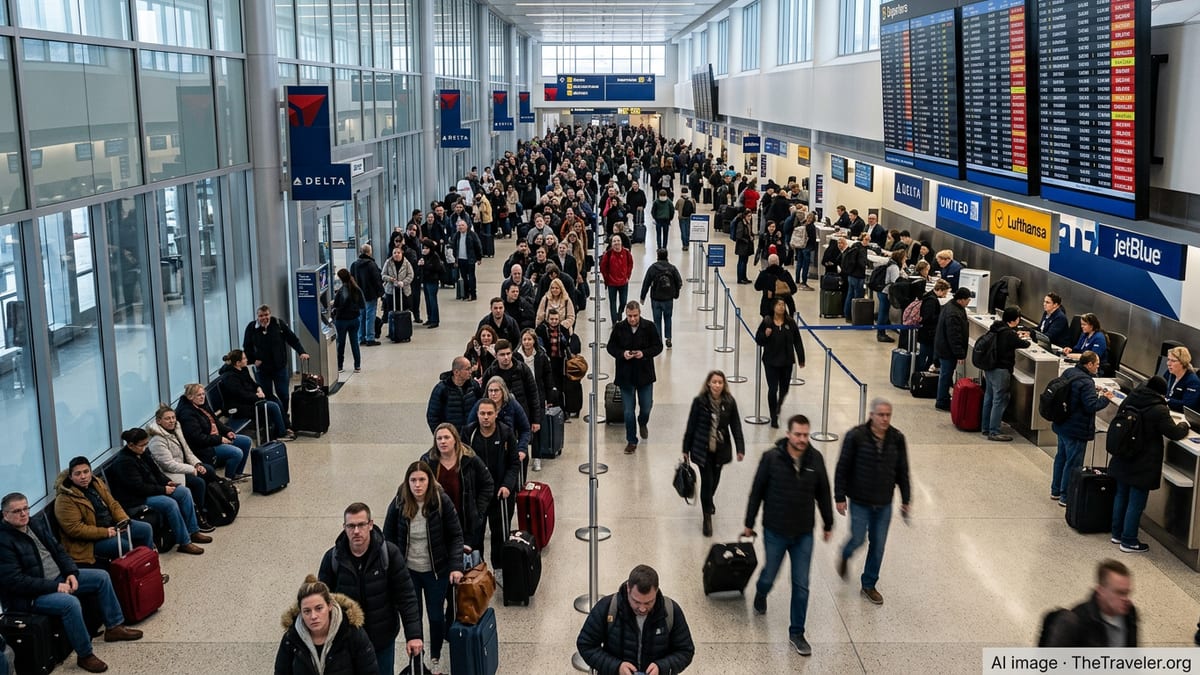
After weeks of zigzagging through U.S. airports this summer, watching departure boards fill with yellow and red, I learned that flight delays are rarely about a single bad day. They are the visible edge of a strained global system, shaped by weather, staffing, infrastructure and a travel boom that has left little slack when anything goes wrong.
Get the latest news straight to your inbox!
Weather Tops the List, but It Is Only Part of the Story
Publicly available information from the Federal Aviation Administration shows that in 2024, roughly six in ten U.S. delays were tied to weather, with additional disruption attributed to traffic volume and runway capacity. Airlines and regulators emphasize that routing aircraft around storms or pausing departures is a safety decision rather than a convenience choice. For travelers, that often translates into hours on the ground while convective storms park over key hubs.
Global reports on air traffic management indicate that adverse weather has become more frequent and disruptive, particularly in peak summer months. European network data for the 2024 season, for example, documented sharp increases in en route weather-related delays compared with the previous year, suggesting that storms and heat are exerting more pressure on an already busy system. The pattern was similar in the United States, where summer thunderstorms repeatedly triggered ground stops and reroutes across major hubs.
From a passenger’s perspective, the practical lesson is that the clock you care about is not only the one at your departure gate, but also the one ticking at your destination and along the route. A flight can push back on time and still spend an hour in a departure queue because storms have slowed arrivals into a congested airspace sector. Weather may be localized on the radar, but its effects ripple widely through the network.
Staffing Gaps and Infrastructure Add Invisible Delays
Alongside weather, staffing shortfalls in air traffic control and airline operations have played a growing role in delays. Studies from aviation policy groups and technical panels over the last two years describe how key control facilities in major metropolitan areas have struggled to keep pace as traffic rebounded from the pandemic. When there are not enough qualified controllers to safely handle peak demand, the system compensates by spacing out flights, imposing ground delay programs and cutting arrival or departure rates at busy airports.
Industry analyses also point to persistent staffing and capacity issues within some European and North American air navigation service providers. Reports indicate that in 2024, staffing and capacity constraints accounted for a large majority of air navigation service delays in parts of Europe, underscoring that the bottleneck is not limited to any single region. For passengers, this can look like clear skies, an aircraft at the gate and yet a departure time that keeps moving in small increments.
Airports and airlines contribute their own layers of vulnerability. Tight runway configurations, ongoing construction, and limited gate space can all reduce how many movements an airport can handle in a given hour. At the airline level, crews and aircraft are tightly scheduled, so a disruption on one leg can quickly create a shortage of pilots, flight attendants or available planes for subsequent departures. The result is that a delay reported as due to “air traffic control” or “operations” often reflects several overlapping constraints behind the scenes.
More Passengers, Less Slack in the System
Travel demand has climbed steadily, and in many markets has surpassed pre-pandemic levels. Data from airline trade associations show that global passenger traffic in mid-2024 was significantly higher than a year earlier, with North American carriers handling a substantial share of that growth. This surge has filled aircraft and schedules, particularly on peak days and at popular times of day.
At the same time, infrastructure and staffing have not expanded at the same pace. Runway projects, terminal upgrades and technician hiring all take years, while passenger demand can spike in a single season. Aviation organizations have warned that this imbalance leaves networks more exposed to cascading disruption when an incident occurs, whether it is a major storm, an airspace restriction or an IT outage that throws airline systems offline.
Recent summers offered several high-profile examples of how quickly things can unravel. A global technology outage in mid-2024, for instance, left tens of thousands of flights delayed or canceled over one weekend as airlines struggled to restore crew assignments and aircraft rotations. While such events are rare, they show how a tightly coupled system with little reserve capacity can take days to fully recover once it is knocked off balance.
What Helped Most When Plans Fell Apart
Spending weeks navigating rolling delays highlighted a clear divide between what travelers can influence and what remains outside their control. It is not possible to fix staffing gaps or stop summer thunderstorms. But choices about timing, routing and preparation can make a measurable difference in how disruptive a delay becomes.
Morning departures consistently proved more reliable than late afternoon and evening flights. Operational guidance from aviation agencies notes that peak heat and storm activity often coincide with the busiest hours of the day, increasing the likelihood of weather-related delays and traffic management initiatives. By contrast, early flights benefited from cooler conditions and the fact that aircraft and crews were more likely to be where they were supposed to start the day.
Routing decisions mattered as well. Connecting through chronically congested hubs during peak hours increased exposure to knock-on delays from earlier storms or staffing issues. When alternative routings via less constrained airports were available, they sometimes meant an extra connection but a higher chance of arriving the same day. Building longer connection buffers reduced the risk that a modest delay on the first leg would cascade into an unplanned overnight stay.
Learning to Read the System, Not Just the Departure Board
Perhaps the most useful lesson from weeks of disruption was learning how to interpret early warning signs. Aviation agencies encourage passengers to monitor real-time airport status tools and airline notifications, which often show traffic management programs or weather advisories before delays hit individual flights. When those indicators flared for a hub on my itinerary, it was often a signal to adjust plans, rebook or at least prepare for a longer day.
Understanding the typical causes and patterns of delays also made them easier to navigate emotionally. Knowing that a ground stop was imposed to avoid thunderstorms, or that a reduced arrival rate was linked to staffing limits in a busy control center, did not make the wait shorter. It did, however, make it clearer that the disruption was part of maintaining safety in a saturated system rather than an arbitrary inconvenience.
For travelers heading into another busy travel season, the reality is that flight delays are likely to remain a recurring feature rather than an exception. Weather patterns, staffing pipelines and infrastructure timelines all suggest that the gap between demand and capacity will not close overnight. But with better awareness of how the system works, and a few practical adjustments in how trips are planned, passengers can regain some control over how severely those inevitable delays shape their journeys.