


More news on this day
Brussels Airlines is sharpening its focus on northern Europe this coming winter, adding capacity and niche charter links to Nordic destinations as demand grows for snowbound escapes and northern lights experiences.
Get the latest news straight to your inbox!
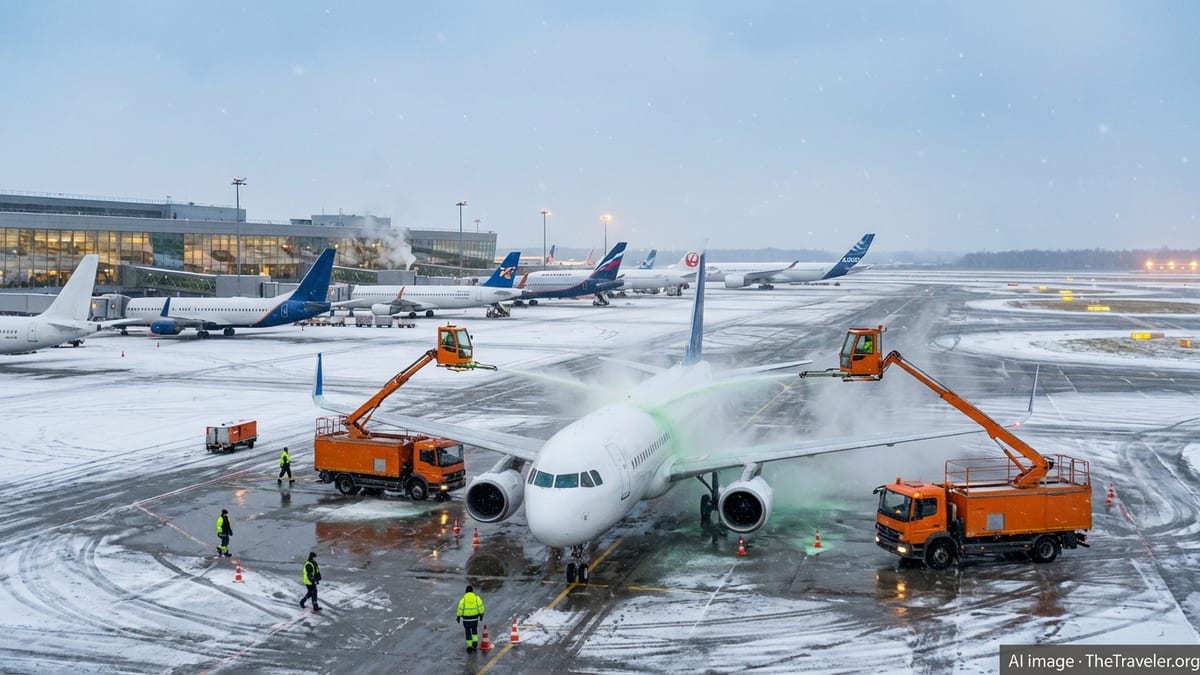
New focus on Nordic winter demand
Published schedules for the 2024 to 2025 winter season indicate that Brussels Airlines is leaning further into Northern Europe, using both regular services and dedicated charter operations to connect Belgium with popular Lapland and Arctic gateways. Industry data shows that Brussels Airport will again offer direct winter links to destinations such as Tromsø in Norway and Kittilä and Kuusamo in Finland, with Brussels Airlines positioned as one of the main providers alongside leisure and charter carriers.
The strategy aligns with a broader trend in European aviation, where carriers are adding capacity to Scandinavia and the Arctic to meet rising interest in northern lights trips, ski holidays and winter city breaks. Network planning documents from the Lufthansa Group, Brussels Airlines’ parent company, highlight an expanded winter portfolio across Europe, with the Belgian carrier acting as a feeder and holiday specialist out of Brussels.
While Brussels Airlines’ long haul network continues to prioritize Africa and North America, its seasonal Nordic offering allows the airline to diversify revenue in the quieter winter months on traditional Mediterranean routes. The result is a more balanced mix of sun, snow and city destinations, tailored to evolving leisure travel patterns.
Lapland charters and niche northern gateways
Publicly available information on past and current programmes shows that Brussels Airlines has developed a particular niche in Lapland and northern Scandinavia through partnerships with Nordic-focused tour operators. Earlier cooperation agreements detailed winter flights from Brussels to Kittilä in Finnish Lapland and Tromsø in northern Norway, as well as seasonal links to Kiruna in Swedish Lapland and Bergen on Norway’s west coast.
These operations typically run as part of package holidays that bundle flights, accommodation and activities such as husky safaris, snowmobile excursions and aurora viewing trips. Charter flights allow Brussels Airlines to serve secondary airports that are not part of its core scheduled network, while giving tour operators guaranteed capacity for short high-season peaks around Christmas, New Year and school holidays.
For winter 2024 to 2025, network overviews and tourism board information indicate that Brussels remains among the key departure points for Lapland, joining cities such as London, Paris, Amsterdam and Frankfurt in feeding traffic into airports like Rovaniemi and Kittilä. In this environment, Brussels Airlines’ experience in coordinating charter series and ad hoc operations to remote northern airports is seen as a competitive advantage.
Strengthening Brussels Airport’s winter proposition
Brussels Airport is using the Nordic push to reinforce its image as a diversified winter gateway. Airport press materials for the current cold-weather season list more than one hundred and forty direct winter destinations, including a cluster of snow and ski airports across the Alps and the Nordics such as Innsbruck, Salzburg, Tromsø, Kittilä and Kuusamo. Brussels Airlines features prominently within that mix, complementing the offerings of leisure operators and low cost carriers.
Airport data suggests that the combination of scheduled routes and charter services has helped smooth out the traditional winter slowdown in point-to-point traffic. Passengers from Belgium and neighbouring countries can now choose between sun routes to the Canary Islands and North Africa or snow-centric escapes in Scandinavia, often operated on similar travel days and time slots.
For Brussels Airlines, this environment supports better aircraft utilization. Aircraft that might otherwise sit idle during off-peak days on Mediterranean routes can instead be deployed on Lapland or Arctic charters, often at strong yield levels driven by package holiday demand. The result is a more efficient use of the medium haul fleet throughout the winter timetable.
Competitive landscape in the Nordic skies
The Belgian carrier’s Nordic ambitions unfold in a competitive market. Scandinavian and Finnish airlines, along with several low cost operators, are all targeting winter tourism flows into Lapland and northern Norway. Route announcements from carriers elsewhere in Europe for the 2024 to 2025 winter season highlight new and expanded services to Rovaniemi, Tromsø and other northern airports, indicating that demand is strong but contested.
In this context, Brussels Airlines benefits from its positioning within the Lufthansa Group network. The group’s winter network communications emphasize broad connectivity between central European hubs and Nordic destinations, allowing Brussels-based services to feed into a wider system of onward connections via partner airlines. For passengers, this means additional itinerary options that combine a Brussels departure with multi-stop northern itineraries or open-jaw trips across the region.
At the same time, Brussels Airlines faces pressure to differentiate its offer. The airline’s collaboration with specialized Nordic tour operators, long experience with dedicated charters and focus on Belgian-origin traffic help create a profile distinct from carriers that rely primarily on pan-European low cost demand.
Outlook for future winter seasons
Industry observers expect Brussels Airlines to continue refining its Nordic portfolio as data from recent winters becomes available. If strong load factors and high ancillary spending on winter sports and northern lights trips are confirmed, the carrier could look at extending existing charter programmes, adding new Lapland airports or shifting some seasonal routes toward more regular operations.
However, the Nordic winter market is sensitive to broader economic conditions and fluctuations in discretionary travel budgets. Exchange rates, energy prices and perceptions of geopolitical stability can all influence decisions to book higher-priced Arctic holidays. Brussels Airlines will likely monitor these variables closely when finalizing its winter timetables and deciding how much capacity to allocate to the far north.
For now, the increased visibility of Nordic destinations in Brussels Airlines’ winter communications underlines a clear strategic direction: pairing its established strengths in Africa and European city routes with a growing portfolio of snow and aurora-focused getaways. For travellers in Belgium and beyond, that translates into more options to head north when the temperatures drop.