


More news on this day
Premium economy has become the sweet spot for long-haul travelers seeking extra comfort without paying business-class prices, but when it comes to airport lounges, only a select few airlines actually include access with the ticket.
Get the latest news straight to your inbox!
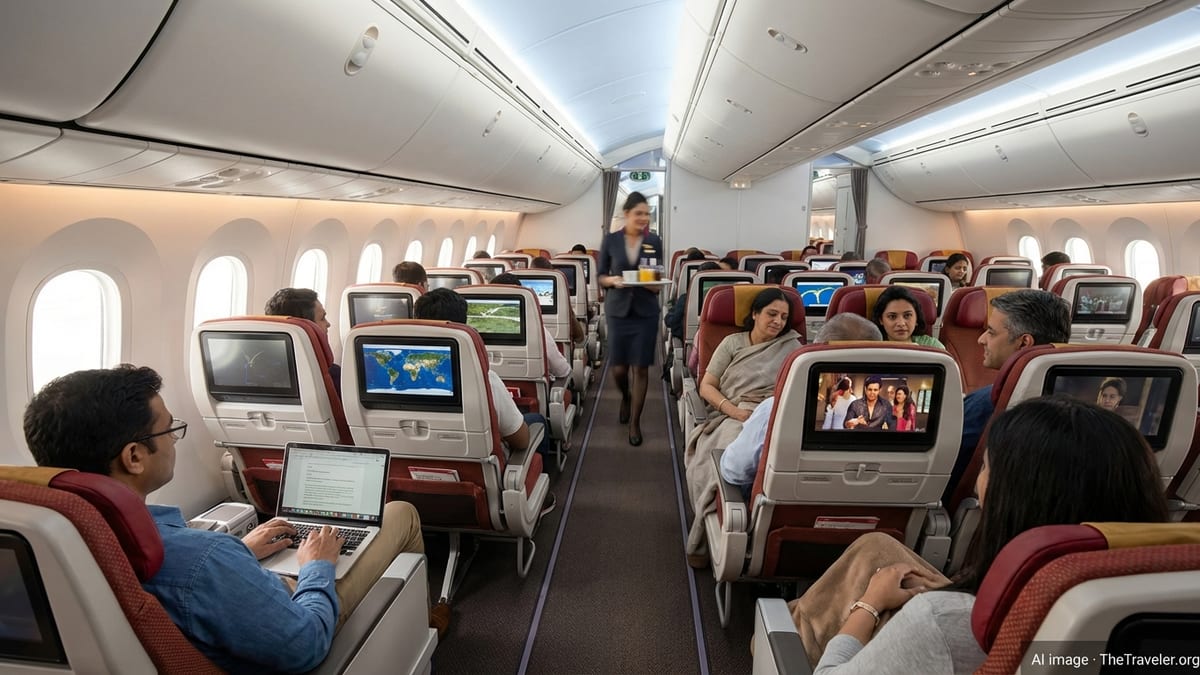
A Rare Perk in a Crowded Cabin Segment
Premium economy cabins have expanded rapidly in recent years as airlines look to bridge the gap between standard economy and business class. Wider seats, extra legroom and upgraded meals are now common, but complimentary lounge access remains an exception rather than the rule, according to recent industry surveys and airline policy summaries.
Publicly available information on airline websites and independent premium economy reports shows that most major global carriers treat lounge access as a separate benefit tied to business class, elite status or paid memberships. In many cases, premium economy passengers can buy their way into a lounge, but the ticket alone does not open the door.
For travelers comparing fares, this can create confusion. Marketing for premium economy often highlights priority check-in, early boarding and enhanced onboard service, which can sound similar to business-class perks. Closer inspection of fare rules reveals that lounge access is usually missing unless the airline makes a specific exception.
As airlines tighten entry rules for their lounges in response to crowding, the lines between cabin-based access, status privileges and paid entry are becoming more complex. That makes it increasingly important for travelers to know which premium economy products still come with lounge access built in.
The Airlines That Include Lounge Access with Premium Economy
Japan Airlines is one of the clearest examples of a carrier that includes lounge access with premium economy on international routes. According to its published product descriptions and corroborating coverage from frequent flyer sites, passengers booked in premium economy on eligible flights are granted access to JAL-operated or partner lounges, subject to local availability and capacity controls.
All Nippon Airways follows a similar approach. Public information about ANA’s premium economy offering indicates that customers on international itineraries can use designated ANA lounges or partner facilities, again subject to route and airport specifics. In practice, this means a premium economy ticket on ANA can function more like a hybrid between economy and business class when it comes to ground services.
Scandinavian Airlines has also stood out in this area. Industry comparisons of long-haul premium economy products note that SAS Plus, the airline’s premium economy brand, includes airport lounge access on many routes, along with fast-track security in selected airports. On shorter intra-European flights where SAS Plus is the highest cabin, the product is often marketed with lounge access as a core benefit.
In Latin America, LATAM’s policies provide another notable exception. Publicly available information on the airline’s lounge program indicates that passengers booked in Premium Economy on eligible routes can access company-operated lounges alongside those traveling in premium business, with additional access pathways for higher-tier frequent flyers. Exact coverage varies by airport, but premium economy is explicitly acknowledged in LATAM’s lounge eligibility rules.
Where Lounge Access Is Limited, Optional or Route-Specific
Even among airlines that appear on lists of premium economy products with lounge benefits, the reality can be more nuanced. Some carriers provide access only on specific routes, in particular hubs, or where premium economy is sold as the top cabin on the aircraft.
Scandinavian Airlines, for example, differentiates between long-haul and short-haul operations, and published fare details indicate that lounge access for SAS Plus is more consistently available on intercontinental services and at primary hubs. Travelers relying on this perk are often advised in expert guides to verify the specific route and airport before assuming entry is included.
Reports focusing on Japan Airlines and ANA also emphasize that lounge access for premium economy can be subject to local constraints. At airports where the airline uses third-party facilities or where capacity is tight, access policies may be adjusted, even if the general rule supports entry for premium economy passengers. This means that the benefit is strong but not completely uniform across every station.
Other airlines are frequently cited in consumer guides as offering “occasional” or “limited” premium economy lounge access through targeted promotions, bundled fares or higher-priced ticket types. In these situations, the lounge benefit is tied to a specific fare brand rather than the premium economy cabin as a whole, requiring travelers to study the fare conditions closely before purchase.
Major Carriers That Do Not Include Lounge Access in Premium Economy
On many of the world’s largest network airlines, a premium economy ticket alone does not unlock lounge access. Reviews of current policies at carriers such as British Airways, Lufthansa, Air France, KLM, American Airlines, Delta Air Lines and United Airlines indicate that premium economy cabins are treated similarly to standard economy for lounge purposes.
In these cases, lounge entry typically depends on a separate qualification: holding airline or alliance elite status, purchasing a day pass where offered, or holding a credit card that comes with lounge membership. Some airlines also sell discounted lounge access to premium economy travelers, but it is positioned as an optional extra rather than an included feature of the fare.
Middle East and Asia-Pacific carriers follow a similar pattern. Information from Emirates and Singapore Airlines shows that while their premium economy seats offer enhanced onboard comfort and service, complimentary lounge access remains reserved for business and first class or for passengers with relevant status. Premium economy travelers may be able to buy access to airline lounges at select airports or use independent lounges through paid programs.
Industry analyses suggest that airlines are keen to preserve the price and experience gap between premium economy and business class. Keeping lounge access tied to higher cabins or status tiers is one way carriers maintain that distinction, even as they continue to refine premium economy with better seats, upgraded catering and added baggage allowances.
How Travelers Can Work Around the Lounge Gap
For passengers who value a quiet space, showers or pre-flight dining, there are several strategies to pair lounge access with a premium economy ticket even when it is not automatically included. Travel publications and loyalty program guides point first to frequent flyer status, which often grants lounge access regardless of cabin on international itineraries and, in some cases, on domestic flights within alliance networks.
In North America and Europe, co-branded credit cards and independent lounge memberships have become another common route. Priority-style memberships and airline club cards can give premium economy travelers consistent access to lounges across multiple trips, although availability still depends on specific locations and partner agreements.
Paid single-visit access, offered by many airline and independent lounges, remains a flexible option. Several major carriers allow premium economy passengers to purchase entry at the airport or during booking, sometimes at a lower rate than for standard economy customers. This can be attractive on particularly long travel days, such as overnight connections or multi-leg itineraries.
With lounge access policies continuing to evolve amid rising demand and crowding concerns, experts recommend that travelers treat lounge benefits as a separate line item when comparing premium economy fares. For now, only a small group of airlines consistently bundle lounge access into the cabin, while most others expect passengers to rely on status, cards or paid options to enjoy the same pre-flight comfort.