


For many U.S. travelers, especially those loyal to Delta or United, choosing the right airline credit card can make the difference between dreading every baggage fee and breezing through the airport with built-in perks. Two of the most popular mid-tier options are the Delta SkyMiles Gold American Express Card and the United Explorer Card from Chase. Both promise free bags, priority boarding, and bonus miles, but the fine print and real-world value can look very different once you start booking actual trips.
Get the latest updates straight to your inbox!
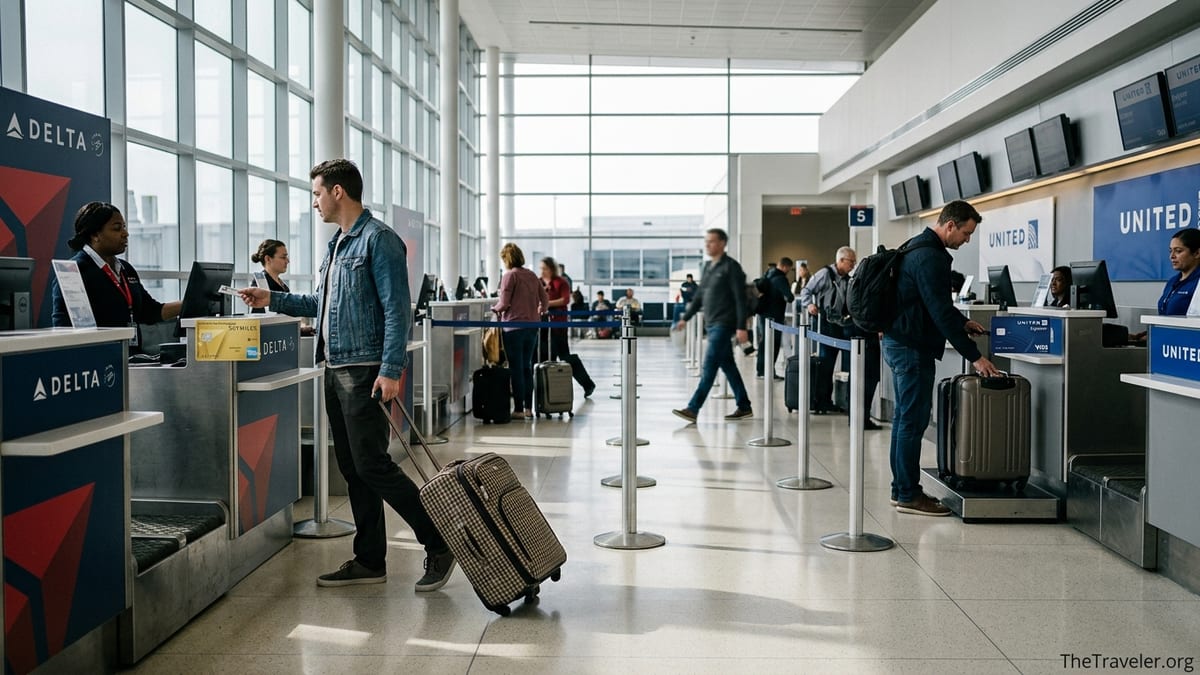
Card Basics: Annual Fees, Networks, and Who Each Card Fits
The Delta SkyMiles Gold American Express Card is designed for travelers who fly Delta several times a year and want to reduce out-of-pocket costs like checked bags while steadily earning SkyMiles. As of mid-2026, the card carries an annual fee of around the mid‑$100 range, charged starting in the first year. It runs on the American Express network, which is widely accepted in the United States but still occasionally less welcome at very small merchants or some independent hotels abroad.
The United Explorer Card is issued by Chase on the Visa network, which tends to be accepted almost everywhere major cards are taken worldwide. Its annual fee is also in the mid‑$90 to low‑$100 range, often waived the first year in many public offers. That first‑year waiver means casual United flyers can test the waters with relatively low upfront cost, which appeals to occasional travelers who take one big trip plus a couple of domestic flights per year.
In practice, the decision often starts with airline preference. If you live near a Delta fortress hub like Atlanta, Minneapolis, Detroit, or Salt Lake City, the Delta SkyMiles Gold Amex is more likely to match your actual flight patterns. If your home airport is a United hub like Denver, Houston Intercontinental, Chicago O’Hare, Newark, San Francisco, or Washington Dulles, the United Explorer card typically aligns better with the routes you actually fly.
For a family in Denver that goes to Orlando every spring and New York each fall, United dominates the nonstop options, so the Explorer card’s benefits are easy to use. Meanwhile, a couple in Atlanta flying frequently from ATL to Los Angeles and Cancun will probably see more savings from the Delta SkyMiles Gold, simply because Delta offers more nonstops and competitive pricing from its hub.
Welcome Offers and Earning Miles on Everyday Spending
Both cards frequently advertise limited‑time welcome bonuses for new cardmembers, typically framed as tens of thousands of miles after spending a few thousand dollars in the first several months. The exact figures change regularly, but in many public offers you will see Delta SkyMiles Gold Amex bonuses in the range that can cover at least one round‑trip economy ticket in the continental U.S. if you book saver‑level awards, and similar ballpark bonuses on the United Explorer for MileagePlus miles.
On the Delta SkyMiles Gold Amex, you earn bonus miles on Delta purchases like airfare and seat upgrades, plus boosted earning at U.S. supermarkets and at restaurants worldwide. For example, if you spend about 500 dollars a month on groceries and 300 dollars on dining out on this card, you can accumulate enough SkyMiles over a year to cover at least a one‑way domestic trip or a good discount toward a longer flight, depending on how you redeem.
The United Explorer Card provides extra MileagePlus miles when you buy tickets directly from United, and on common categories like restaurants and hotel stays booked directly with the hotel. Imagine a traveler who spends 3,000 dollars per year on hotel rooms and another 2,400 dollars on dining. Putting those purchases on the Explorer card can yield a meaningful chunk of extra United miles, which might be enough for a domestic one‑way flight or to reduce the cost of a transcontinental ticket in basic economy or standard economy, depending on award pricing at the time.
For a typical U.S. household, the better earning structure comes down to where most non‑airline spending happens. A family that spends heavily at big supermarket chains and cooks at home will usually do better with the Delta SkyMiles Gold Amex multipliers. A frequent traveler who eats out and stays at hotels often, but does relatively little grocery shopping, may earn more MileagePlus miles with the United Explorer.
Baggage Benefits: How Much You Really Save at the Airport
For many travelers, the headline perk is the free checked bag. Delta’s policy currently allows Delta SkyMiles Gold Amex primary cardmembers to check their first standard bag free on Delta‑operated flights for themselves and up to eight companions on the same reservation, as long as the cardmember’s SkyMiles number is attached to the booking. In 2026 Delta has also expanded the benefit so that eligible cardmembers get a second checked bag free on domestic Delta flights. In a world where a first checked bag often costs around 45 dollars each way and a second around 55 dollars each way on many mainstream fares, that can mean a savings of roughly 200 dollars or more per person on a simple round trip with two checked bags.
United’s Explorer Card offers the primary cardmember and one companion on the same reservation their first standard checked bag free on United‑operated flights, provided the ticket is purchased with the Explorer card and the MileagePlus number is in the reservation. United describes the value at up to about 40 dollars each way per person on many domestic routes, which translates to as much as 160 dollars in savings on a round‑trip flight for two people who would otherwise pay for luggage.
Consider a concrete scenario. A family of four in Atlanta flies round‑trip to Seattle on Delta economy, each checking one bag. Without an eligible Delta Amex card, they might pay around 45 dollars per checked bag in each direction. That is 45 dollars x 4 passengers x 2 directions, or 360 dollars in bag fees. With the Delta SkyMiles Gold Amex in the primary traveler’s name and all four people on the same reservation, the first checked bag for each passenger can be free, effectively erasing that 360‑dollar expense. If two family members also want a second checked bag on a domestic route, the newer second‑bag benefit could easily push total savings above 500 dollars for that one trip.
Now look at a couple in Chicago flying round‑trip to Honolulu on United, each checking one standard bag. At 40 dollars per bag per direction on many routes, they could face roughly 160 dollars in checked‑bag fees. With the United Explorer Card, both their first bags are free, and the 160‑dollar savings nearly covers the card’s annual fee in one vacation. If they repeat a similar trip the next year, the baggage benefit alone has more than doubled their annual fee value before even counting miles earned.
Boarding, Inflight Perks, and Airport Comforts
Both cards also make the airport experience a little smoother. Delta SkyMiles Gold Amex holders receive priority boarding on Delta flights in one of the main cabin priority zones, typically allowing them to board ahead of general economy. In practice this can mean finding overhead bin space for carry‑ons more easily, which matters on busy flights from hubs like Atlanta or New York LaGuardia where bins often fill by the time the final zones are called.
United Explorer cardmembers get priority boarding in a dedicated MileagePlus credit card zone, which is usually ahead of standard economy but behind elite Premier members. Again, the practical perk is overhead bin access and a less rushed boarding experience. On full flights from airports like Denver or Newark, simply being able to board before general economy can make the difference between keeping your roller bag in the cabin and having to gate‑check it.
Where the two products diverge more is in additional inflight and airport comforts. The United Explorer Card includes two one‑time United Club passes each cardmember year. These passes can be used at United Club lounges in major airports like Chicago O’Hare, San Francisco, and Newark. For example, if you have a long layover in Houston on your way to Costa Rica, two free lounge visits can provide several hours of quiet seating, Wi‑Fi, drinks, and light snacks that might otherwise cost 60 dollars or more per person if you paid the standard one‑time entry fee.
The Delta SkyMiles Gold Amex, by contrast, does not include complimentary Delta Sky Club passes as a standard feature at this mid‑tier level. Access to Delta lounges is usually reserved for higher‑tier Delta Amex products or for travelers with eligible Medallion status or separate club memberships. This makes the Explorer card feel more generous for travelers who frequently connect through United hubs and value a quiet workspace with complimentary refreshments in between flights.
Real‑World Trip Scenarios: Which Card Wins Where
To understand how these cards perform, it helps to walk through realistic itineraries. Imagine a solo traveler based in Minneapolis who visits family in Phoenix twice a year and takes one work trip to New York. Delta controls many nonstops on those routes from Minneapolis. With the Delta SkyMiles Gold Amex, this traveler could check a bag free on all three round trips. Assuming 45 dollars per direction in baggage fees, that is 45 dollars x 2 directions x 3 trips, or 270 dollars saved in a year. If the card’s annual fee is around 150 dollars, the baggage perk alone more than pays for it. Any SkyMiles earned on airfare and supermarket spending are a bonus.
Now consider a small business owner in Denver who files to Los Angeles, San Francisco, and Washington, D.C. several times a year, almost always on United. With the United Explorer Card, the traveler’s first checked bag is free and they earn bonus miles on United purchases, restaurants, and hotels. Suppose they take six round trips where they would normally check a bag both ways at 40 dollars per direction. That is 40 dollars x 2 directions x 6 trips, or 480 dollars in avoided bag fees. Add the occasional use of the two United Club passes on long connections, where a single visit might be worth 60 to 70 dollars, and the ongoing value can easily exceed the card’s annual fee many times over.
For families, the math gets even starker. A family of five living near Salt Lake City, where Delta has a strong presence, might use the SkyMiles Gold Amex to cover first and potentially second bags on annual summer trips to Hawaii or Florida. With bag fees running roughly 45 dollars for the first bag and 55 dollars for the second bag each way on many mainstream fares, total savings can crest well above 800 dollars on a single multi‑bag, multi‑passenger trip. Meanwhile, a similar family of four based in Newark could see several hundred dollars in annual savings on United flights thanks to the Explorer card’s free first bag for the primary cardmember and one companion, though the benefit does not extend to as many companions as Delta’s.
The key is to map out your past year of trips and your likely next year. If most of your nonstops and best‑priced routes are on Delta, and especially if you frequently fly domestically with checked luggage, the expanded free‑bag benefit on the Delta SkyMiles Gold Amex can be very compelling. If United offers better schedules from your home airport, or you fly through United hubs where lounge access is helpful, the Explorer’s combination of free bag for two travelers and annual lounge passes may provide more day‑to‑day comfort and savings.
Protections, Foreign Use, and Fine‑Print Differences
Beyond miles and airport perks, both cards layer on travel protections that can matter in stressful situations. The United Explorer Card has historically included trip delay and trip cancellation benefits when you pay for your ticket with the card. In practice, that means if your flight from Denver to Boston is delayed overnight due to covered reasons, you may be able to claim reimbursement for reasonable hotel and meal expenses up to a stated limit per ticket. Similarly, if a covered illness forces you to cancel a prepaid trip, certain non‑refundable costs might be partially recoverable through the card’s protections, subject to terms and exclusions.
The Delta SkyMiles Gold Amex offers its own set of protections, which can include trip delay coverage on eligible round‑trip tickets and baggage insurance when your luggage is lost or damaged on a covered trip. For example, if your checked suitcase goes missing en route from Atlanta to Paris on a Delta‑ticketed itinerary, the combination of airline liability and card baggage insurance may provide additional reimbursement for necessary clothing and toiletries while the bag is tracked down, subject to coverage caps.
Foreign transaction policies are another distinction. At this level, both products typically waive foreign transaction fees, making them more practical for use abroad. However, American Express is still less commonly accepted at some small shops, rural guesthouses, and local restaurants in parts of Europe, Asia, and Latin America. In contrast, the Visa network behind United Explorer sees near‑universal acceptance where cards are taken. If you travel internationally often to places beyond major tourist corridors, carrying a Visa like the United Explorer can reduce payment friction.
One more subtle difference is how tightly the free‑bag benefit is tied to purchase behavior on United. To trigger the baggage waiver on United with the Explorer card, you usually must pay for your ticket, or at least the taxes and fees on an award ticket, using the Explorer card and attach your MileagePlus account to the reservation. Some travelers who mix and match other rewards currencies, like booking United flights through a separate bank portal with another card, need to take care to pay a small portion with the Explorer card to preserve the bag benefit. On Delta, the free checked bag from the SkyMiles Gold Amex is primarily based on the cardmember’s SkyMiles number being on a qualifying Delta‑operated reservation, without the same emphasis on paying the fare with the card itself.
The Takeaway
When you strip away marketing language and look at what actually saves money and reduces stress on real trips, the choice between the Delta SkyMiles Gold American Express Card and the United Explorer Card usually comes down to two questions: Which airline do you actually fly most, and how many checked bags do you and your travel companions bring on typical trips.
If Delta is your home‑team airline and you frequently fly domestic routes with family or groups who check luggage, the expanded free‑bag benefit on the Delta SkyMiles Gold Amex can deliver outsized value, especially now that a second checked bag is free for the cardmember on domestic Delta flights. A single family vacation with multiple checked bags can often offset the annual fee several times over, and priority boarding plus everyday spending bonuses at U.S. supermarkets and restaurants help round out the value.
If you are tied to United hubs or prefer United’s international network, the United Explorer Card shines through its first free checked bag for you and one companion, strong global acceptance as a Visa, and the extra comfort of two United Club passes each year. For a couple taking one or two major trips annually, the bag savings plus lounge visits often justify the fee even if you do not fly every month.
For many travelers, the ideal setup is to align one main airline card with whichever carrier dominates their nearest hub, use that card for airfare on that airline, and pair it with a flexible points card for everyday spending. Whether Delta SkyMiles Gold Amex or United Explorer is the better fit will depend on your airport and your travel style, but both can be powerful tools for reducing travel friction and squeezing more value out of trips you were already planning to take.
FAQ
Q1. Does the Delta SkyMiles Gold Amex always give me a free checked bag?
The Delta SkyMiles Gold Amex offers a free first standard checked bag on eligible Delta‑operated flights for the primary cardmember and up to eight companions on the same reservation, as long as the cardmember’s SkyMiles number is attached. The bag must meet Delta’s size and weight limits, and the benefit does not stack if you already receive free bags through status or certain fares.
Q2. How many people get a free bag with the United Explorer Card?
With the United Explorer Card, the primary cardmember and one companion on the same reservation each receive their first standard checked bag free on eligible United‑operated flights, provided the ticket is purchased with the Explorer card and the MileagePlus number is in the booking.
Q3. Do I need to buy my ticket with the Delta SkyMiles Gold Amex to get free bags?
Delta’s free‑bag benefit is tied mainly to your SkyMiles number and eligible Delta‑operated flights, not strictly to paying for the ticket with the card, although using the card for airfare still earns bonus SkyMiles. You should always confirm current terms before booking, since card benefits can change.
Q4. Does the United Explorer Card free bag work on international flights?
The United Explorer Card free first checked bag generally applies on eligible United‑operated itineraries, which can include some international routes, but not usually on partner airlines where United only sells the ticket. If a leg is operated by another carrier, standard partner baggage rules may apply, so it is important to review the baggage section of your specific reservation.
Q5. Which card is better if I live near a Delta hub like Atlanta?
If your home airport is dominated by Delta, the Delta SkyMiles Gold Amex usually makes more sense because you are more likely to fly Delta consistently and actually use the free‑bag and priority boarding benefits on multiple trips each year.
Q6. Which card is better for lounge access?
The United Explorer Card is stronger for lounge access because it includes two United Club one‑time passes per year. The Delta SkyMiles Gold Amex does not typically include complimentary Delta Sky Club visits at this tier, so lounge access usually requires a different card or paid membership.
Q7. Are either of these cards good for international spending?
Both cards usually waive foreign transaction fees, making them suitable for purchases abroad. However, the United Explorer Card runs on the Visa network, which tends to be more universally accepted worldwide than American Express, particularly at smaller merchants and in some developing regions.
Q8. Can I hold both the Delta SkyMiles Gold Amex and United Explorer?
Yes, you can hold both cards, and some frequent travelers do so if they split their flying between Delta and United or move between cities over time. The key is to ensure that the combined annual fees are justified by baggage savings, lounge visits, and miles earned on the flights you actually take.
Q9. Do these cards help me earn elite status with Delta or United?
Neither card on its own guarantees elite status, but both help by encouraging you to concentrate spending and flying with one airline. Occasionally, airlines offer limited‑time promotions where credit card spending can count toward status metrics, so it is worth watching for targeted offers in your email or loyalty account.
Q10. What if I mainly want flexible points instead of airline‑specific miles?
If you prefer flexibility over airline‑specific miles, a general travel rewards card that earns transferable points may be better for everyday purchases, while you use a Delta SkyMiles Gold Amex or United Explorer primarily for airfare on that airline and for the baggage and airport perks. Many travelers find that combining a flexible points card with one primary airline card gives the best balance of value and choice.