


More news on this day
India is accelerating the expansion of its budget long distance rail network, adding seven new Amrit Bharat Express services that promise faster, smoother and more affordable journeys for millions of sleeper class travelers across the country.
Get the latest news straight to your inbox!
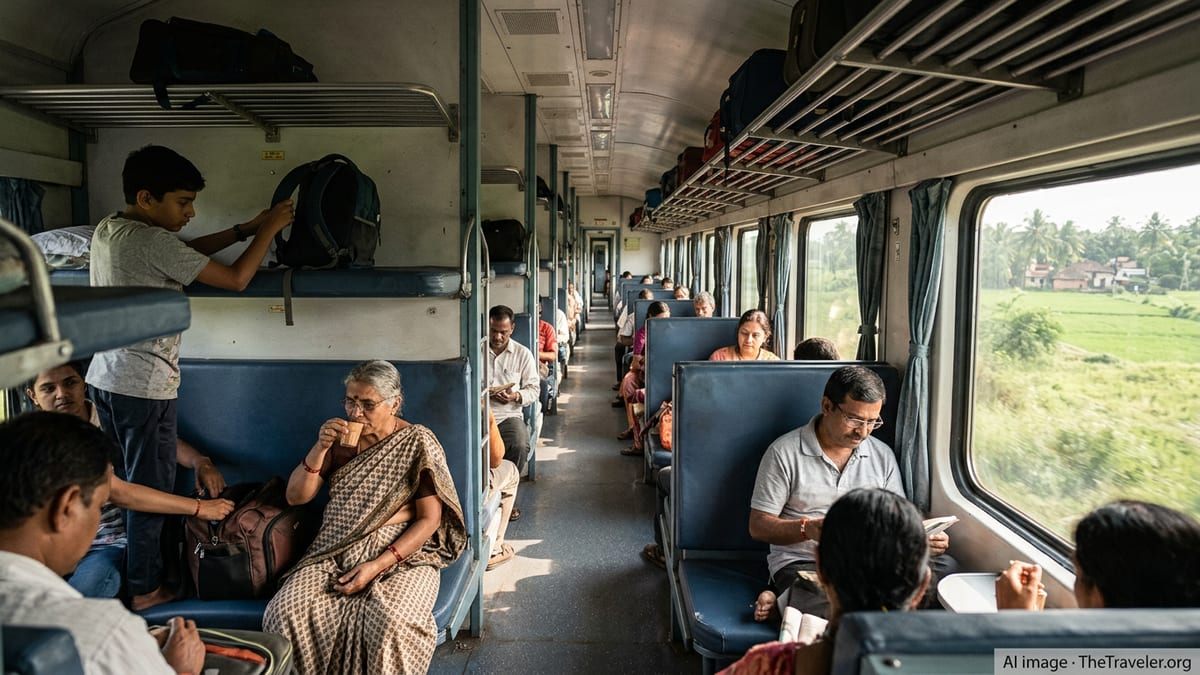
A Growing Backbone for Long Distance Budget Travel
Introduced as a new category of non air conditioned superfast services in late 2023, Amrit Bharat Express trains were conceived to upgrade the experience of the vast majority of Indian Railways passengers who travel in sleeper and general class. Publicly available information shows that the network has expanded steadily since the first commercial runs in January 2024, with the latest tranche of seven services further strengthening long distance connectivity across multiple regions.
Amrit Bharat trains use modern Linke Hofmann Busch coaches configured primarily with sleeper and unreserved accommodation, hauled by powerful electric locomotives. The design target is a maximum permissible speed of around 130 km per hour on suitable sections, enabling end to end journeys that are typically faster than existing express services on comparable routes. Reports indicate that many of the early routes have logged very high occupancy levels in sleeper class, suggesting strong demand for upgraded but still affordable travel options.
The latest additions follow earlier expansion phases that focused on links from Bihar and Uttar Pradesh to Delhi and from eastern India toward Bengaluru and other southern hubs. The seven new trains continue that pattern of stitching together distant regions at price points that remain accessible to lower and middle income travelers, particularly migrant workers and students who rely heavily on overnight services.
New Routes Linking East, North and South
According to published coverage and recent railway communication, the newest set of Amrit Bharat Express services has been deployed to fill long standing connectivity gaps between major population centers. Several of the trains originate in eastern and northeastern states, running across the heartland toward northern and southern metros, while others link coastal and interior cities that previously required slow, multi change itineraries.
New services from hubs in West Bengal and Assam expand options to destinations in Uttar Pradesh, Bihar, Maharashtra, Karnataka and Tamil Nadu, reflecting a deliberate focus on corridors with high volumes of migrant and seasonal travel. Journeys that once involved changing trains after long waits in major junctions are increasingly being replaced by through services that keep passengers in the same coach for the entire trip.
In the south, new Amrit Bharat Express links are reported to connect Kerala and Tamil Nadu more efficiently with major hubs such as Hyderabad and Bengaluru. These services complement existing long distance expresses and offer additional sleeper capacity on routes where many trains run at or near full occupancy for much of the year, particularly around festival and holiday peaks.
Faster Timings and Operational Advantages
While Amrit Bharat Express trains are not classified as high speed in the sense of dedicated bullet corridors, their schedules typically represent a noticeable improvement over legacy services on the same routes. Publicly available timetables show end to end average speeds that are higher than many conventional express trains, helped by upgraded track sections, improved rolling stock and more streamlined stopping patterns.
Journey times on some of the new seven services cut several hours from previous options, enough to turn what used to be a two night trip into a single overnight run in certain corridors. For passengers, the difference can translate into an extra working day saved at either end of a journey, while for the railway operator, faster turnarounds potentially allow better utilization of locomotives and coaches.
Operationally, running a branded family of long distance trains with standardized coach layouts, door positions and on board fittings can also ease maintenance and scheduling. Depots familiar with the Amrit Bharat configuration can streamline cleaning and servicing, while control offices can plan crossings and overtakings using broadly similar performance profiles across multiple routes.
Design Features Focused on Comfort and Capacity
The Amrit Bharat Express concept emphasizes incremental but meaningful improvements in comfort compared with many older non air conditioned trains. Interior photographs and descriptions published by Indian Railways highlight brighter coach interiors, better lighting, modern toilets, improved luggage racks and charging points to meet the needs of smartphone dependent travelers.
The use of LHB coaches, already standard on most premium services, contributes to a smoother ride and better safety characteristics than older designs. The train sets are designed for quicker acceleration and deceleration when paired with high horsepower electric locomotives, which not only supports faster schedules but can also reduce wear on infrastructure compared with frequent heavy braking of older rolling stock.
Importantly, the layout continues to prioritize capacity. Sleeper class remains the dominant accommodation type, reflecting the needs of budget travelers on journeys that often exceed 1,000 kilometers. Unreserved coaches at one end of the rake cater to short haul and last minute passengers who form a significant share of ridership on many trunk routes.
Balancing Expectations and Future Expansion
Public discussion around Amrit Bharat Express services has been lively, with some rail users praising the cleaner coaches and upgraded fittings, while others note that overall average speeds are still constrained by track capacity and mixed traffic on many routes. Comparisons with semi high speed Vande Bharat trains are common, even though the two categories serve different passenger segments and price points.
For policymakers and planners, the seven new trains represent another step in a broader effort to modernize a network that carries among the highest passenger volumes in the world. Official documents and media analyses point to a strategy that pairs marquee projects such as high speed corridors and premium chair car services with quieter but equally important improvements to the non air conditioned backbone used by most Indians.
Further expansion of the Amrit Bharat Express network is widely anticipated as additional rakes are manufactured and more routes receive track and signaling upgrades suited to higher average speeds. For travelers across India’s vast distances, each new long distance sleeper service that trims journey times while holding fares at accessible levels represents a tangible improvement in daily mobility and economic opportunity.