


More news on this day
Delta Air Lines passengers traveling between Atlanta and Chicago over the Independence Day holiday weekend reported hours-long delays, cancellations, and missed connections as a surge in demand and operational disruptions rippled through one of the carrier’s most heavily used routes.
Get the latest news straight to your inbox!
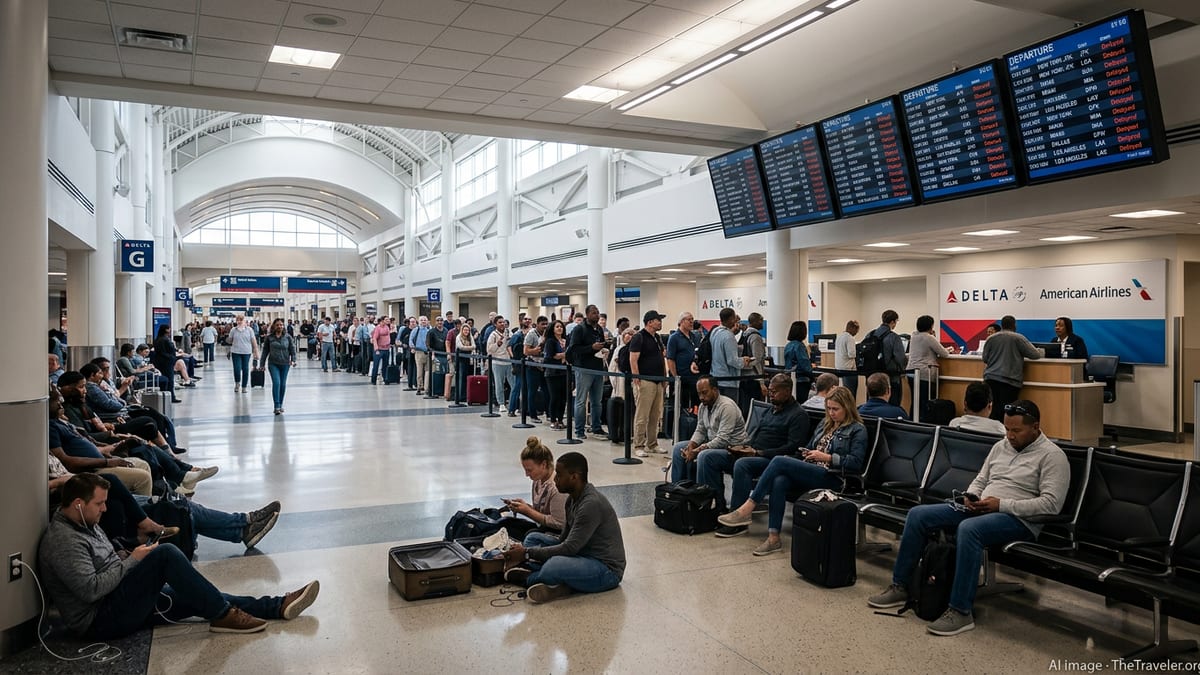
Heavy holiday traffic collides with operational disruptions
Independence Day 2026 shaped up as one of the busiest U.S. travel periods of the year, with airlines adding capacity and warning travelers to expect crowded airports and tight connections. Publicly available flight data and media coverage indicate that Delta’s services between Atlanta and Chicago were among the routes that struggled to keep up, with passengers describing extended waits on the ground and late-night arrivals.
Coverage from major U.S. outlets highlights multiple Delta flights between Hartsfield-Jackson Atlanta International Airport and Chicago’s two main airports, O’Hare and Midway, operating significantly behind schedule or being scrubbed entirely over the July 3 to July 5 period. Travelers posting on social media and consumer forums detailed delays stretching past three or four hours, along with last-minute cancellations that forced some to rebook for the following day or route through secondary hubs.
Schedule and tracking services show that while many Delta departures on the Atlanta to Chicago corridor did operate, a cluster of flights over the holiday weekend experienced extended ground holds, rolling departure times, and late-night gate arrivals. These disruptions were particularly painful for passengers using Atlanta as a connection point, since missed onward flights quickly cascaded into overnight stays and improvised itineraries.
Reports also point to broader strain across Delta’s network during the same period, with weather challenges, heavy holiday demand, and localized operational issues contributing to delays on other domestic and international routes. For travelers on the popular Atlanta to Chicago corridor, that meant fewer options when initial flights failed to operate as planned.
Passenger reports of long waits and missed plans
Accounts shared publicly by Delta passengers describe an uneven experience on the Atlanta to Chicago route over the holiday weekend. Some travelers reported typical holiday congestion but ultimately arrived only slightly behind schedule. Others recounted spending much of the day in terminals as departure times slipped repeatedly before flights were eventually canceled.
Several travelers described arriving at the gate in Atlanta to find their Chicago-bound flights already heavily delayed, only to see departure estimates move back by 30 or 60 minutes at a time. In some cases, passengers said they spent more than six hours waiting as crews, aircraft, or weather conditions disrupted the schedule. When cancellations were announced, rebooking proved difficult because subsequent flights were already near capacity for the holiday period.
Publicly available posts also point to knock-on effects for weekend travel plans. Travelers cited missed weddings, family gatherings, and vacation departures tied to the Chicago area, along with lost hotel nights and prepaid activities. Some passengers reported overnight stays in Atlanta or other connecting cities after missing the last viable Chicago departure of the day.
While individual experiences varied, the pattern described in traveler accounts aligns with data showing that a relatively small number of cancellations and extended delays can have an outsized impact during peak holiday periods, when spare seats and alternative routings are limited.
Firework contact incident adds to Chicago travel anxiety
Compounding concerns for some travelers on the Atlanta to Chicago corridor was a separate incident on the same weekend, in which a Delta flight from Atlanta to Chicago Midway reported contact with a firework during its final approach. According to widely circulated news reports, the crew of the flight, which was operating on the evening of July 4, alerted air traffic control after feeling a sudden impact and seeing a flash outside the aircraft.
Information released in subsequent coverage indicates that the aircraft landed safely and taxied to the gate without injuries among the 50-plus passengers and crew on board. Delta later stated in public comments that maintenance checks did not reveal structural damage to the Airbus A319 involved. Federal aviation regulators have opened an investigation into the incident, which occurred as Chicago neighborhoods were staging large Fourth of July fireworks displays.
For passengers already dealing with hours-long waits and cancellations between Atlanta and Chicago, news of the firework incident added another layer of anxiety to an already tense weekend. Although the event did not appear to trigger widespread additional cancellations on the route, it highlighted the unusual risks associated with dense fireworks activity near busy urban airports during major holidays.
Travel analysts note that while midair firework contacts are rare and commercial aircraft are built with significant safety margins, such events can heighten public attention on a specific airline and route, especially when they occur during a period of already heightened disruption.
Data show uneven performance on key Atlanta to Chicago flights
Flight-tracking databases for July 3 through July 5 show a mixed performance picture for Delta on the Atlanta to Chicago corridor. Some key flights between Hartsfield-Jackson and Chicago O’Hare recorded modest arrival delays of under an hour, within what many travelers consider tolerable for a peak holiday weekend. Others, however, experienced longer ground holds and schedule changes that produced multi-hour disruptions.
Historical records for flights such as Delta’s regular Atlanta to Chicago Midway services indicate that, on specific departures, estimated gate arrivals shifted repeatedly during the day as the airline adjusted to weather, traffic-management programs, and aircraft availability. In cases where delays extended deep into the evening, some flights were ultimately canceled, leaving passengers dependent on limited late-night options or next-day departures.
Operational advisories published by Delta in recent weeks have acknowledged strain in parts of the network linked to construction, weather, and infrastructure constraints at major hubs, including Atlanta. While those postings did not single out the Atlanta to Chicago route, they underline how disruptions in a central hub can ripple outward to popular domestic city pairs, particularly when combined with strong seasonal demand.
Industry observers note that the Atlanta to Chicago corridor functions as a critical link between two of the country’s busiest air travel markets, serving both point-to-point passengers and large numbers of connections to the Midwest, Great Lakes, and international destinations. Even limited irregular operations on this route can therefore affect far more travelers than the raw number of delayed or canceled flights might suggest.
What stranded travelers are being told about options
According to publicly available guidance on Delta’s website and recent advisory documents, customers affected by cancellations or significant delays generally have several options, depending on the cause and specifics of the disruption. In many cases, the airline automatically rebooks travelers on the next available flight to their destination and sends notifications through its mobile app and contact details stored in the reservation.
For holiday weekend travelers between Atlanta and Chicago, that automatic rebooking process sometimes meant arrivals many hours later than originally planned, or connections through alternate hubs where space was still available. Some passengers have reported accepting these options to salvage parts of their weekend plans, while others sought refunds or travel credits instead, particularly when the new itineraries no longer aligned with event schedules.
Consumer advocates routinely advise passengers dealing with lengthy disruptions to monitor their booking closely through official airline channels, verify whether a formal travel waiver is in effect, and document out-of-pocket expenses such as hotels and meals. For complex cases involving missed cruises, tours, or package trips linked to Chicago departures, travelers are often encouraged to review any travel insurance coverage or credit card protections that may apply.
The Independence Day weekend issues on Delta’s Atlanta to Chicago services underscore how quickly a combination of heavy demand, operational challenges, and isolated safety incidents can turn a normally routine domestic hop into an all-day ordeal. For many travelers, the experience has become a reminder to build extra buffer time into holiday itineraries on busy routes and to prepare contingency plans when flying during peak periods.