


More news on this day
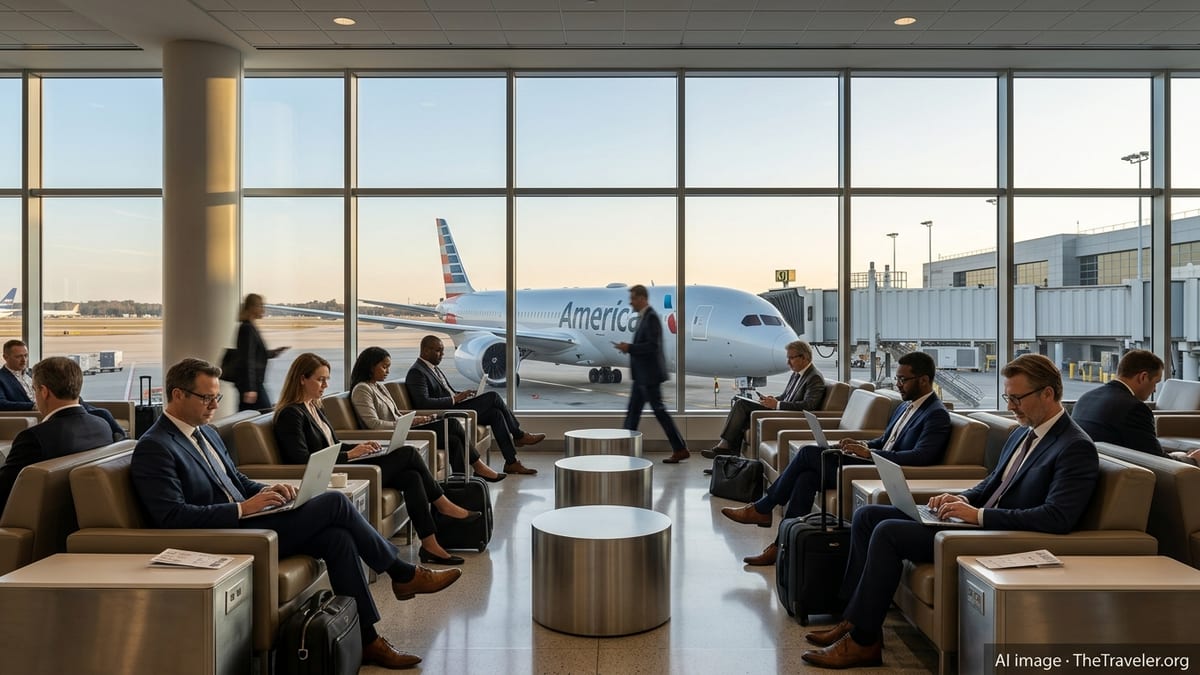
A new study from Texas Christian University estimates that American Airlines generates up to $71 billion in annual economic activity across North Texas, underscoring the carrier’s outsized role in the region’s growth and its position as the area’s dominant travel hub.
Get the latest news straight to your inbox!
Study Highlights Expansive Economic Footprint
The TCU report, commissioned to evaluate American Airlines’ regional impact, concludes that the airline’s presence tied to its Dallas Fort Worth International Airport hub supports tens of billions of dollars in business output each year. The estimate reaches as high as $71 billion when direct, indirect and induced effects across the wider North Texas economy are combined.
According to published coverage of the findings, the analysis captures the spending of the airline itself, the supply chain that services its operations, and the ripple effects generated when employees and suppliers spend their earnings in the community. This approach is commonly used in aviation and regional economic studies to reflect the broader ecosystem anchored by a major hub carrier.
The North Texas region, already one of the country’s most dynamic metropolitan economies, has long leveraged its central location and airport infrastructure as a competitive advantage. The TCU study places American Airlines at the center of that story, characterizing its DFW operation as a foundational economic driver rather than simply a transportation asset.
Regional economic reports have previously noted that air service, corporate relocations and population growth in the Dallas Fort Worth area are closely intertwined. The new TCU work adds updated figures that quantify just how large a single global carrier’s footprint has become in this environment.
Jobs, Payroll and Local Spending Ripple Through the Region
Beyond headline output figures, the study emphasizes employment and income supported by American’s North Texas operations. Public summaries of the analysis indicate that hundreds of thousands of jobs across the metro area are either directly tied to the airline or connected through airport services, hospitality, logistics, technology and professional services.
The DFW hub employs workers in a wide range of roles, from pilots, flight attendants and mechanics to ground crews, customer service staff and corporate employees based near the airport. The TCU researchers then extend that footprint to include jobs at tenant businesses, contractors and suppliers that depend on American’s daily schedule of flights, as well as positions at hotels, restaurants and retailers serving travelers.
The report also points to a sizable regional payroll associated with these positions, which flows into local consumer spending on housing, transportation, education and entertainment. Economists often describe this cycle as induced impact, where wages generated by a major employer circulate through the broader economy and support additional employment.
These job and income effects are particularly significant in North Texas, where the aviation and logistics sector has grown alongside corporate relocations and population gains. American’s long-standing decision to base its headquarters and largest hub in the region has helped solidify that concentration of aviation-related activity.
DFW Hub Strengthens North Texas as a National Gateway
Dallas Fort Worth International Airport is consistently ranked among the world’s busiest aviation hubs, and American operates the majority of flights there. Publicly available airport and airline data show that the carrier’s network strategy has turned DFW into a central connecting point for domestic and international travel, offering nonstop links to cities across the United States and key overseas markets.
The TCU findings underscore how that connectivity translates into economic gains. By concentrating flights at DFW, American enables a dense schedule of arrivals and departures that attracts corporate investment, regional offices and tourism spending. Businesses often cite air access as a critical factor when choosing where to expand or relocate, and North Texas has marketed its hub status as a competitive advantage in that race.
Travel and hospitality impacts are evident in hotel development around the airport, visitor spending in Dallas, Fort Worth and surrounding cities, and growth in meetings and convention activity. Freight and cargo operations linked to the airline’s network add another dimension, supporting distribution centers and logistics corridors that have proliferated along major highway and rail routes.
For travelers, the hub translates into more route options and frequencies, but for the regional economy it represents a strategic asset that influences corporate location decisions, tourism flows and long term infrastructure planning. The TCU study quantifies these dynamics in monetary terms, providing policymakers and civic leaders with updated figures to reference in transportation and economic development discussions.
Long-Term Partnership With North Texas Economy
American Airlines’ presence in North Texas stretches back decades, including the relocation of its headquarters to the area and continued investment in facilities around the airport. Over time, that relationship has deepened as DFW has expanded runways, terminals and support infrastructure designed to accommodate large volumes of connecting traffic.
Regional economic organizations often point to the airline’s decision to build and maintain its primary hub in North Texas as a pivotal factor in the area’s transformation into a major corporate and logistics center. The TCU analysis places that partnership into a contemporary context, arguing that the airline’s current scale now underpins a significant share of the region’s annual economic activity.
Publicly available planning documents for DFW highlight ongoing capital projects tied to the hub’s growth, including terminal modernization and capacity enhancements. Those projects, undertaken in coordination with airline needs, support construction jobs in the near term and are expected to sustain higher passenger volumes, visitor spending and business travel in the years ahead.
The new study arrives as airlines and airports across the United States continue to recalibrate networks, invest in upgraded passenger experiences and respond to evolving travel demand. In North Texas, the TCU findings suggest that American’s choices about fleet, schedule and infrastructure will remain closely watched not only by travelers and investors but also by communities that increasingly view the carrier as a cornerstone of the regional economy.