


More news on this day
Denmark is rapidly cementing its reputation as the “Las Vegas of Europe,” as thousands of international couples every year choose the Scandinavian country for fast, paperwork-light civil ceremonies set against cobbled streets, Baltic beaches and storybook town halls.
Get the latest news straight to your inbox!
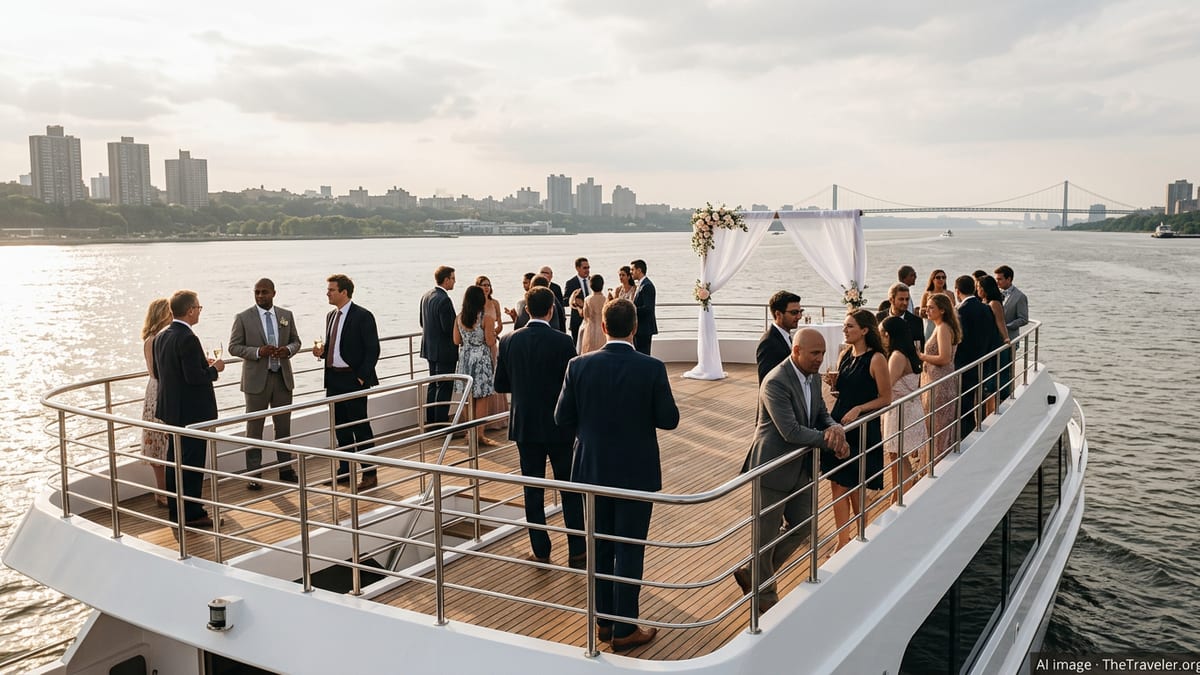
From Bureaucratic Headaches to One-Stop Wedding Trips
Across Europe and beyond, couples navigating cross-border relationships are facing increasingly complex residence rules, visa limits and national marriage regulations. In this climate, Denmark’s comparatively straightforward civil marriage framework has become a powerful draw for those who want legal certainty without long waiting periods or language barriers.
Publicly available guidance from Danish family law authorities shows that many international couples can apply digitally for permission to marry and receive a decision within weeks rather than months, provided their documents are in order. Requirements, while strict on fraud prevention, are clearly listed and largely the same for residents and non-residents, removing the need for prolonged local registration or mandatory pre-marital residency that is still common in some neighboring countries.
Reports from wedding planners and local tourism businesses indicate that this administrative predictability is one of the main reasons Denmark has become a magnet for binational and non-resident couples. For many, the appeal lies in being able to secure a legal marriage during a short trip, often combined with a mini-moon, instead of navigating prolonged procedures in their country of residence.
Online discussion forums and destination wedding communities increasingly refer to Denmark as Europe’s answer to Las Vegas, not for neon-lit chapels but for the combination of speed, accessibility and the possibility to marry while simply being a legal visitor in the country.
Liberal Laws and Inclusive Marriage Rights
Denmark’s liberal approach to marriage is another pillar of its growing wedding tourism. Decades of progressive family law, including early recognition of same-sex partnerships and later full marriage equality, have positioned the country as a safe and welcoming option for LGBTQ+ couples who may face restrictions at home.
European legal overviews highlight Denmark among the group of EU and Schengen states where both same-sex and opposite-sex couples can access civil marriage on equal terms. This has made the country particularly attractive for couples from jurisdictions where marriage laws are more restrictive, or where administrative practices still create obstacles for certain nationalities or family setups.
The country’s integration into wider European legal frameworks further strengthens its position. Marriages performed in Denmark can, in many cases, be recognized across the EU once properly documented and, when required, validated with an apostille. For globally mobile couples, that prospect of relatively smooth recognition abroad is an important part of the decision to marry there rather than in a traditional resort destination.
Specialist wedding agencies and legal advisers have emerged to guide couples through document requirements and post-wedding legalization, reinforcing Denmark’s status as a hub for streamlined, cross-border marriage arrangements.
Island Town Halls and Coastline Ceremonies Drive New Travel Patterns
Beyond the legal framework, the way Denmark packages its marriage offer is reshaping travel patterns to smaller towns and islands. Municipal information and local tourism marketing show that places such as Ærø, Bornholm and border town halls in southern Jutland host large numbers of foreign couples each year, far outnumbering local residents tying the knot.
Ærø in particular has gained a reputation as a romantic “wedding island,” with town hall ceremonies often followed by photo sessions along the harbor, on sandy beaches or in streets lined with colorful historic houses. Accommodation providers promote special wedding stays close to the town hall, and local vendors have built a cottage industry around bouquet services, photography and intimate celebration dinners.
On Bornholm in the Baltic Sea, municipal notes describe regular time slots set aside for civil ceremonies at the main town hall, while tourism materials highlight the island’s cliffs, forests and beaches as a backdrop for post-ceremony escapes. These locations combine the practicality of a quick civil marriage with scenery more commonly associated with honeymoon brochures than administrative appointments.
The pattern is mirrored in southern border towns, which have drawn non-resident couples for years due to simpler rules than in some neighboring countries. Data cited in past local coverage has shown that town halls in these areas at times perform dozens of foreign weddings for every ceremony involving local residents, underlining how strongly marriage tourism now shapes their visitor numbers.
Wedding Tourism Boosts Denmark’s Visitor Economy
The rise of Denmark as a quick wedding destination is intersecting with a broader tourism upswing. According to international tourism assessments, the country recorded record overnight stays in 2023, with international visits surpassing pre-pandemic levels. While general leisure and business travel still account for the majority of arrivals, niche segments such as marriage travel are increasingly visible within the overall visitor mix.
Wedding-focused travel has a multiplier effect on local economies. Couples typically stay several nights to complete formalities and enjoy a short holiday, and many bring a small circle of family or friends who also require accommodation, dining and transport. Local wedding planners, photographers, florists and restaurants all benefit from this concentrated demand, particularly in smaller communities where off-season tourism would otherwise be limited.
Industry operators report that some couples extend their trip into a broader tour of Scandinavia or continental Europe, using Denmark as a legal starting point before continuing on a honeymoon elsewhere. This pattern reinforces the country’s role as a gateway in more complex travel itineraries built around life events.
National tourism organizations have increasingly incorporated wedding imagery and references into their international promotion, presenting Denmark not only as a design and gastronomy destination but also as a setting for intimate, modern civil ceremonies.
Global Couples Seek Hassle-Free, Hybrid Wedding Experiences
The growing appeal of Denmark as Europe’s Las Vegas fits into a wider shift in how couples structure their weddings. Many now separate the legal act from the larger celebration, opting for a simple civil ceremony abroad that satisfies immigration and family law requirements, followed by a symbolic event closer to home at a later date.
Travel and wedding planning platforms highlight that this model is especially popular among binational couples, digital nomads and expatriates who live in a third country and cannot easily comply with traditional hometown procedures. For these travelers, Denmark offers an opportunity to resolve legal status quickly, in a country seen as neutral, efficient and relatively affordable compared with iconic luxury wedding destinations.
At the same time, the Danish model caters to a growing preference for smaller, experience-focused weddings. Many international couples arrive with just one or two witnesses, sometimes arranged by the town hall or a planner, and invest instead in photography, local gastronomy and a few days of exploration. This emphasis on intimacy and travel experiences aligns closely with broader trends in post-pandemic tourism and event planning.
As word spreads through online communities and social media, more couples are expected to add Denmark to their shortlist of wedding destinations, attracted by the promise of minimal bureaucracy, inclusive laws and the chance to turn a necessary legal formality into a memorable European getaway.