

More news on this day
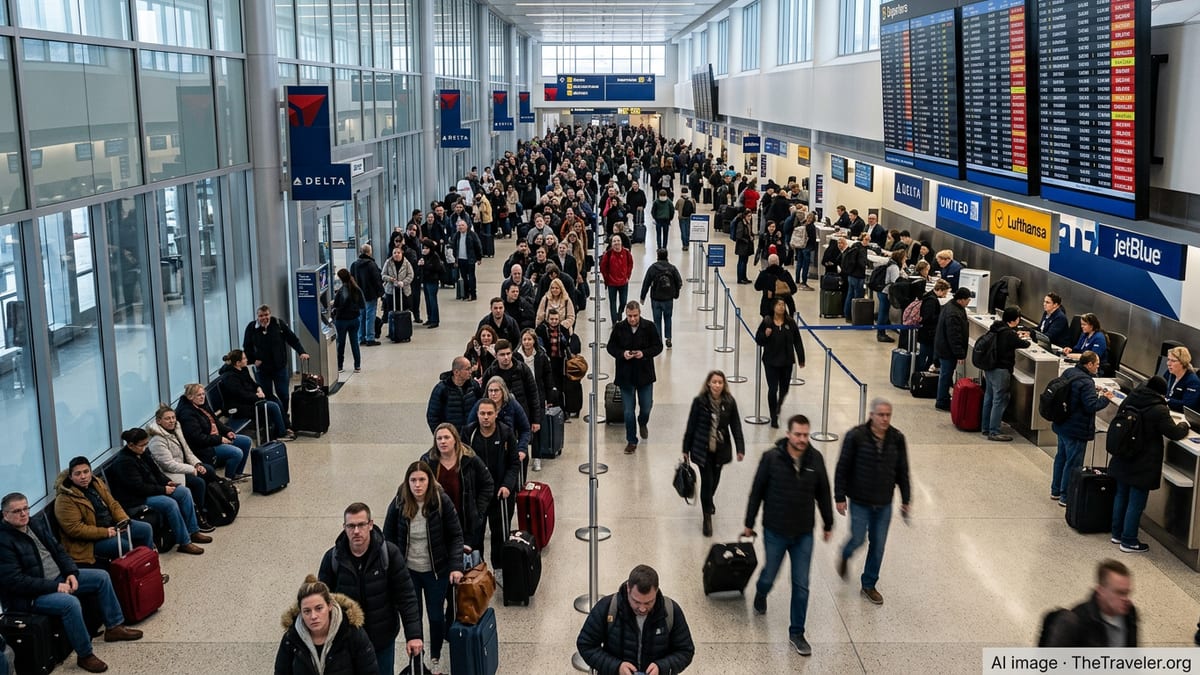
Travelers moving through Denver International Airport are facing another day of uneven operations, with clusters of delays and cancellations affecting Southwest and United flights and rippling across domestic routes.
Get the latest news straight to your inbox!
Patchy Operations After a Volatile Spring
Denver International Airport remains one of the busiest hubs in the United States, serving as a major connecting point for Southwest Airlines and United Airlines across the Mountain West and Midwest. Recent months have brought a mix of strong traffic growth and episodic disruptions, leaving schedules fragile when bad weather or technical issues arise.
Publicly available traffic dashboards from the airport show that both carriers have continued to add passengers and maintain sizable market share at Denver in early 2026, even as systemwide reliability has come under pressure during major weather events. This combination of high volumes and tight scheduling has made the airport particularly sensitive to storms, air traffic control slowdowns and downstream delays originating at other hubs.
Analysts who track airline operations note that this pattern is not unique to Denver, but the airport’s role as a central connecting node means that localized problems there can quickly magnify into missed connections and rolling cancellations throughout the day.
For passengers, the result is that short clusters of delays and cancellations, even when they affect a relatively small percentage of departures, can create outsized disruption across the network.
Southwest Cancellations Concentrated Around Weather and Congestion
Southwest passengers have experienced intermittent cancellations and long delays on certain Denver routes when storms or congestion hit the central United States. Industry overviews of 2026 disruptions describe Southwest among the carriers vulnerable to weather-related cancellations, particularly when snow, ice or strong thunderstorms affect multiple hub airports at the same time.
Operational summaries published earlier this year highlight familiar triggers for the carrier: airport congestion, air traffic control delays and fast-changing weather patterns that require last-minute adjustments to aircraft and crew availability. When those factors converge, Southwest has at times reduced frequencies or cancelled select flights out of Denver to reset its network, affecting travelers booked on popular domestic routes.
Recent traveler accounts circulating online indicate that some passengers have encountered limited notice when flights were cancelled or rebooked, with frustration focused on how quickly information appears in apps and email alerts during busy disruption periods. While those experiences are anecdotal, they underscore how even small gaps in communication can compound the stress of same-day cancellations.
At the same time, performance data shared in public forums suggest that Southwest’s overall cancellation rate remains relatively low by industry standards, with most Denver flights still operating but often leaving passengers vulnerable to delays when inbound aircraft arrive late from other cities.
United Adjusts Denver Schedules After Power and Weather Hits
United Airlines, which operates a major hub at Denver, has also made targeted schedule adjustments following a series of disruptive events this year. Reports from March described a power outage at the airport that prompted United to issue a travel waiver for Denver-originating and connecting customers, allowing some flexibility in rebooking during the recovery period.
That incident came on the heels of a broader March weather pattern that brought snow, ice and thunderstorms to large parts of the country, including Colorado. Industry trackers attributed thousands of cancellations across multiple airlines on peak days during that stretch, with Denver listed among the affected airports and United among the carriers trimming flights as conditions deteriorated.
Since then, United’s real-time schedules show Denver continuing to function as a core domestic hub, but with ongoing sensitivity to storms in both the Rockies and the Midwest. On high-impact days, the airline has tended to proactively cancel or consolidate a limited number of flights rather than risk cascading delays across its network, a strategy that can be especially visible to passengers funneling through Denver.
Travelers connecting on United through Denver this week report largely normal operations punctuated by occasional long delays on individual routes, underscoring how quickly conditions can shift from routine to disruptive when a new round of weather or technical issues arises.
What Today’s Delays Mean for Travelers at Denver
As of Thursday, June 18, publicly available flight-tracking boards show Denver operating without the kind of widespread shutdown seen during major winter storms, but with pockets of disruption tied to specific routes and carriers. Southwest and United flights into and out of the airport are generally running, though some departures are logging late pushbacks or arrival holds as weather and congestion in other regions ripple through the schedule.
Where cancellations have occurred, they appear concentrated on select domestic routes and time blocks rather than across entire Denver banks of flights. For affected passengers, this can still translate into missed connections, overnight stays and the need to rebook on alternative departures or carriers, even if the broader operation continues at a reduced tempo.
Travel advisers caution that the uneven pattern of delays and cancellations may persist into the evening as airlines work to reposition aircraft and crews. Because Denver sits at the intersection of east-west and north-south traffic flows, late-day disruptions can be particularly challenging for travelers who rely on tight connections to reach smaller regional destinations.
For those with flexibility, shifting to earlier flights, building in longer connection times and monitoring flight status frequently throughout the day remain among the most effective ways to reduce the risk of being stranded during a sudden disruption at Denver.
How Passengers Can Navigate Ongoing Schedule Volatility
Industry guidance compiled in recent months emphasizes preparation as the best defense against cancellation clusters at major hubs like Denver. Travel experts consistently recommend booking the first departure of the day when possible, since early flights are less exposed to knock-on delays from earlier disruptions and are often prioritized during recovery efforts.
Passengers are also encouraged to use airline apps and text alerts, which typically update more quickly than airport display boards during rapidly changing operations. While not fail-safe, these tools can provide earlier notice of gate changes, rolling delays or cancellations that may not yet be reflected at the terminal.
For Southwest and United customers in particular, understanding each carrier’s reaccommodation policies, same-day change options and eligibility for travel waivers can make a significant difference when schedules unravel. Published guidance stresses acting quickly once a disruption appears likely, as alternative seats on later flights tend to disappear rapidly when large numbers of passengers are seeking rebooking at the same time.
With the busy summer travel season ramping up, Denver’s experience illustrates how even a single day of irregular operations can have national repercussions. For now, Southwest and United flights are moving through the airport, but the pattern of selective cancellations and rolling delays serves as a reminder that passengers should build extra time and flexibility into any itinerary that runs through the Mile High City.