

More news on this day
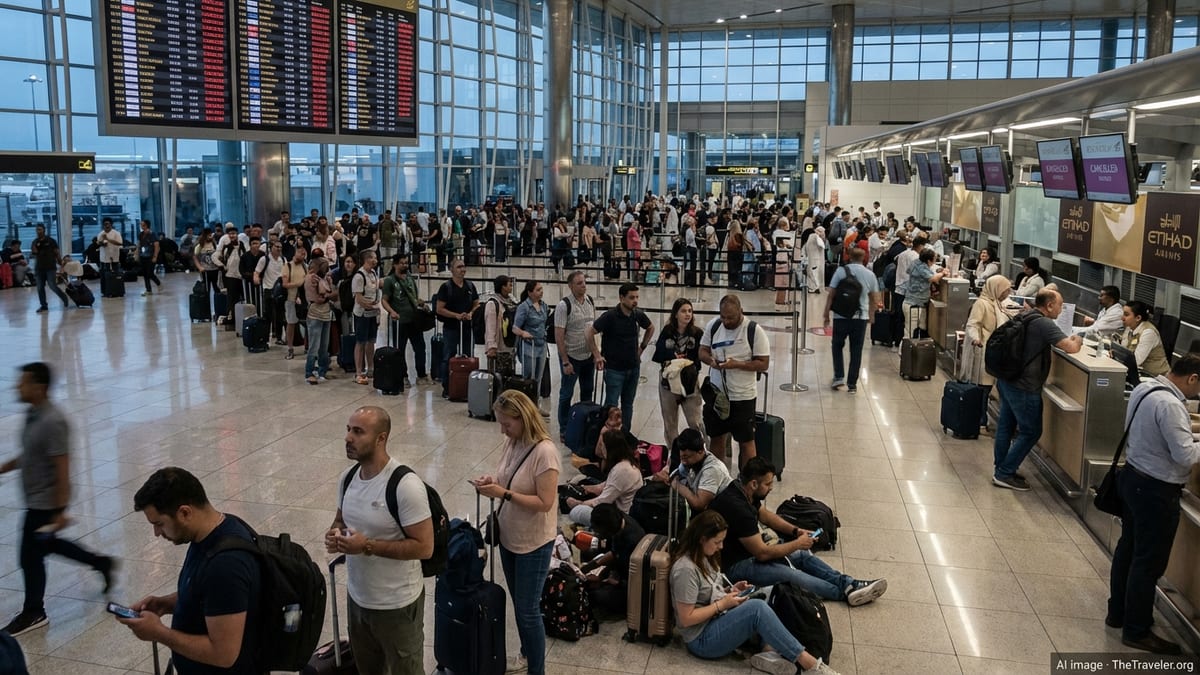
Global tourism is entering another turbulent season as a tentative cooling of hostilities in parts of the Middle East contrasts with a renewed escalation of conflict in Ukraine and recurring Iran–Israel tensions, reshaping flight routes, safety perceptions, and demand patterns across Europe and the Gulf hubs that underpin long-haul travel.
Get the latest news straight to your inbox!
Tourism’s Recovery Meets a New Geopolitical Stress Test
International tourism has broadly clawed its way back to, and in some regions beyond, pre‑pandemic levels, yet the sector now finds itself navigating overlapping crises that are highly concentrated along key aviation corridors. Data published by UN Tourism indicate that by late 2024 and into 2025, global arrivals were essentially back at 2019 volumes, with the Middle East and much of Europe among the main engines of the rebound. At the same time, industry and academic analyses highlight how war, sanctions, and energy shocks have reshaped travel flows and airline economics far more abruptly than typical economic cycles.
Recent European Tourism Commission material points to a solid recovery in Western and Southern Europe, even as Central and Eastern destinations remain more exposed to safety perceptions tied to the war in Ukraine. Parallel research on hotel performance and trade flows suggests that security shocks exert a disproportionate impact on borderland states, depressing occupancy in some markets while redirecting demand to destinations perceived as removed from the front lines.
In the Middle East, UN Tourism and regional data show that arrivals have surpassed pre‑Covid benchmarks, driven heavily by Gulf state investments in air connectivity and large‑scale events. Yet this growth has unfolded against a backdrop of periodic airspace closures and missile threats linked to the Iran–Israel confrontation, exposing how fragile the recovery can be when core transit hubs are pulled into wider security crises.
For travelers and the industry alike, the result is a patchwork map: strong headline numbers for global travel, but persistent weak spots around Eastern Europe and episodic disruptions radiating from the Gulf and Levant, where flight paths, insurance costs, and itineraries remain vulnerable to a sudden shift in risk calculations.
Ukraine Conflict Again Disrupts Eastern Europe’s Tourism Map
Russia’s full‑scale invasion of Ukraine, now in its third year, continues to undercut the region’s tourism prospects well beyond the immediate war zone. Publicly available assessments by the United Nations and European research institutes document repeated large‑scale missile and drone attacks against Ukrainian power, transport, and port infrastructure since 2024, with fresh waves of strikes reported against energy and airport facilities through late 2024 and into 2025. These attacks, combined with extensive landmine contamination and martial law, have effectively kept inbound leisure travel to Ukraine at a standstill.
The collateral impact extends into neighboring EU members. Analysis compiled for the European Travel Commission cites sustained booking weakness in countries such as Poland and the Baltic states, where inbound demand from long‑haul markets remained significantly below 2019 levels in 2023 and early 2024, in large part due to travelers’ perception of the broader region as unsafe. Hotel‑sector studies reinforce this picture, indicating that proximity to the conflict correlates with softer occupancy and revenue figures compared with Western European peers.
Airspace closures and sanctions have compounded the disruption. Research on Europe–Asia air routes shows that the closure of Russian, Belarusian, and parts of Ukrainian airspace has forced detours for many European and Asian carriers, lengthening flight times and raising operating costs on itineraries that once formed the backbone of long‑haul tourism between Europe, Northeast Asia, and the Pacific. Those additional hours in the air translate into higher fares, altered schedules, and in some cases the suspension of marginal routes.
Russia, for its part, has seen its own inbound tourism market structurally weakened by sanctions, restricted air links, and reputational risk. Official statistical summaries cited in specialist travel media report that foreign arrivals to Russia remained well below pre‑war norms in 2024 despite a modest rebound in domestic trips, underscoring how the conflict has depressed cross‑border leisure flows on both sides of the front.
From Sky Closures to Level‑4 Warnings: Iran Crisis Fallout
Alongside the fighting in Ukraine, the multi‑layered confrontation involving Iran, Israel, the United States, and regional allies has emerged as another powerful disruptor of global travel. A succession of incidents since early 2024, including Israeli strikes on Iranian targets in Syria and retaliatory missile and drone salvos by Iran and its partners, has periodically pushed the region to the brink of wider war. In 2026, a new phase of hostilities triggered mass evacuations of foreign nationals from parts of Iran and neighboring states, while attacks on airfields and energy facilities reverberated through commercial aviation networks.
Industry risk briefings and travel advisories describe a pattern of sudden airspace closures affecting not only Iran and Israel but also Iraq, Syria, and at times segments of Gulf airspace. During peak escalation periods, carriers have rerouted or suspended flights over large swaths of the Middle East, interrupting global traffic between Europe, Asia, and Africa. U.S. government warnings now classify Iran and parts of Iraq as do‑not‑travel destinations, with similar cautionary guidance issued by several European states, effectively freezing leisure demand and sharply curbing business travel.
The disruptions have not been limited to countries directly involved in the fighting. Transit hubs in the United Arab Emirates, Qatar, Bahrain, and Saudi Arabia have faced episodic schedule changes and operational constraints when regional skies narrowed, even though their own airports remained open and largely secure. Airlines based in those markets have publicly detailed route adjustments and fuel‑burn penalties when forced to avoid conflict‑adjacent air corridors, costs that ultimately filter down to passengers through higher fares or reduced capacity.
Although recent diplomatic signaling suggests that Tehran, Tel Aviv, and key Gulf capitals have occasionally sought to step back from full‑scale confrontation, the lingering risk of renewed strikes or maritime incidents in the Gulf and Red Sea keeps travel insurers and corporate security departments on high alert. For many would‑be visitors, that translates into postponed trips or preference for alternative hubs perceived as less exposed to sudden escalation.
Gulf and Levant Destinations Balance Growth with Perceived Risk
Paradoxically, some of the same states navigating heightened security concerns are also leading global tourism growth. UN Tourism data and regional reporting show Saudi Arabia, the United Arab Emirates, and Qatar among the fastest‑growing destinations worldwide by 2024 and 2025, buoyed by aggressive investment in new resorts, heritage attractions, and airline expansion. Saudi Arabia in particular has registered arrivals far above 2019 levels as it positions itself as both a stand‑alone destination and a major transfer point between continents.
Other Middle Eastern destinations have seen a more uneven trajectory. Lebanon, Jordan, and parts of the wider Levant remain vulnerable to spillover from the Israel–Hezbollah front and the unresolved crises in Syria. Episodes of cross‑border fire, domestic political instability, and infrastructure strain periodically trigger cancellations and group‑tour withdrawals, even as local hospitality sectors work to attract visitors with competitive pricing and cultural programming.
Despite these headwinds, regional cooperation has yielded signs of a slow cooling in the immediate risk of a runaway Middle East war at several points since late 2024. Joint statements by Gulf and Western governments have emphasized the need to prevent escalation along the Israel–Lebanon border, while quiet contacts among Iran, Gulf monarchies, and external powers have sometimes succeeded in limiting retaliation cycles. For airlines and tour operators, such de‑escalatory pauses have allowed for a gradual restoration of schedules and marketing in key source markets, especially in Europe and Asia.
Nevertheless, the narrative of a fully normalized Middle East for tourism remains fragile. Operators continue to embed flexible booking conditions, layered security assessments, and contingency routings into products that touch Iran‑adjacent airspace or cross land borders near active flashpoints. Travelers willing to visit often do so with a clearer understanding that itineraries may change at short notice if regional tensions spike.
Shifting Corridors, Higher Costs, and Traveler Fatigue
Taken together, the Ukraine war and the Iran‑centered crises illustrate how modern tourism is highly sensitive to conflicts that may be thousands of kilometers from a traveler’s ultimate destination but sit astride the air and sea corridors that connect the global network. Academic work on the economic fallout from the Russia–Ukraine conflict notes that war not only reduces direct trade and travel volumes but also magnifies existing frictions, accelerating the redirection of flows toward less exposed regions. A similar pattern is now visible in aviation data, with carriers favoring routings that minimize time over or adjacent to high‑risk airspace.
For consumers, these shifts increasingly manifest as higher ticket prices on some intercontinental routes, longer travel times, and a more complex risk calculus when choosing where to spend holiday budgets. Surveys compiled for European tourism authorities highlight a persistent perception of Eastern Europe as a risky region among some long‑haul visitors, even when their chosen cities lie hundreds of kilometers from Ukraine’s borders. In the Middle East, high‑profile missile tests and images of intercepted drones have periodically chilled demand, particularly for first‑time travelers weighing whether to book.
At the same time, there is evidence of traveler fatigue with constant crisis headlines. UN Tourism monitoring and industry commentary suggest that many experienced tourists are increasingly distinguishing between countries directly affected by war and those that are merely in the same broad region, leading to a rebound in places like the UAE or southern Mediterranean destinations despite ongoing instability further east. This segmentation offers a measure of resilience but also risks entrenching long‑term stigma for frontline and neighboring states.
As 2026 unfolds, global tourism appears set to continue growing overall, yet along bifurcated lines: on one side, destinations that are able to market stability, maintain open skies, and capitalize on reconfigured corridors; on the other, countries such as Ukraine, Russia, Iran, and parts of the Levant that remain effectively sidelined from the mainstream leisure market by security realities, even as their circumstances help determine whether the rest of the world’s travelers can move freely.