

More news on this day
Travelers across the United States, Caribbean, and Mexico are facing significant disruptions as JetBlue records 209 flight delays and 17 cancellations in a single day, affecting a mix of domestic and international routes into major hubs including New York, Boston, Fort Lauderdale, Orlando, Los Angeles, San Juan, Cancun, Aruba, and Nassau.
Get the latest news straight to your inbox!
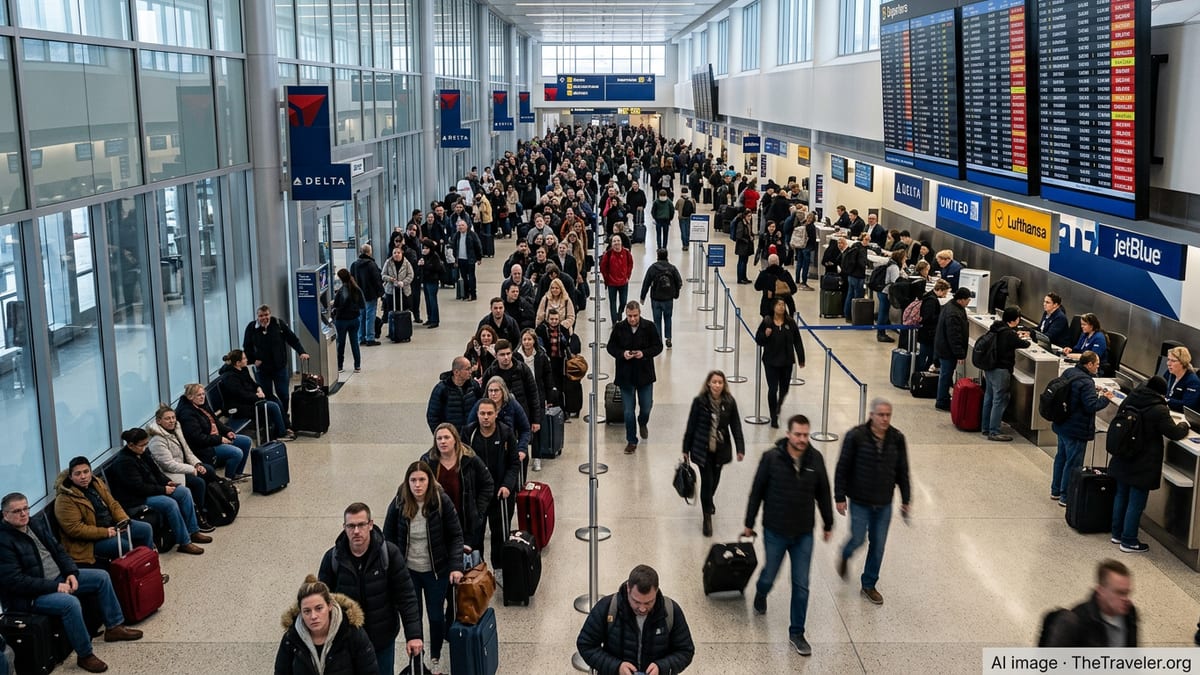
Heavy Operational Strain Across Key JetBlue Gateways
The latest disruption figures highlight how concentrated JetBlue’s operations are at a handful of busy coastal airports. New York, Boston, Fort Lauderdale, Orlando, Los Angeles, and San Juan serve as core gateways for the carrier, feeding traffic to the Caribbean, Mexico, and cross-country U.S. routes. When schedules at these hubs come under pressure, knock-on effects can quickly ripple through the wider network.
Publicly available flight-tracking data for the day of disruption shows that hundreds of JetBlue departures and arrivals experienced schedule changes, with some services pushed back by hours and others removed from the timetable entirely. The 209 delays and 17 cancellations represent a small share of JetBlue’s total daily schedule, but the concentration on key leisure and visiting-friends-and-relatives markets means many travelers saw vacation plans and family visits upended.
Reports indicate that popular routes into New York area airports, Boston Logan, and Florida gateways were particularly affected. These airports already handle dense traffic and are vulnerable to airspace congestion, making it harder for airlines to recover once delays begin to build across peak travel periods.
The disruption also comes as JetBlue continues to adjust its broader network strategy, including a publicly reported reduction in operations at Newark and LaGuardia in order to focus more resources on its profitable Fort Lauderdale hub. Any misalignment between aircraft, crew, and gate availability can add strain to already complex operations when irregular events arise.
Caribbean and Mexico Leisure Routes Hit Hard
While many of the delays involved domestic legs, a notable share affected international leisure markets such as Cancun, Aruba, and Nassau, along with other Caribbean destinations reached via JetBlue’s hubs in New York, Boston, Fort Lauderdale, and San Juan. These routes are especially time-sensitive for travelers whose plans revolve around resort check-ins, cruise departures, and prepaid excursions.
Flight-status data and traveler accounts shared publicly show that services into and out of San Juan have been an important pressure point. San Juan plays a dual role in JetBlue’s network, acting as both a local gateway for Puerto Rico and a connecting point toward other islands. When flights into San Juan are delayed, onward connections to smaller Caribbean destinations can be missed, leaving passengers waiting for the next available seat on already full services.
Similarly, delays on northbound flights from Cancun, Aruba, and Nassau into U.S. hubs have left some travelers facing missed connections to domestic destinations. In several cases, customers reported on social platforms that evening departures were pushed back multiple times before eventually operating late at night, extending what were intended to be short, direct journeys into all-day ordeals.
Because many of these leisure routes operate with limited daily frequency, a single cancellation or lengthy postponement can translate into overnight stays or multi-stop rebookings. This amplifies the practical impact of what may appear as relatively modest cancellation numbers on paper.
New York and Boston Remain Vulnerable to Cascading Delays
JetBlue’s identity as a major carrier in New York and Boston means its on-time performance is closely tied to the operational realities of those congested airports. Industry discussions and traveler reports frequently note that when weather or air traffic control constraints slow movements in the Northeast, airlines with dense schedules at John F. Kennedy International and Boston Logan face a higher risk of cascading delays.
On the day JetBlue logged 209 delays and 17 cancellations, many of the affected services involved aircraft that either originated from or were scheduled to pass through New York or Boston at some point in their daily rotations. Once an aircraft arrives late into one of these hubs, the resulting schedule compression can push subsequent departures further behind, especially in late afternoon and evening banks when runways are busiest.
Passengers reported extended waits on the ground and at gates, sometimes receiving multiple departure time updates as operations attempted to reshuffle aircraft and crews. Because JetBlue often uses the same aircraft for several short- and medium-haul segments per day, an early delay can compound quickly, touching destinations far beyond the initial problem airport.
Travel data guides note that late-evening departures are typically more prone to disruption than early-morning flights, a pattern that appears to have played out across portions of JetBlue’s schedule. Travelers booked on later departures into or out of New York and Boston were more likely to encounter rolling delays as the day progressed.
Fort Lauderdale, Orlando, and Los Angeles Feel Secondary Impacts
Fort Lauderdale and Orlando, two of JetBlue’s core Florida bases, also featured prominently in the day’s disruption statistics. These airports serve as gateways not only for Florida-bound vacationers but also for customers continuing onward to the Caribbean and Latin America. When flights from the Northeast arrive late, crews and aircraft for onward services can be out of position, triggering additional schedule changes.
Publicly available information on JetBlue’s strategy indicates a renewed emphasis on Fort Lauderdale as a central hub, including upcoming expansions of premium transcontinental services to the West Coast. This increased focus heightens the importance of maintaining reliable operations at Fort Lauderdale, since disruptions there can affect both domestic links and long-haul routes.
Los Angeles has also experienced knock-on delays linked to East Coast congestion. When transcontinental flights depart late from New York, Boston, or Fort Lauderdale, arrival times into Los Angeles can spill into the late night and early morning hours. This complicates crew scheduling and aircraft turnaround times for subsequent services, particularly where overnight maintenance or early morning departures are involved.
In Orlando, where air traffic is heavily driven by theme-park tourism and family travel, delays can be especially disruptive for tightly planned itineraries. Flight-status records show that several Orlando services operated significantly behind schedule, affecting travelers connecting from Caribbean and Northeastern routes as well as those starting or ending their journeys in central Florida.
What Travelers Can Do During Disruptions
For passengers caught in widespread delays and cancellations, publicly available consumer-advocacy guidance emphasizes the importance of closely monitoring flight status through both airline apps and independent tracking tools. Data compiled on day-of-operations performance suggests that updates can change rapidly once irregular operations begin, and that alternative options may disappear quickly as other affected travelers seek rebooking.
Travel rights information published by regulators and consumer groups notes that, on U.S. domestic flights, airlines generally decide their own compensation policies for delays that are not related to formal involuntary denials of boarding. However, for cancellations and significant schedule changes initiated by the airline, travelers may be entitled to refunds if they choose not to travel, separate from any credits or vouchers offered.
Advisories also highlight that travelers heading to leisure destinations such as Cancun, Aruba, Nassau, and San Juan can reduce risk by allowing extra buffer time before cruise departures or important events, and by considering travel insurance products that cover delays and missed connections. Given the concentration of JetBlue’s operations at congestion-prone airports, building in flexibility can make a difference when disruptions like the latest 209 delays and 17 cancellations occur.
As JetBlue pursues route adjustments in New York and expansion in South Florida, the airline’s ability to maintain dependable operations during peak travel days will remain under scrutiny from both travelers and industry observers. For now, the latest wave of disruptions serves as a reminder of how quickly conditions at a few key hubs can affect journeys across an entire route map.