


More news on this day
Australia’s Department of Foreign Affairs and Trade is urging travellers to treat artificial intelligence as a starting point, not a substitute, for planning overseas holidays, warning that AI-generated itineraries can overlook critical safety advice, visa requirements and fast-changing local conditions.
Get the latest news straight to your inbox!
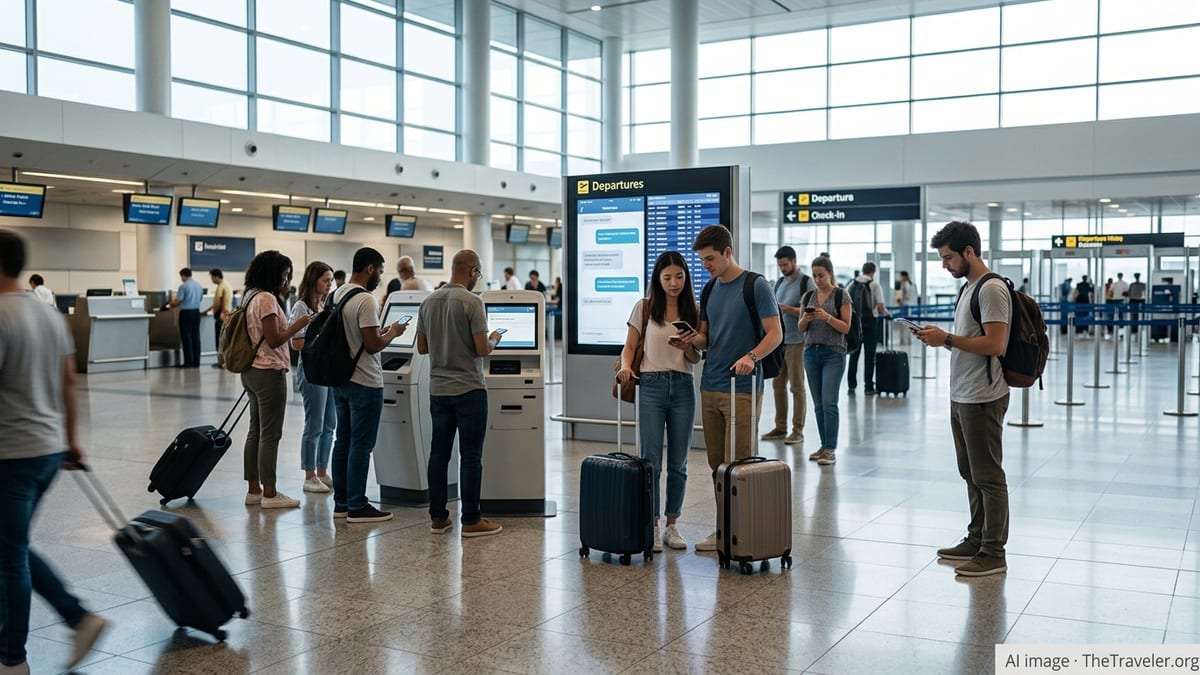
New DFAT guidance targets AI travel boom
Publicly available information from Smartraveller, the government’s official travel advice service, shows that DFAT has released dedicated guidance on “travel planning with AI”, reflecting how rapidly Australians are turning to chatbots and itinerary generators when booking trips.
The advisory, updated in mid-July 2026, notes that AI tools are now commonly used to select destinations, map out daily schedules and even estimate budgets. Research cited by the department indicates that around 30 per cent of Gen Z Australians already rely on AI to help plan overseas travel, with usage expected to grow as platforms become more embedded in booking sites and travel apps.
DFAT’s message is not to avoid AI altogether, but to be sceptical about its output. The guidance frames AI as a useful research aid that can help cut through information overload, while stressing that travellers remain responsible for verifying any advice against official sources before they book or depart.
The move places Australia among the first governments to publish consumer-facing guidance specifically focused on AI in leisure travel, underlining mounting concern that convenience and novelty may be overshadowing due diligence.
Inaccurate safety, visa and law advice flagged as key dangers
The Smartraveller material highlights multiple areas where AI-generated itineraries can expose Australians to risk, particularly when tools are used for information that has legal or safety consequences. DFAT-backed research shows that younger travellers are already leaning on AI for complex topics such as visas, local laws and personal security.
According to the guidance, AI systems may provide outdated, incomplete or simply wrong information about visa and entry rules, including requirements for onward tickets, proof of funds or mandatory travel insurance. Inaccurate advice in these areas can lead to denied boarding, refusal of entry or costly last-minute changes at the border.
The department also points to misinterpretations of local laws and customs as a concern. AI models trained on general web content may understate penalties for offences such as drug possession, public behaviour or photography restrictions, or miss country-specific rules on items like medications and drones. Travellers who follow such advice without checking official regulations could inadvertently break the law.
On the safety front, the advisory warns that AI tools may overlook current travel alerts and security issues, including civil unrest, natural disasters, crime hotspots or disease outbreaks. Because many models are not updated in real time, they can recommend neighbourhoods, routes or even entire destinations that appear attractive but are currently subject to elevated risk levels or “Do Not Travel” advisories.
When AI itineraries collide with on-the-ground reality
Beyond legal and security pitfalls, DFAT’s guidance lists a series of practical problems that have become common as AI holiday planning spreads. Reports compiled in public coverage describe AI suggesting hotels that have permanently closed, attractions that are shut for renovations, and seasonal activities that are unavailable at the time of travel.
Transport information is another weak point. The advisory notes that AI may reproduce outdated flight schedules, public transport timetables or route maps, failing to reflect pandemic-era changes, budget airline withdrawals or new rail links. Travellers who build tight connections around such data can face missed departures, additional costs and disrupted itineraries.
Cost estimates generated by AI can also mislead. By drawing on generic or historic pricing, tools may significantly understate accommodation, ticket and local transport expenses, particularly in destinations experiencing rapid inflation or tourism surges. This can leave travellers under-budgeted, with limited options once abroad.
DFAT’s broader consular reporting shows that even small planning gaps can cascade into bigger problems, from being stranded without affordable onward travel to needing emergency financial assistance. The department’s message is that AI cannot be relied upon to capture the latest conditions that determine whether a trip runs smoothly.
Government pushes official travel advice as the safety anchor
Alongside the AI-specific warning, DFAT is using the moment to reinforce long-standing messages about smart travel preparation. Smartraveller’s platform encourages Australians to start every trip by checking the official advisory level for their destination, then revisiting it before departure and while overseas.
The site’s country pages combine security assessments, local contact details, health updates and practical guidance covering everything from driving standards to natural hazard seasons. DFAT states that this advice is continually reviewed and updated as new information emerges, and should be treated as the authoritative baseline for risk decisions.
In its AI guidance, the department frames these official advisories, together with other verified government sources, as the benchmark against which any AI-generated suggestion should be tested. It recommends that travellers confirm specific details such as visa conditions, vaccination requirements and prohibited items directly with government or airline channels rather than relying on chatbot responses.
Travel industry commentary also notes that insurers often expect policyholders to have followed official travel advice when making claims, meaning that ignoring updated government warnings in favour of AI itineraries could have financial consequences if something goes wrong.
AI as a planning tool, not a travel autopilot
Despite the cautious tone, DFAT’s position recognises that AI is now embedded in how many Australians search, compare and book holidays. The Smartraveller guidance presents a model where AI is used to inspire early-stage ideas, organise preferences and draft sample itineraries, while critical checks and final decisions are grounded in human judgment and trusted information.
Publicly available research on consumer behaviour suggests that a large majority of younger travellers already cross-check what AI provides against at least one other source, indicating that habits may be evolving toward a more blended approach. Travel commentators argue that the real risk lies not in using AI, but in allowing its convenience to replace verification.
DFAT’s warning effectively reframes AI as part of a broader toolkit: helpful for brainstorming routes and activities, translating basic phrases or comparing accommodation options, but unsuitable as a sole authority on border rules, safety conditions or legal obligations. The department’s messaging to Australians considering AI-planned holidays is clear: enjoy the efficiency and creativity of new tools, but make sure every key decision is anchored in up-to-date, official advice.