


More news on this day
Spain’s national rail operator Renfe is preparing a large scale digital upgrade of its high speed fleet, combining 5G mobile networks and low Earth orbit satellite links to deliver more reliable onboard WiFi across 183 trains.
Get the latest news straight to your inbox!
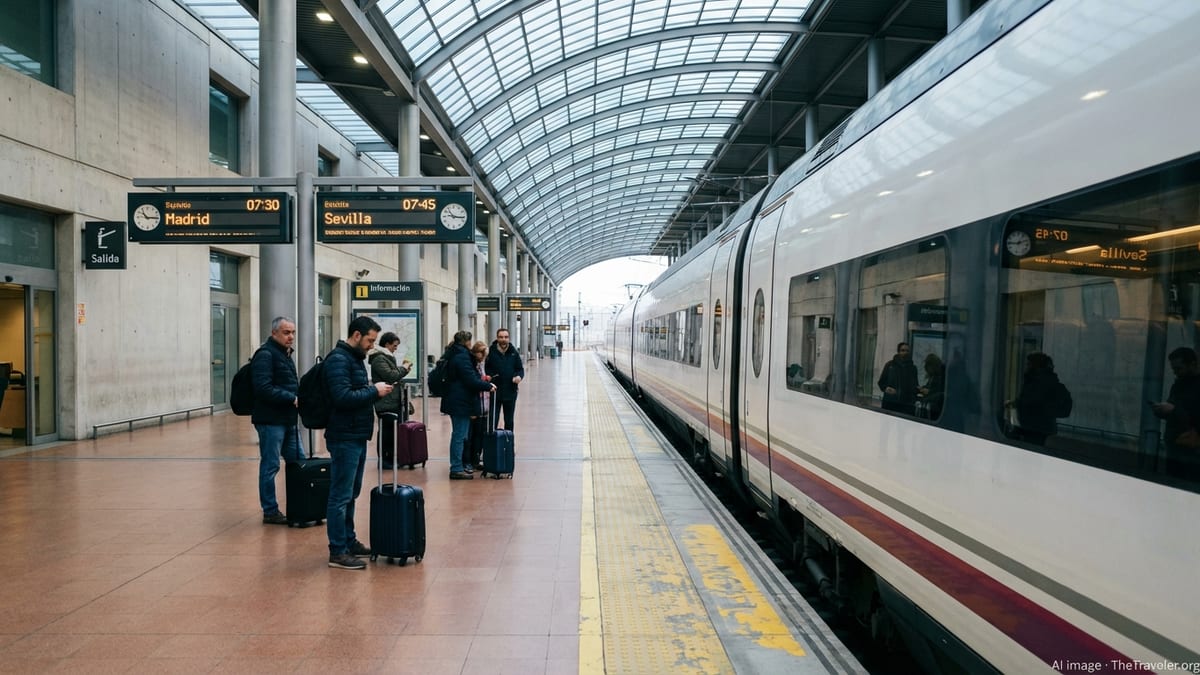
New hybrid network to replace existing onboard WiFi
According to published information from the company, Renfe plans to deploy a unified connectivity platform on all series of its Alta Velocidad trains, covering 183 units used on AVE and long distance routes. The new system will replace the current PlayRenfe setup with an infrastructure designed to integrate multiple communication technologies in a single managed network.
The upgraded architecture is expected to blend LTE and 5G coverage with low Earth orbit satellite connections, dynamically routing traffic across available links to maintain service continuity. Publicly available details indicate that this approach is intended to reduce the frequency of WiFi dropouts that passengers currently experience on some Spanish high speed lines, particularly in rural sections and tunnels where terrestrial mobile coverage is sparse.
Renfe’s communications describe the initiative as a “service integral de conectividad,” a full connectivity service that goes beyond passenger entertainment to support a broader digital ecosystem onboard. The move aligns the operator with a growing trend in European rail, where hybrid ground and satellite systems are being tested and deployed to meet rising expectations for always on internet access while travelling.
Focus on passenger experience and onboard entertainment
Reports indicate that one of the main goals of the project is to improve the digital experience for travelers, who have grown accustomed to streaming media, remote work and cloud based services during their journeys. By increasing bandwidth and smoothing out coverage gaps, the operator aims to make activities such as video conferencing, VPN connections and high definition streaming more viable on long distance routes.
The unified platform is expected to continue offering an onboard entertainment environment similar to the current PlayRenfe service, but with higher quality connectivity as its backbone. That includes access to films, series and other multimedia content, alongside general internet browsing. Industry coverage notes that better network performance should also allow more personalized content recommendations and smoother integration with passengers’ own devices.
Improved WiFi is increasingly seen as a factor in encouraging modal shift from air and road to rail on key domestic corridors. For Renfe, which competes with low cost airlines and new high speed rail entrants on routes such as Madrid Barcelona, a more dependable digital offering is likely to be part of its strategy to retain and win customers who depend on being online throughout their trip.
Operational and safety systems to benefit from connectivity
While passenger facing WiFi is the most visible element of the project, publicly available documents highlight that the new network is also intended to serve a wide range of operational uses. The upgraded communications backbone will enable applications related to train diagnostics, real time monitoring of onboard systems and more efficient maintenance planning.
Enhanced bandwidth and lower latency are expected to support the transmission of large volumes of technical data from trains to control centers, helping staff identify issues earlier and schedule interventions more precisely. Industry analyses of similar projects in Europe suggest that this kind of connectivity can reduce out of service time and improve fleet availability by allowing predictive maintenance models to run on richer data streams.
The system is also designed to integrate with other onboard services ranging from passenger information displays to security cameras and environmental controls. As rail operators increasingly digitize their operations, a robust communications layer on each train becomes essential for both customer comfort and safe, efficient running of high speed services.
Part of a broader digital transformation in European rail
Renfe’s plan to combine 5G and satellite links on 183 trains comes as rail operators across Europe experiment with new connectivity models. Projects supported by European digital initiatives have explored 5G coverage along high speed corridors and the use of neutral host infrastructure that can be shared by multiple mobile networks, while national operators in countries such as Portugal and the United Kingdom are testing low Earth orbit satellite services to improve WiFi on routes with difficult terrain.
Technical studies highlight that high speed trains present particular challenges for mobile networks, including rapid cell handovers, signal attenuation through carriage structures and frequent transitions between open countryside, tunnels and urban areas. Hybrid architectures that can aggregate several terrestrial networks and fall back on satellite when ground coverage is weak are increasingly viewed as a pragmatic solution to these constraints.
For Spain, the Renfe initiative underlines the role of connectivity in making rail more competitive and attractive, especially as new operators enter the liberalized high speed market. By investing in a common platform across its Alta Velocidad fleet, the company is positioning its trains as mobile digital spaces where work and leisure can continue with fewer interruptions, reinforcing high speed rail’s appeal on some of the country’s busiest corridors.
Timeline and scope of the 183 train rollout
Renfe’s announcements state that the connectivity upgrade will extend to all of its high speed series, encompassing 183 trains that operate a mix of domestic AVE and long distance services. While detailed deployment dates have not been set out in public materials, the program is framed as a multi year effort intended to progressively eliminate current WiFi blackspots.
The scale of the rollout suggests a phased installation, with work likely scheduled to coincide with planned maintenance windows in order to limit disruption to regular services. Industry observers note that hardware for the hybrid system, including roof mounted antennas, onboard routers and cabling, must be carefully integrated into existing rolling stock and fully tested at speed before entering commercial use.
Once completed, the project is expected to give Renfe one of the largest high speed fleets in Europe equipped with a mixed terrestrial and satellite connectivity solution. For passengers, the most immediate change will be a more stable WiFi experience on routes that previously suffered from frequent signal loss, while for the operator the new platform becomes a key enabler of ongoing digital transformation across its long distance network.