


More news on this day
Europe’s carbon market is generating record sums for climate action, and transport analysts say a bigger, more predictable slice of this revenue could turn rail into a central tool for cutting emissions across the continent.
Get the latest news straight to your inbox!
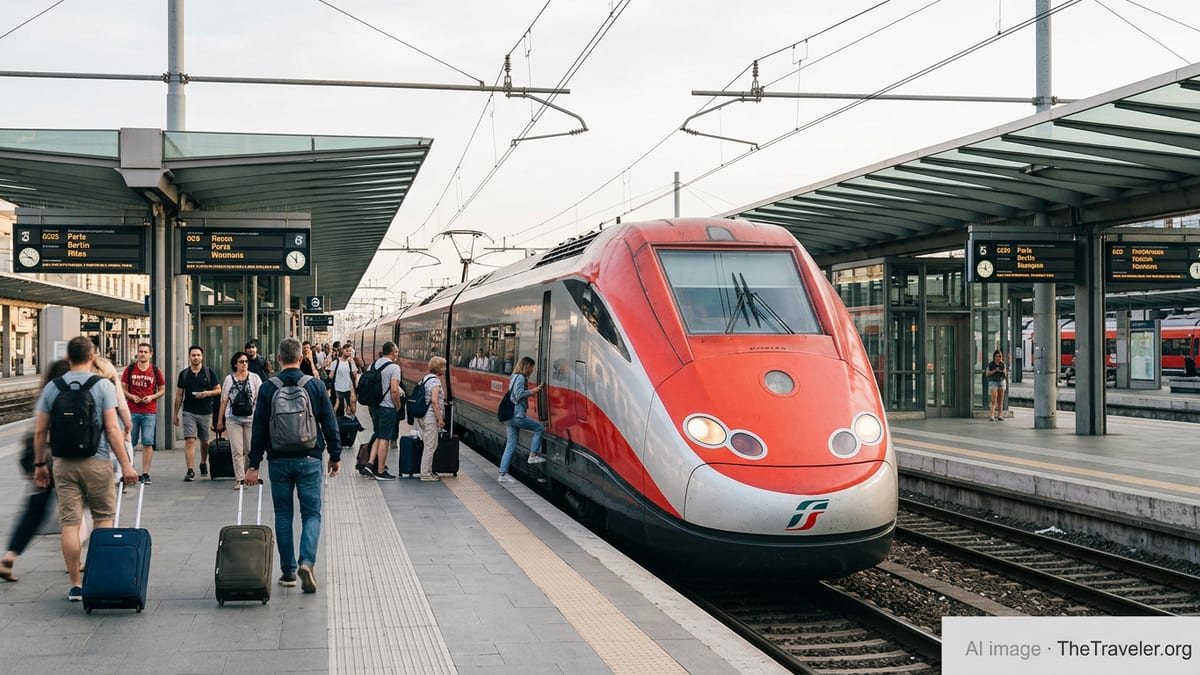
Carbon market money reshapes climate finance
The European Union Emissions Trading System has evolved from an experimental carbon market into a major source of public finance for the green transition. Publicly available data indicate that by mid-2025 the scheme had generated roughly 245 billion euros in revenue from auctioning emission allowances, with annual receipts climbing as carbon prices increased and free allocations were gradually reduced.
Under reforms adopted in 2023, EU countries are now expected to channel virtually all EU ETS auction proceeds, or an equivalent amount, into climate and energy measures. Official climate finance tracking shows that in 2023 member states reported using the overwhelming majority of their ETS income for activities such as renewable energy deployment, energy efficiency programmes, low carbon technologies and support for vulnerable consumers.
Transport is beginning to feature more prominently in this spending profile. Reports on the use of ETS revenues highlight examples including upgrades to public transport networks, investments in alternative fuels infrastructure and targeted support for cleaner vehicles. Within this emerging portfolio, rail is increasingly framed as a high impact destination for carbon market funds because of its comparatively low emissions and potential to shift both passengers and freight away from road and air.
Rail’s decarbonisation potential compared with other modes
Transport remains one of the EU’s most challenging sectors for climate policy, responsible for around a fifth of greenhouse gas emissions when international aviation and shipping are included. Road traffic accounts for the bulk of that total, while aviation emissions have grown rapidly over the past two decades. Rail, by contrast, contributes only a small share, reflecting both its relatively modest modal share and its high degree of electrification in many member states.
European transport assessments consistently describe rail as one of the most energy efficient ways to move people and goods over medium and long distances. Once powered by low carbon electricity, trains can deliver large emission reductions per passenger kilometre or tonne kilometre compared with cars, trucks or planes. Policy studies argue that shifting freight from long haul road transport to rail and inland waterways would be especially significant in reaching climate targets.
Despite these advantages, rail’s share of overall passenger and freight movements remains limited. Data compiled for the European Parliament suggest that rail accounted for only a small fraction of cross border passenger transport and just over a tenth of freight in 2020. Industry organisations and research institutes contend that closing this gap will require sustained investment in infrastructure, digital signalling, rolling stock and cross border interoperability, which in turn demands stable funding streams.
Early examples of ETS revenues supporting rail
Evidence from member state reporting shows that a portion of ETS revenues is already being channelled into rail and related public transport investments. Climate action progress documents point to cases such as Slovenia, where part of the country’s ETS income has been used for rail upgrades and cycle paths, as well as other examples linking auction proceeds to low emission mobility projects.
Further details contained in climate finance summaries indicate that, across the EU, billions of euros of ETS revenues in recent years have gone into public transport and mobility categories. Within that envelope, improving railway networks emerges as a major line of expenditure, with figures in one compiled dataset suggesting that more than one billion euros of ETS funded spending has been directed to rail infrastructure enhancements.
Projects reportedly supported through such channels range from rail modernisation and electrification to the expansion of urban and suburban rail services that can reduce car dependence. While these amounts are still modest compared with the overall investment needs of the sector, observers note that they demonstrate how carbon market revenues can be aligned with long term transport decarbonisation strategies.
New carbon markets widen the funding base
The EU’s decision to create a separate emissions trading system for fuels used in road transport and buildings, commonly referred to as ETS2, is expected to reshape the funding landscape for low carbon transport in the coming decade. Policy analyses explain that ETS2 will apply a carbon price to fuel suppliers, with all allowances auctioned and revenues earmarked for climate and social objectives.
In parallel, a Social Climate Fund is being set up to help households, micro enterprises and transport users cope with the distributional impacts of higher fuel prices. Budget projections from EU institutions suggest that a share of ETS2 revenue will flow into this fund, while the remainder will accrue to national budgets under the same climate spending rules that govern the existing ETS.
Analysts argue that this expansion creates a clearer link between emissions from road transport and investment in cleaner alternatives. If member states choose to dedicate a visible share of their combined ETS and ETS2 income to rail, they could support new high speed lines, improved cross border corridors, rail freight terminals and urban rail networks that offer viable substitutes for car and truck journeys.
Calls for earmarking and long term planning
Transport policy briefs and position papers from sector organisations urge governments to treat ETS revenues as a strategic tool rather than an ad hoc budget supplement. Recommendations include earmarking a portion of auction proceeds specifically for rail and other forms of sustainable mobility, and integrating these resources into multi year investment plans aligned with EU climate and transport targets.
Several studies stress that predictable funding is critical for large rail projects, which often require long lead times, complex permitting and coordination across borders. Dedicated use of ETS revenues, they argue, could underpin upgrades of existing lines, deployment of interoperable signalling systems, expansion of rail freight capacity and procurement of modern rolling stock.
Debate also continues over how to balance rail investment with other pressing needs, including building renovation, renewable energy expansion and support for vulnerable groups affected by higher carbon prices. Nonetheless, there is growing consensus in expert literature that steering a greater share of carbon market income toward rail would make the EU’s decarbonisation pathway more credible, particularly in a sector where emissions have been stubbornly resistant to decline.