


More news on this day
Kontron Transportation has secured a long-term railway communications contract worth nearly 100 million euro in Europe, reinforcing the Austrian group’s position in mission-critical rail connectivity as operators upgrade networks for the next generation of digital signaling.
Get the latest news straight to your inbox!
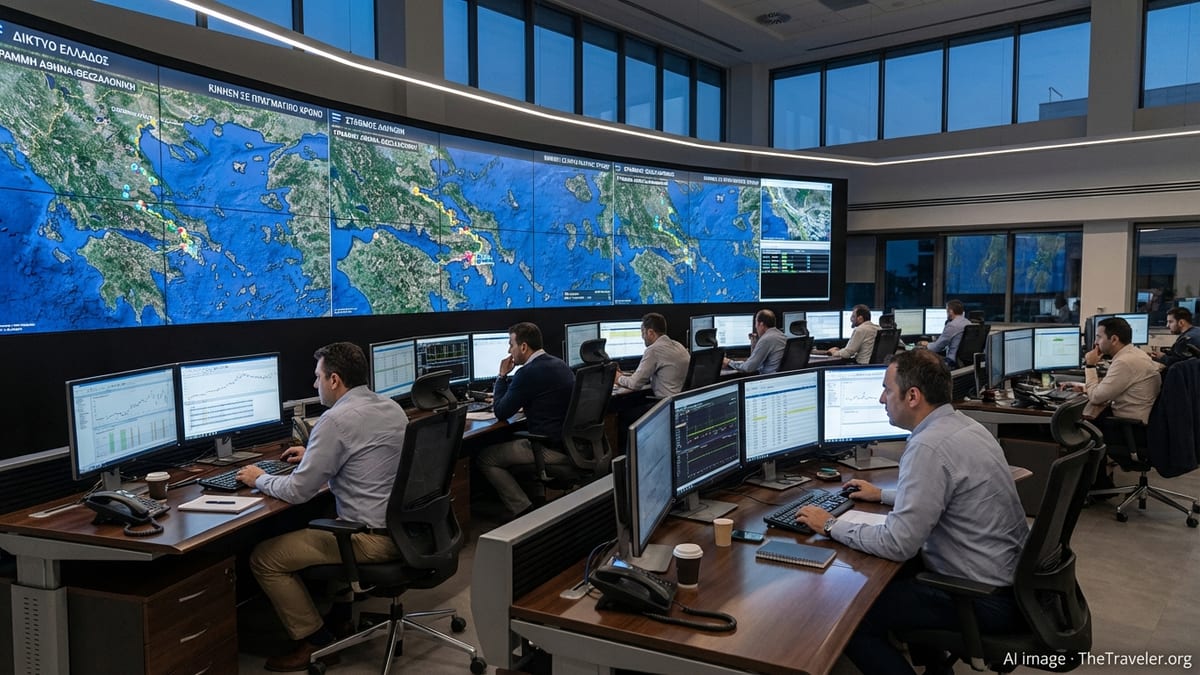
Long-term deal anchors Kontron’s rail strategy
According to published corporate disclosures and financial news coverage, the new contract is valued at just under 100 million euro and runs through 2035, with an option to extend beyond that date. The agreement covers maintenance and security services for an existing GSM-R network, the dedicated mobile communications standard used for train control and voice services across much of Europe.
Publicly available information indicates that the client is a major European railway operator, although its identity has not been disclosed. The deal is structured as a framework agreement in which recurring orders for operations, maintenance and cybersecurity services will be placed over the life of the contract, giving Kontron Transportation a predictable revenue stream in a core business segment.
The contract builds on the company’s long-standing role in supplying and servicing mission-critical communications for rail infrastructure. Kontron Transportation, part of Vienna-listed Kontron AG, specializes in end-to-end telecommunications solutions that link trains, trackside equipment and control centers, helping operators keep services running safely and reliably.
Analysts commenting on the transaction note that the near 100 million euro volume is significant not only in absolute terms, but also in light of the long duration and the strategic nature of communications infrastructure in the rail sector. The agreement is seen as a vote of confidence in Kontron’s technology and service capabilities at a time when many railways are starting to plan the transition to new standards.
From GSM-R to FRMCS as rail networks modernize
The newly announced deal focuses on GSM-R, the 2G-based Global System for Mobile Communications standard dedicated to railways, which underpins train radio, signaling communication and operational voice services. While GSM-R is still widely deployed, European and international rail bodies are preparing for its replacement by the Future Railway Mobile Communication System, or FRMCS, which will be based on 5G and other advanced technologies.
Kontron’s publicly available product information highlights its strategy of supporting customers across this transition, providing both legacy GSM-R solutions and newer architectures aligned with FRMCS. The company emphasizes seamless migration, parallel operation of old and new systems, and lifecycle support for communications assets that can remain in service for decades.
Industry research on next-generation rail communications indicates that the move toward FRMCS is driven by the need for higher data capacity, lower latency and improved integration with digital signaling and automation. For operators, however, the migration must be carefully managed to avoid service disruption, making long-term service and maintenance partnerships such as Kontron’s new contract particularly important.
Observers point out that continued investment in GSM-R maintenance, cybersecurity and performance upgrades is a necessary bridge to FRMCS. The new contract reflects this reality, securing expert support for an existing network while giving the operator flexibility to plan for future technology rollouts on its own timeline.
Strengthening Kontron’s position in European rail
The near 100 million euro agreement adds to a growing list of Kontron Transportation wins in European rail communications. In the past two years the company has reported contracts in markets including France, the Czech Republic, Ireland and Portugal, covering both new system deployments and upgrades to existing infrastructure.
Recent announcements show that Kontron has supplied core communications networks, radio systems and maintenance services for national railways and infrastructure managers across the continent. These projects often involve multi-year implementation phases, followed by long-term support arrangements, which together create a stable base of recurring revenue.
Market commentary suggests that the latest contract helps deepen Kontron’s relationships with key European customers and strengthens its reference base at a time when many tenders for FRMCS-ready solutions are expected to emerge. Demonstrated performance in maintaining and securing critical GSM-R networks is seen as an important credential when operators evaluate partners for future digital upgrades.
For the wider rail technology ecosystem, the deal underscores how communications suppliers are positioning themselves not only as equipment vendors but as long-term service providers embedded in operators’ safety and operations frameworks. This shift is shaping competition in the sector, with players emphasizing lifecycle support and systems integration capabilities.
Implications for investors and the rail technology market
Financial media reports highlight that the contract arrives at a pivotal time for Kontron AG, which has been in focus due to an ongoing takeover offer by a major shareholder. The new long-term revenue commitment is viewed as strengthening the company’s investment case, signaling steady cash flows from a highly specialized market niche.
Analysts following the stock note that mission-critical rail communications is a defensible segment with high barriers to entry, given safety requirements, regulatory approvals and the complexity of integrating telecom systems with signaling and control platforms. Long-running infrastructure contracts such as the one announced this week can support valuation arguments that differ from those of more cyclical industrial businesses.
Beyond the company level, the agreement illustrates how European rail infrastructure spending increasingly includes a large services component. Communications contracts now often span more than a decade, covering not just equipment but also software updates, cybersecurity measures, and 24/7 support arrangements that evolve as standards change.
For travelers, the impact of such contracts is largely invisible, yet the reliability of onboard radio links, driver-dispatch communication and signaling data flows depends on the kind of systems and services that Kontron and its peers provide. As rail networks become more digital and connected, the importance of these behind-the-scenes communications platforms is expected to grow further.