


More news on this day
Algeria has secured 878 million dollars in new multilateral financing to extend a strategic railway line across its southern regions, a move expected to reshape transport, trade and regional integration along the edge of the Sahara.
Get the latest news straight to your inbox!
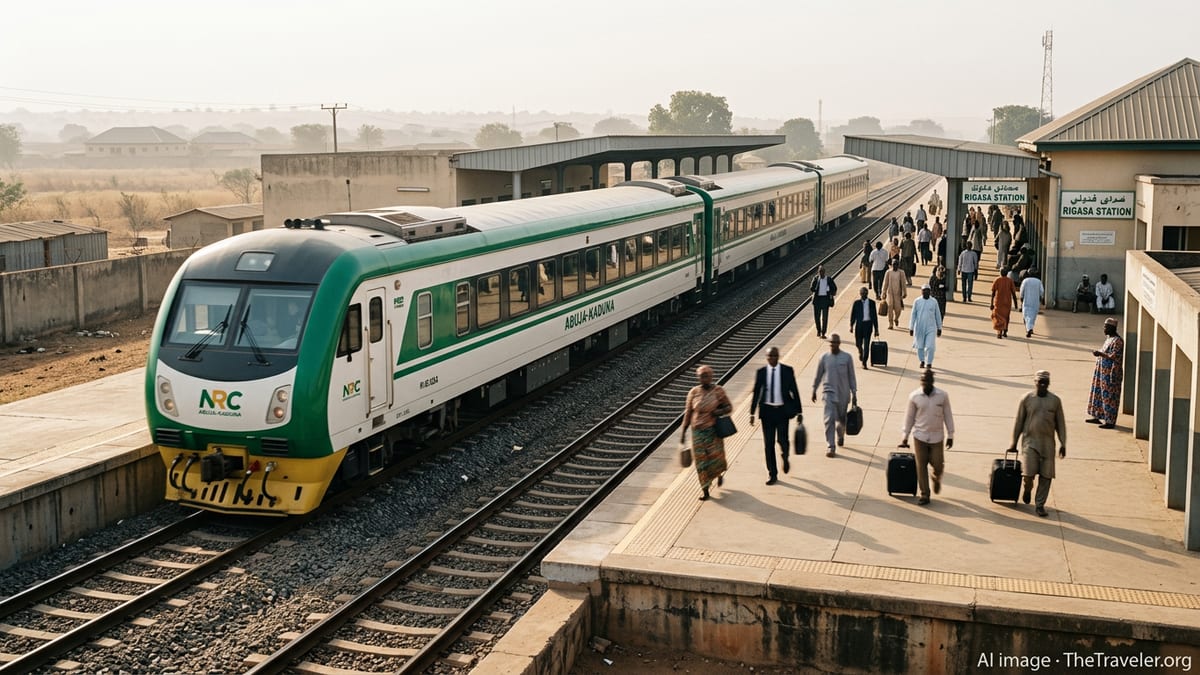
Major funding boost for Laghouat–Ghardaïa–El Meniaa line
According to publicly available information from development banks, the 878 million dollar package is earmarked for the second phase of the Laghouat–Ghardaïa–El Meniaa railway corridor in southern Algeria. The funding builds on an earlier sovereign loan that launched the first phase of the line, designed as a 495 kilometre route connecting Laghouat, Ghardaïa and El Meniaa on the fringes of the Sahara.
Reports indicate that the African Development Bank approved the new tranche this week, with cofinancing from the Asian Infrastructure Investment Bank and a contribution from the Algerian government. The package will cover a substantial share of construction and associated works on the Ghardaïa–El Meniaa section, including civil engineering, systems, rolling stock and support for project management.
Project documentation shows that the overall Laghouat–Ghardaïa–El Meniaa scheme is one of the largest transport investments currently under way in Algeria. The first phase focused on priority sections and preparatory works, while the newly approved second phase is intended to complete the southern stretch and bring the corridor closer to full operational status in the coming years.
Strategic role in Algeria’s north–south rail vision
The Laghouat–Ghardaïa–El Meniaa railway is a core component of Algeria’s broader plan to build a continuous north–south rail axis from the capital Algiers to Tamanrasset near the southern border. Government statements reported in local media have outlined a target for the Algiers–Laghouat–Ghardaïa–El Meniaa–In Salah–Tamanrasset line to enter service by the end of 2028, creating a backbone route across more than 1 500 kilometres of territory.
Recent briefings from Algeria’s Ministry of Public Works and Basic Infrastructure describe the north–south railway as a strategic project designed to support the Trans-Saharan transport corridor, complementing the long-standing Trans-Saharan Highway. The Laghouat–Ghardaïa–El Meniaa segment is presented as a pivotal middle link, connecting high plateau regions to emerging logistics hubs in the deep south.
Regional media coverage highlights that authorities are working in parallel on the legal, technical and land clearance steps required for the wider Algiers–Tamanrasset railway. A series of working sessions this spring examined the release of rights of way, the relocation of utilities and the coordination with provincial authorities in Laghouat, Ghardaïa, El Meniaa, In Salah and Tamanrasset to allow construction to advance without major delays.
Construction timetable and local implementation
National news agencies report that ground works on the Laghouat–Ghardaïa–El Meniaa corridor are scheduled to intensify from September 2026, following earlier preparatory activities. Statements from sector officials cited in Algerian media point to an initial construction front focused on the approximately 230 kilometre Ghardaïa–El Meniaa segment, financed by the newly approved funding package.
The project is being implemented under the supervision of Algeria’s specialised railway investment agency, working with local and international contractors. Engineering plans cover track construction, bridges and structures, signalling and communications, stations and maintenance facilities, as well as the acquisition of locomotives and passenger and freight wagons.
Public documents from the African Development Bank indicate that part of the budget is also dedicated to technical assistance and safeguards. This includes support for environmental and social management, resettlement where required, and the strengthening of local institutions responsible for railway operation and oversight once the line enters service.
Economic and social impact for southern regions
Development bank analyses describe the Laghouat–Ghardaïa–El Meniaa railway as a transformative investment for Algeria’s central and southern wilayas. The corridor is expected to improve connections between agricultural areas, industrial zones and urban centres, reducing transport times and costs for both goods and passengers.
For remote communities along the route, the new railway is projected to provide more reliable access to markets, public services and employment opportunities in construction and later in operations. Project documentation notes planned collaboration with national employment and training agencies to help local residents, particularly young people and women, acquire skills relevant to railway and logistics activities.
The railway also aligns with Algeria’s efforts to diversify its economy by supporting logistics, mining, manufacturing and tourism beyond the coastal belt. Analysts commenting on the project suggest that more efficient inland transport could make it easier to develop value chains in the Sahara fringe, where infrastructure constraints have historically limited investment.
Stepping stone toward wider trans-Saharan connectivity
According to recent coverage of Algeria’s transport strategy, the Laghouat–Ghardaïa–El Meniaa line is viewed as a precursor to potential trans-Saharan rail links connecting North Africa to the Sahel and West Africa. Regional plans under discussion aim to pair upgraded Algerian infrastructure with cross-border routes toward Niger and Chad, building on the role of the existing Trans-Saharan Highway.
Statements from the African Development Bank regarding its North Africa portfolio describe the Algiers–Tamanrasset railway as one of the most transformative infrastructure projects currently in preparation on the continent. The 878 million dollar financing for the Laghouat–Ghardaïa–El Meniaa phase is presented as a key step toward realising that wider vision, by locking in progress on a central segment of the corridor.
Further investment decisions will be required to complete the remaining sections south of El Meniaa and to modernise connecting lines closer to the Mediterranean coast. Nonetheless, observers of North African transport policy note that the latest funding approval signals sustained momentum behind Algeria’s ambition to position itself as a critical land bridge between Europe, the Maghreb and sub-Saharan Africa.