


More news on this day
Deadly missile and drone strikes on Riyadh’s King Khalid International Airport in early October have triggered a wave of travel warnings, widespread flight disruptions and renewed questions about the safety of using Saudi Arabia’s capital as a transit hub.
Get the latest news straight to your inbox!
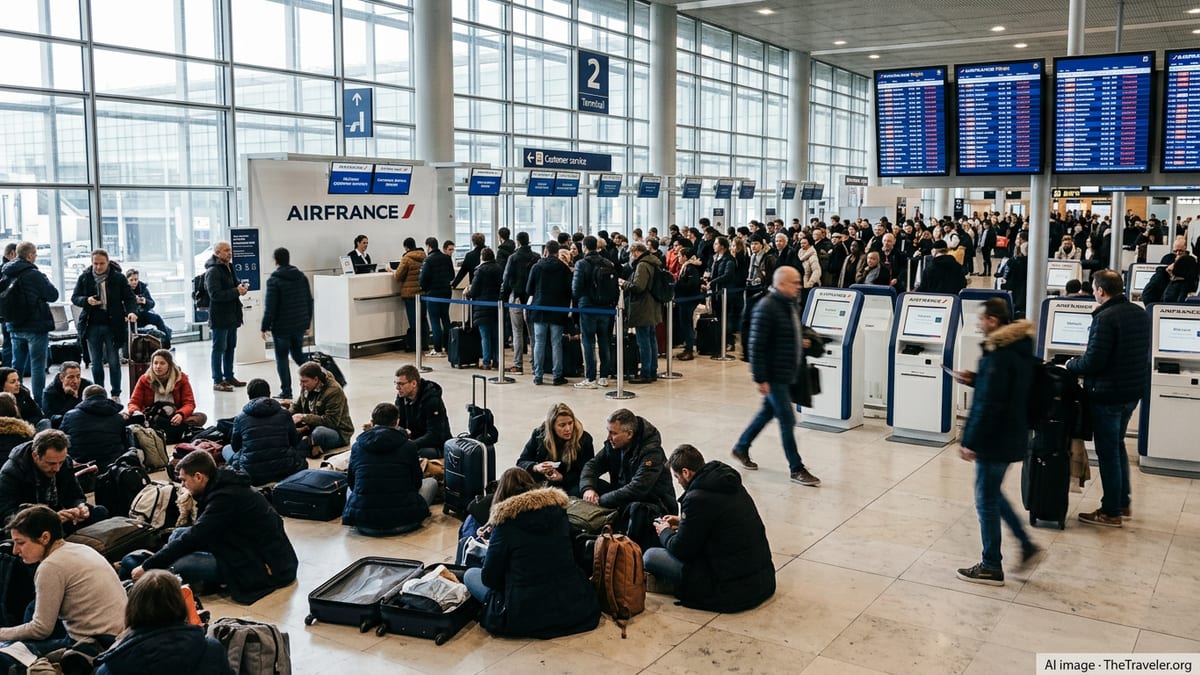
Mass-casualty strikes shut a key Gulf aviation hub
Publicly available information from international media and aviation records indicates that Yemen’s Houthi movement launched a series of coordinated missile and drone attacks on Saudi airports between 6 and 12 October 2026, with King Khalid International Airport in Riyadh bearing the brunt of the damage. Reports describe multiple impacts on terminal areas and airport infrastructure over several days.
Coverage in global news outlets indicates that the deadliest incident occurred on 10 October, when explosions tore through part of Riyadh’s Terminal 3 during a busy afternoon departure wave. Initial figures cited in those reports point to at least 12 to 13 fatalities and well over 300 injured passengers and staff, making it the most lethal attack in the kingdom in more than a decade.
Further reporting shows that a second strike on 11 October caused additional casualties and compound damage while emergency services were still dealing with the aftermath of the first blast. Imagery and accounts compiled by broadcasters and wire agencies depict shattered glass facades, scorched jet bridges and debris strewn across departure halls that would normally handle thousands of travellers a day.
In the immediate aftermath, Saudi authorities moved to suspend all civilian operations at King Khalid International Airport. Travel-security briefings and airline advisories note that as of 18 October 2026, commercial flights in and out of Riyadh remain largely halted, with only limited emergency or diversionary operations reported.
Global travel advisories tighten around Riyadh
Foreign ministries and embassies across multiple regions have updated travel advice in response to the Riyadh attacks. Public advisories from several governments now warn against travel to King Khalid International Airport and, in some cases, to other Saudi airports, citing a high likelihood of further strikes and the risk of sudden airspace closures.
Specialist security bulletins summarising the diplomatic response note that one European government has advised against all but essential travel to a broad swathe of Saudi territory, including major cities such as Jeddah and Dammam, while also highlighting specific concern about airport infrastructure nationwide. Another published update from a Gulf-focused risk consultancy reports that further attacks against Saudi airports are considered “very likely” in the short term.
Embassy notices made publicly available online show that at least two Western missions in Riyadh have urged their citizens to avoid King Khalid International Airport entirely for now. These notices emphasise the potential for additional strikes, the closure of terminals at short notice and the strain on local medical facilities following the mass-casualty events of 10 and 11 October.
Travel industry briefings indicate that insurers and corporate travel managers are reviewing risk thresholds for itineraries involving Saudi airspace. Some corporate policies now require high-level approval for routings that include Riyadh, while others temporarily bar staff travel via the airport until security conditions can be reassessed.
Airlines suspend routes and reroute passengers
Airline schedules and flight-tracking data show that carriers across Europe, Asia and the Middle East have suspended or curtailed services to Riyadh in the wake of the attacks. Several regional airlines appear to have cancelled daily rotations into King Khalid International Airport through at least the third week of October, while some long-haul operators have removed Riyadh from their booking engines for near-term departures.
Publicly available timetables suggest that airlines are redirecting capacity to alternative Gulf hubs, including Jeddah, Dammam, Dubai, Doha and Abu Dhabi, where normal operations continue for now. However, security advisories caution that other Saudi airports have also been targeted or threatened, creating a fluid situation for carriers attempting to maintain regional connectivity.
For passengers already booked to transit Riyadh, airline statements and travel-agency notices emphasise the need to reconfirm flights and be prepared for rerouting or refunds. Some carriers are reportedly waiving change fees for itineraries involving Saudi airports during October, while warning that seat availability via alternative hubs is tight due to the sudden spike in rebookings.
Operational summaries from aviation intelligence providers note that crews and aircraft have been repositioned away from Riyadh, and that ground handling at King Khalid International Airport is functioning only at a reduced, emergency-oriented level. This combination of security concerns and logistical disruption means a rapid return to normal schedules is considered unlikely in the immediate future.
What the attacks mean for regional and long-haul travellers
King Khalid International Airport serves as a significant regional node for travel between Europe, Asia and the broader Middle East. Although not as dominant a global transfer hub as Dubai or Doha, the airport connects major business and pilgrimage routes and supports growing tourist flows into Saudi Arabia’s developing leisure sector.
Analyses published by aviation experts in international media highlight that the probability of any individual traveller being caught in a missile or drone strike remains statistically low. However, the Riyadh attacks underscore how quickly a key node in the global air network can be forced offline, triggering widespread ripple effects such as missed connections, extended diversions and complex rebooking chains that can stretch across continents.
For travellers with near-term plans involving Saudi Arabia, current travel advisories and airline notices point to several practical steps. These include checking government travel advice before departure, monitoring flight status through airline apps and flight-tracking services, and keeping flexible arrangements for hotels and onward connections in case of last-minute rerouting away from Riyadh.
Security analysts cited in open-source briefings also note that the targeting of airports by armed groups is part of a broader trend in regional conflicts, where critical infrastructure is used as leverage. This raises the possibility of more frequent airport closures, airspace restrictions and indirect impacts, even on flights that do not touch Saudi soil but transit nearby corridors.
Key safety and planning considerations for upcoming trips
Travel-risk consultancies and airline advisories encourage passengers to review how their itineraries might be affected if Saudi airports remain under threat. Travellers are advised through publicly available guidance to consider booking routings that avoid Riyadh for journeys taking place in the coming weeks, especially when non-stop or single-stop alternatives via other Gulf or European hubs are available.
Specialist briefings suggest that travellers who cannot avoid transiting the region should allow longer minimum connection times, favour tickets booked on a single itinerary with one carrier or alliance, and ensure that their travel insurance explicitly covers disruption caused by conflict-related events. Policies vary, and some standard leisure products may exclude losses associated with war or terrorism, so careful reading of policy documents is essential.
Airports across the Middle East were already operating under heightened security before the October attacks, and open reporting indicates that screening, patrols and access controls have been further reinforced since the strikes on Riyadh. Even at unaffected airports, travellers may encounter longer queues at security checkpoints, expanded baggage checks and intermittent delays as authorities adjust operating procedures.
Ultimately, the situation at King Khalid International Airport remains highly fluid. As investigations into the attacks continue and armed groups issue further public statements about their intentions, travel advisories, flight schedules and insurance conditions are likely to evolve quickly. Travellers planning to pass through the region in late October or beyond are being urged in multiple public forums to stay informed and to maintain flexible, well-documented plans that can adapt to sudden changes in the security picture.