


Naples has a reputation for chaos. Before my trip, friends warned me about honking scooters, crowded alleys, and a pace of life that never really slows down. All of that exists. Yet what surprised me most about Mergellina, the waterfront district to the west of the historic center, was the relaxed atmosphere that settles in as soon as you reach the sea. It felt like someone had quietly turned the city’s volume down a few notches.
Get the latest updates straight to your inbox!
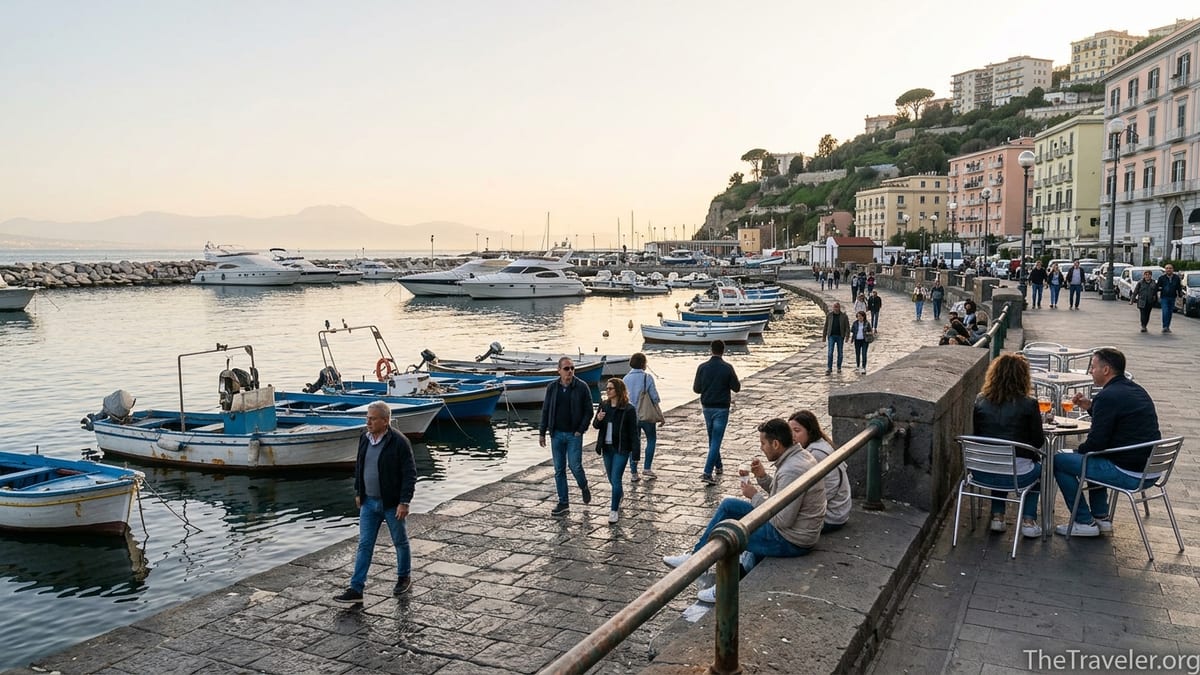
A Waterfront Where Naples Finally Breathes
Mergellina sits along the Bay of Naples, just west of the more famous Lungomare near Castel dell’Ovo. Officially it is a coastal district of the city, with its own train, metro, and funicular connections, but on the ground it feels more like a self-contained seaside neighborhood. The traffic thins, the sidewalks widen, and the focus shifts from shopping and sightseeing to simply watching the water and the sky.
Walk along the seafront promenade in late afternoon and the contrast with central Naples is immediate. Instead of street vendors and aggressive souvenir stands, you are more likely to pass a fisherman cleaning his nets on the low wall, teenagers sharing a paper cone of fried seafood, or an older couple strolling arm in arm. On a warm day you might see locals perched on the rocks below the road, their feet dangling over the water, chatting for an hour without checking a phone.
The pace of business is equally unhurried. Many of the small kiosks by the marina sell the same things you will see elsewhere in Naples fresh orange juice, bottled water, espresso, simple pastries yet staff are quick to wave off pressure. Sit at an outdoor table with a 1.50 euro espresso or a 3 euro spritz and no one will rush you away, even if you linger long after your cup is empty. It is a different energy from the historic center, where tables turn quickly and service can feel brisk during peak hours.
That sense of breathing room is amplified by the geography. The bay opens wide in front of you, with the curve of Posillipo hill to one side and, on clear days, a hazy outline of Capri visible out at sea. It is still unmistakably Naples, but softened by space, sea air, and the steady rhythm of boats slipping in and out of the small harbor.
Cafes, Gelato, and Aperitivo Without the Rush
Nowhere is Mergellina’s relaxed atmosphere more tangible than at its cafes and gelaterie. Instead of standing three deep at a bar, you can usually find a seat outside and stay as long as you like. A typical afternoon might involve a stop at a waterfront gelato counter for a pistachio and hazelnut cone, around 3 to 4 euros depending on size, then a slow walk along the marina as the sun begins to drop.
Along Via Caracciolo and the streets that branch off toward the harbor, you will find a string of small family-run spots: coffee bars with a few tables facing the sea, simple trattorias serving plates of spaghetti alle vongole for around 12 to 15 euros, and neighborhood bakeries where locals buy sfogliatelle to bring home. Many of these businesses depend more on regulars than on passing tour groups, which subtly changes the mood. Staff take time to talk, regulars greet each other by name, and the expectation is that you are there to unwind, not to hurry on to the next attraction.
Aperitivo in Mergellina offers another glimpse of this slower rhythm. Between 6 pm and 8 pm, outdoor tables start to fill with small plates: olives, potato chips, bruschetta. Order a spritz for 5 to 7 euros or a glass of local Falanghina white wine and snacks will often arrive automatically. You might find a couple of tables occupied by foreign visitors, but most of your neighbors will be Neapolitans who have escaped here after work, enjoying the sea breeze before heading home.
Even in peak travel months, Mergellina’s bars rarely feel overloaded. Reservations help for full-service restaurants with sea views on summer weekends, but if you simply want a drink and a view of the water, you can usually sit down within a few minutes. Compared with central Naples, where some of the trendier spots around Piazza Bellini and Chiaia can feel packed and noisy, Mergellina’s nightlife is understated, more about conversation than spectacle.
Boats, Islands, and the Gentle Hum of the Marina
Mergellina’s small harbor is one of the neighborhood’s defining features. Historically, this is where fast hydrofoils to Capri and other islands departed, and while much of the Gulf of Naples traffic now runs from larger piers closer to the center, Mergellina still sees a steady flow of smaller boats and seasonal services to the islands. Travelers today might find limited hydrofoil departures here in summer months to Capri or Ischia, usually in the 40 to 50 minute range for Capri, but the port feels more like a local marina than a major transport hub.
The atmosphere around the docks is surprisingly low-key. Instead of long lines and bus tours, you are more likely to see local fishermen repairing nets, recreational sailors hosing down decks, and small charter boats preparing for half-day trips along the coast. Prices for shared boat excursions typically start around 60 to 90 euros per person for a several-hour cruise, depending on season and route, but the negotiation tends to be calm and matter-of-fact. There is little of the hard sell that characterizes larger Mediterranean ports.
For travelers, this quiet maritime setting has practical benefits. If you are heading to Capri or another island, it can be calmer to arrive early in Mergellina, pick up a coffee and cornetto at a nearby bar for 3 to 4 euros total, and wait at the quayside while watching fishermen come and go. Even if you are not planning to sail anywhere, the harbor offers one of Naples’ most pleasant places for an aimless walk. Wooden masts sway gently, the occasional dog naps in a patch of sun, and the only real noise comes from the clinking of rigging or the putter of a small engine heading out to sea.
This gentle marina hum gives Mergellina a distinctly Mediterranean feel that contrasts with the dense urban grit of the city center. It is a working harbor, not a polished resort marina, yet that authenticity contributes to its calming effect. You feel like a guest in a real neighborhood, not a customer moving through a carefully curated backdrop.
Getting There: Easy Connections Without the Frenzy
Reaching Mergellina is straightforward, and the journey itself helps reinforce the sense of leaving the city’s intensity behind. The Napoli Mergellina railway and metro station sits a few minutes’ walk inland from the seafront and is part of Line 2 of the Naples Metro. Trains connect here from Napoli Centrale, the main station at Piazza Garibaldi, in roughly 10 minutes. Step out at Mergellina and you emerge into a quieter residential area, with tree-lined streets and small grocery stores replacing souvenir shops and market stalls.
From the station, it is an easy downhill walk of about five to ten minutes to reach the waterfront, depending on your pace. Along the way, you might pass schoolchildren streaming home, office workers on their lunch break, or grandparents on benches chatting under the trees. It is a small but noticeable shift from the tourist-heavy streets of the centro storico. Even rush hour feels gentler here; there are still honking scooters and double-parked cars, but in smaller doses.
Another distinctive feature of the area is the Mergellina Funicular, one of Naples’ four operating funicular lines. It connects the lower Mergellina district with the higher Posillipo area, climbing the hill in just a few minutes. For around 1.40 to 1.70 euros, roughly the standard ticket for Naples public transport, you can ride from sea level up to sweeping hilltop views and then back down again. The funicular stations themselves are modest and functional, used mainly by commuters, but for visitors they provide an almost playful way to experience the city’s dramatic topography.
Public transport in Naples can feel hectic in the most central hubs, especially around Garibaldi and the main port. By contrast, Mergellina’s station and funicular are usually calmer. Ticket machines are less besieged, platforms are less crowded, and the odds of boarding a train without being squeezed in at rush hour are significantly higher. For many travelers, using Mergellina as a base or as a nightly escape route from the center offers a more measured way to experience the city.
Local Life, Safety, and an Everyday Calm
Naples often suffers from an exaggerated reputation for danger, but recent safety overviews consistently note that the city is generally safe for tourists who take standard big-city precautions. Within that context, Mergellina feels especially approachable. It is primarily residential, and in the evenings families, joggers, and dog walkers reclaim the seafront. The atmosphere is less about nightlife and more about community, particularly on warm nights when people stay out late to enjoy the cooler air.
That said, normal urban awareness still applies. Pickpocketing can occur anywhere in Naples, and visitors in Mergellina should keep an eye on bags, especially near the harbor and at public transport stops. Cross-body bags that close securely, avoiding displays of expensive jewelry, and keeping phones out of back pockets are simple, effective habits. Most incidents reported by travelers are more about petty theft than confrontation, and many visitors leave Mergellina with no negative experiences at all.
What stands out more than any safety concern is the sense of everyday life unfolding at a human pace. On weekday mornings, you can watch residents doing their grocery shopping at small corner stores or chatting over a quick espresso at the bar counter. In the afternoons, older locals gather on benches along the promenade, discussing football and politics under the shade of palm trees. Children ride scooters along the wide pavement, watched from a distance by parents who seem in no hurry to go home.
For travelers, this calm is contagious. Spend a few hours in Mergellina and you may find your own schedule loosening. The pressure to tick off sights fades, replaced by a simple desire to sit on the sea wall, listen to the waves, and watch the sky change color over the bay.
When to Go and How the Mood Changes Through the Day
The relaxed character of Mergellina is present year-round, but it reveals itself in different ways depending on the time of day and season. Mornings are particularly tranquil, especially outside of July and August. Around 8 or 9 am, the light over the bay is soft, joggers and dog walkers share the promenade, and cafes serve espresso and pastries for commuters and a handful of early-rising visitors. Prices for a standard breakfast of cappuccino and cornetto typically range between 3 and 4 euros, significantly less than you would pay in many northern European cities.
Midday brings more activity. On sunny days, especially weekends, small groups gather at the low walls overlooking the water, teenagers sit in circles on the rocks, and restaurants begin serving seafood lunches to both locals and tourists. In summer, some people swim from the rocky shoreline or from small platforms along the coast, while others retreat to shaded benches or cafe terraces to escape the heat. Even then, the noise level rarely approaches the frenetic energy of central Naples.
Late afternoon and early evening are perhaps the most enchanting times to experience Mergellina. As the sun drops toward Posillipo, the bay takes on a warm glow. Fishermen return, pulling their boats into the harbor. Families arrive for pre-dinner walks, and aperitivo tables fill with glasses catching the last light. It is busy but not overwhelming, a shared ritual where visitors blend easily with residents.
After dark, the neighborhood remains lively but mostly mellow. Streetlights reflect on the water, and the buzz comes from conversation rather than loud music. Some restaurants stay open late in high season, and you will see couples enjoying late dinners of grilled fish or pizza by the sea, but the area does not turn into a bar strip. For many travelers, this balance between life and calm is exactly what makes Mergellina feel so unexpectedly relaxing.
The Takeaway
What surprised me most about Mergellina in Naples was not a single landmark or spectacular view, though it has both, but the cumulative effect of small, everyday scenes: a fisherman quietly repairing his nets, a group of friends sharing a cone of fried seafood on the sea wall, an older couple lingering over an evening coffee long after sunset. Together, they create an atmosphere that softens the city’s rougher edges.
For travelers, Mergellina offers a different lens on Naples. It is still connected to everything that makes the city compelling the food, the energy, the proximity to islands like Capri and Ischia yet it provides space to slow down and actually absorb those experiences. A morning run along the bay, a lazy lunch in a neighborhood trattoria, a sunset ride on the Mergellina Funicular, an unhurried aperitivo overlooking bobbing boats these are simple pleasures, but they might be the moments you remember most.
If you arrive in Naples expecting only chaos, make time for Mergellina. You may find that the city you thought of as intense and overwhelming also has a gentle, seaside side, where life moves at a more forgiving pace and the soundtrack is less car horn and more lapping waves.
FAQ
Q1. Is Mergellina a good area to stay in Naples for first-time visitors?
Mergellina can be an excellent base if you want waterfront views and a calmer atmosphere than the historic center, while still having easy metro and train connections to major sights.
Q2. How do I get from Napoli Centrale to Mergellina?
From Napoli Centrale or Piazza Garibaldi, take Line 2 of the metro toward Pozzuoli and get off at Napoli Mergellina. The ride is about 10 minutes, followed by a short downhill walk to the seafront.
Q3. Is Mergellina safe at night for tourists?
Like most of Naples’ central neighborhoods, Mergellina is generally safe in the evening, especially along the busy waterfront. Normal precautions against pickpockets still apply, particularly near stations and crowded areas.
Q4. Are there beaches in Mergellina?
Mergellina itself has mainly rocky shoreline and small access points to the water rather than wide sandy beaches. For more established beach clubs and larger swimming areas, many locals head further along the coast toward Posillipo or nearby coastal towns.
Q5. Can I catch a ferry to Capri from Mergellina?
Some hydrofoils to Capri and other islands have traditionally departed from Mergellina, especially in summer, but schedules change frequently and many services now run from larger central ports. It is best to check current timetables and departure points before planning your trip.
Q6. What are typical prices for food and drinks in Mergellina?
Expect to pay around 1.50 euros for an espresso, 3 to 4 euros for a cappuccino and pastry breakfast, 5 to 7 euros for a spritz, and 12 to 18 euros for a main course at a mid-range waterfront restaurant.
Q7. Is Mergellina crowded with tourists?
Mergellina sees visitors, especially in summer and on weekends, but it is less saturated with tour groups than places like Spaccanapoli or the streets around Castel dell’Ovo. Many of the people you see here are locals enjoying the seafront.
Q8. What is the Mergellina Funicular and is it worth riding?
The Mergellina Funicular is a short inclined railway that links the waterfront district with higher residential areas toward Posillipo. It is inexpensive, used daily by locals, and offers a fun, quick way to experience Naples’ hillside views.
Q9. Are there good restaurants and cafes in Mergellina?
Yes, the area has numerous cafes, gelato shops, and seafood restaurants along the waterfront and on nearby streets. Many are family-run and cater primarily to locals, which helps keep the atmosphere relaxed and prices reasonable.
Q10. When is the best time of day to visit Mergellina?
Early morning and late afternoon into sunset are especially pleasant. Mornings are quiet and cool, while evenings bring soft light over the bay, lively but relaxed aperitivo hours, and cooler temperatures for strolling.