


If you rush from Naples’ central station straight to Capri, Pompeii or the Amalfi Coast, it is surprisingly easy to miss one of the city’s most scenic faces. Set along the waterfront beneath the green slopes of Posillipo, Mergellina is more than a minor ferry pier on departure boards. It is where Naples loosens its collar, turns toward the sea and shows visitors a gentler, sunnier version of itself that many travelers never see.
Get the latest updates straight to your inbox!
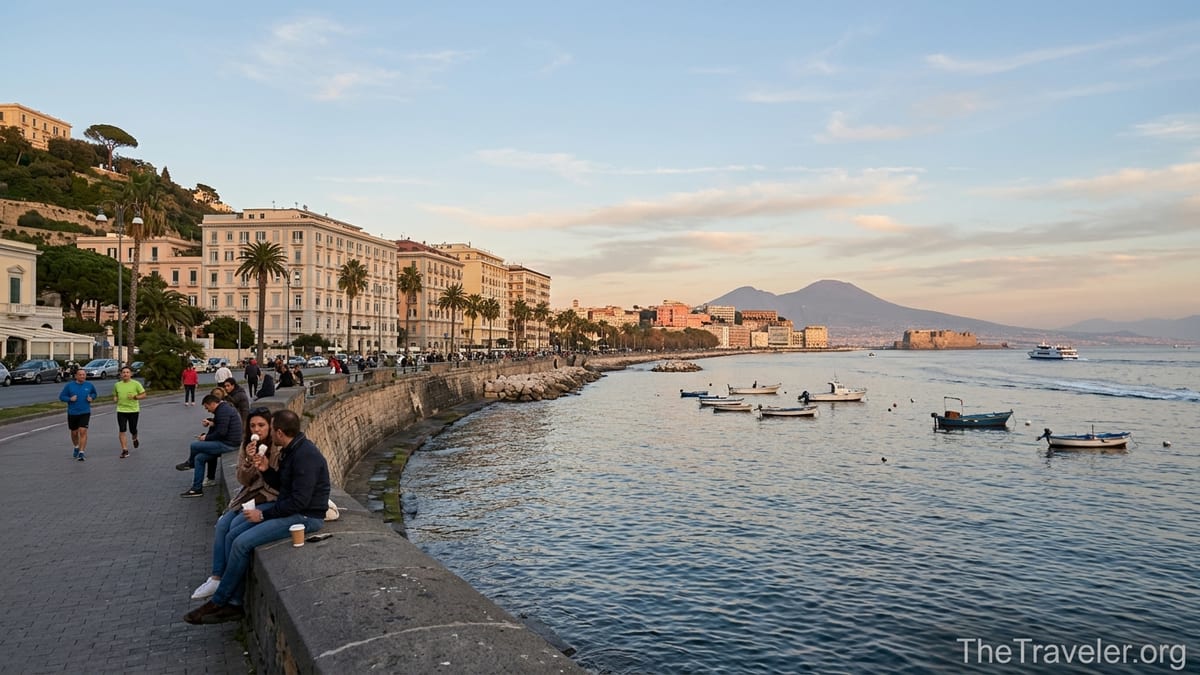
Mergellina: Naples Turned Toward the Sea
Mergellina is a coastal district in the elegant Chiaia area, stretching along Via Caracciolo between the Riviera di Chiaia and the low foothills that rise toward Posillipo. It sits just a couple of metro stops west of the Spanish Quarter yet feels like another city: the air smells of salt and espresso, palm trees line the promenade, and the constant backdrop is the curve of the Bay of Naples with Vesuvius on the horizon. For first‑time visitors who only know Naples from its gritty historic center, an hour here can completely rewrite impressions of the city.
The waterfront itself is an almost continuous promenade, part of a wider project that turned much of the bayfront into a pedestrian‑friendly lungomare. On a clear afternoon you can watch the light move across the water and pick out Capri, Ischia and Procida in the distance. Joggers and cyclists share space with families out for a stroll, while local fishermen tend small boats pulled up along the shore. For a city often associated with tight alleys and enclosed courtyards, Mergellina is Naples wide open to the sky.
It is also one of the few places where you can experience the whole sweep of the gulf without leaving the city. From sections of the promenade you can look east toward the Castel dell’Ovo and the historic center, south to the islands that dot the Campanian Archipelago and west toward Posillipo’s cliffs. Photographers often head here in late afternoon to catch the classic shot: the curve of the bay, the white wakes of ferries and the cone of Vesuvius turning pink as the sun drops behind the hill.
Despite all of this, Mergellina rarely appears as more than a footnote in quick Naples itineraries. Many guidebooks devote pages to Pompeii and the Amalfi Coast but only a paragraph to the neighborhood, usually mentioning the marina and little else. That is a missed opportunity, because the district offers a soft introduction to the city for cautious visitors and a restorative change of pace for those already deep in Naples’ urban energy.
The Waterfront Promenade: Classic Gulf of Naples Views
For many travelers, the highlight of Mergellina is simply walking the length of the waterfront from Largo Sermoneta toward the small harbor. This section of lungomare looks straight across the bay, giving you some of the most postcard‑perfect views in the city. In the mornings, when the air is clear and the sea is glassy, fishermen head out in small boats and the first hydrofoils start carving white trails across the water. By late afternoon, the sky softens, the city lights begin to glow and the whole bay can feel suspended in golden light.
The promenade is lined with low walls that double as informal seating. You will see locals perched here with cornetti and takeaway coffee, or couples sharing a paper cone of fried seafood from a nearby friggitoria. It is a very easy place to join local rhythms: you can buy a gelato from a kiosk, sit on the wall facing the sea and simply watch ferries and cargo ships move between Naples and the islands. Travelers who arrive with only a few hours in the city often report that a single walk here changed their sense of Naples from chaotic to deeply romantic.
Just behind the promenade, side streets hold a mix of residential buildings and classic villa hotels that testify to the area’s long reputation as a vacation address for Neapolitans. You might pass a wedding party leaving a seafront church or photographers staging bridal portraits with Vesuvius in the background. On sunny weekends the promenade can be busy, but it feels more like a local park than a tourist sight: children on scooters, older residents gossiping on benches and small groups of students playing music or taking selfies as the light fades.
If you are working within a tight schedule, this is an easy place to weave into your day. From Piazza Garibaldi you can be on the Mergellina waterfront in roughly 25 to 30 minutes using the metro or a taxi, and even an hour’s stroll followed by a coffee gives you that panoramic “I was really in Naples” moment that airport‑to‑Amalfi transfers skip entirely.
Cafés, Chalet Culture and Sea‑Facing Aperitivi
Mergellina is famous in Naples for its chalet culture: a string of long‑established kiosks and cafés along the waterfront that serve coffee, pastries, gelato and, in the evening, aperitivi. One of the best known is Chalet Ciro on Via Caracciolo, a historic meeting point since the 1950s. Locals come for everything from early‑morning espresso and sfogliatelle to late‑night cones of fried doughnuts. Prices are typically a little higher than in back‑street bars closer to the station, but still reasonable by big‑city European standards, and you are paying to sit virtually on the water’s edge.
Stopping at one of these chalets is an easy way to fold Mergellina into a wider Naples day. For example, if you have spent the morning exploring the National Archaeological Museum or the alleys of Spaccanapoli, you can head down to the waterfront around sunset and order an aperol spritz or a local Falanghina by the glass. Expect to pay a few euros more than in a non‑view neighborhood bar, but that often includes snacks like chips and olives, and the view across the bay more than compensates.
Beyond the chalets, several sit‑down restaurants line the waterfront and the streets behind it. Menus lean heavily on seafood and classic Neapolitan dishes such as spaghetti alle vongole, fried anchovies and grilled calamari. On warm evenings tables spread out onto terraces or pavements facing the water. While there are more famous pizza addresses closer to the historic center, Mergellina’s restaurants win on atmosphere: eating grilled fish while ferries slide past and the city lights rise behind you is hard to beat.
Travelers on a tighter budget can still enjoy the same atmosphere by doing what many locals do: ordering coffee or a single pastry and lingering at a standing table, or picking up a slice of takeaway pizza inland and carrying it down to the promenade. Because the waterfront is public and open, there is no pressure to buy more than you want to. This flexibility makes Mergellina especially attractive for solo travelers, families and anyone who prefers low‑key evenings over high‑priced rooftop bars.
Gateway to the Islands, Without Leaving the City Behind
Mergellina’s small harbor has historically been one of the departure points for hydrofoils heading to Capri, Ischia, Procida and occasionally the Aeolian Islands. In recent years most services have consolidated around the larger Molo Beverello and Calata Porta di Massa terminals closer to the historic center, but seasonal and occasional departures from Mergellina still appear on timetables. Even when you are not actually boarding a boat here, the presence of ferries, fishing vessels and pleasure craft adds a quietly nautical atmosphere.
If your itinerary includes time on the islands, it is worth checking whether any crossings line up with Mergellina. When they do, this can be a pleasant alternative to the more industrial feel of the main port areas. The marina is within a short walk of the Mergellina metro and suburban rail station, and you can move from a café table on the lungomare to the hydrofoil gangway in a matter of minutes. For travelers staying in Chiaia or along the Posillipo slopes, this can save cross‑town traffic and add a calm, early‑morning walk beside the water.
Even if you depart from another pier, spending time in Mergellina helps you understand the geography of the gulf before getting on a boat. From here you can visually pick out the direction of Capri beyond the Sorrento Peninsula, see the outline of Ischia on clear days and imagine the routes ferries take across the open water. That sense of place makes the journey feel less like a simple transfer and more like stepping into the wider seascape of Campania.
Many visitors treat Naples only as a transport hub to these islands, passing through the station or airport without ever seeing the water. Building an afternoon in Mergellina into your arrival or departure day not only gives you better photographs, it turns the city from a blur of traffic and transfers into a real coastal destination in its own right.
From Waterfront to Hilltop: Riding the Mergellina Funicular
One of the most enjoyable ways to connect Mergellina with the upper neighborhoods is via the Mergellina funicular, a hillside railway that links the waterfront area with Posillipo Alto. The lower station sits a short walk inland from the promenade. In a few minutes, the cars climb sharply up the slope, giving you glimpses of courtyards, gardens and rooftops that you would never see from street level. At the top, the views open over the bay and the city’s dense grid below.
Integrating this into a day is straightforward. You might start with a mid‑morning stroll along the promenade, then ride the funicular up to explore residential streets and viewpoints in Posillipo. From certain terraces, such as those near Parco Virgiliano further west, you can see almost the entire Bay of Naples curve from Sorrento to the islands. Returning on the funicular around sunset drops you back into Mergellina just as the chalets and cafés are filling for aperitivo.
The funicular is part of Naples’ regular public transport system, so you can usually use standard tickets and integrated passes. It is not a tourist‑only attraction, which makes riding it feel authentically local. You will likely share the car with schoolchildren, office workers and residents heading to or from the seafront. For visitors nervous about getting around, the route is simple, well signposted and a pleasant contrast to the sometimes crowded metro lines in the city center.
Combining Mergellina’s waterfront with a trip up the hill also gives you two different scenic experiences of Naples in a single afternoon: sea‑level calm and big‑sky panoramas. Many travelers focus solely on famous viewpoints like Castel Sant’Elmo or the Belvedere San Martino in Vomero. While those are excellent, the perspectives from Posillipo and the top of the Mergellina line are gentler, greener and often much less crowded.
A Softer Side of Naples for Cautious or First‑Time Visitors
Some travelers arrive in Naples wary after reading about traffic, pickpockets or urban chaos. While the historic center is vibrant and absolutely worth exploring, starting your visit in Mergellina can be a more relaxed way to acclimatize. The streets along the waterfront are wider and more orderly than the packed alleys near Spaccanapoli, and there is a strong local presence of joggers, families and dog walkers that can quickly put nervous visitors at ease.
Accommodation in and around Mergellina often targets visitors who want sea views without being in the thick of nightlife. You will find mid‑range hotels facing the water, guesthouses tucked into residential blocks and apartment rentals on quiet side streets. Many are within 5 to 10 minutes’ walk of both the promenade and the Mergellina station, making it easy to commute into the historic center by metro or taxi while relaxing in a calmer environment at the end of the day.
Because the area is well connected, basing yourself here does not mean missing major sights. In practice, you can see Pompeii, the Archaeological Museum, Castel dell’Ovo and the San Carlo opera house while staying in Mergellina, then come “home” each evening to sea air and a quieter stroll. For some visitors, that balance turns Naples from a day‑trip city into a place they are comfortable using as a base for a longer stay.
Families in particular may appreciate the open spaces and predictable routines of the lungomare. Children can ride scooters along paved paths, there are plenty of spots to sit and rest, and cafés are used to serving everything from breakfast pastries to early evening snacks. By choosing this neighborhood, you are not escaping Naples, you are seeing a version of it that residents themselves seek out when they want to slow down.
How to Fit Mergellina into a Tight Naples Itinerary
Even on a rushed schedule, it is usually possible to carve out an hour or two for Mergellina. If you are arriving by train at Napoli Centrale and heading to a hotel in the historic center, you might plan to visit on your second afternoon: spend the morning exploring key sights, then take the metro toward Mergellina around 4 or 5 p.m. Walk down to the waterfront, follow the promenade past the chalets and find a spot to sit with a coffee or drink as the sun lowers behind Posillipo.
Travelers catching an evening ferry or overnight train can also use Mergellina as a decompression stop. Check out of your accommodation, store luggage at the station or a left‑luggage service, then ride over to the waterfront for a last look at the bay before you leave. Even a simple lunch of pizza al taglio on the promenade can supply the kind of memory that hectic transfer days usually lack.
If you are staying in the city for several days, consider structuring one “light” afternoon here between heavier sightseeing days. After a morning at Pompeii or Herculaneum, the calm of the sea and the open horizon can be a welcome counterbalance to ruins and crowds. You can arrive back in Naples, continue on to Mergellina, and rinse the dust off with a seaside walk and a gelato.
For those on cruise stops or day trips who worry they do not have time, remember that Mergellina is closer than many famous viewpoints that require multiple transport changes. In practical terms, the time investment is modest compared to the impact on your sense of the city. Skipping it entirely can leave you with an incomplete, almost landlocked image of Naples.
The Takeaway
Naples is a city of strong impressions, and for many visitors the first images they encounter are crowded alleys, honking scooters and tight historic streets. Mergellina shows another side. Here, the city softens into a curving line of palms and pastel buildings facing an expanse of water that stretches to Vesuvius and the islands beyond. It is one of the most scenic, easily accessible and authentically local corners of Naples, and yet it remains optional or invisible in many itineraries.
Spending even a short time in Mergellina recalibrates how you understand the city. You see how closely Naples is tied to the sea, how residents use the waterfront as a shared living room and how the urban intensity of the center resolves into views and breezes just a few stops away. The chalets, the funicular, the harbor and the simple act of walking the promenade at sunset all combine into an experience that feels both deeply Neapolitan and immediately welcoming.
If your plans already include Pompeii, Capri or the Amalfi Coast, consider reserving at least an afternoon or evening for this neighborhood. Sit on the low wall with a coffee, watch ferries cross the bay and let the silhouette of Vesuvius anchor your memory of the city. Skipping Mergellina will not prevent you from checking major sights off your list, but it may mean missing Naples at its most scenic, relaxed and quietly unforgettable.
FAQ
Q1. Where exactly is Mergellina in Naples?
Mergellina is a waterfront district in the Chiaia area, west of the historic center, stretching along Via Caracciolo at the foot of the Posillipo hill.
Q2. How do I get to Mergellina from Napoli Centrale station?
The simplest options are the metro or a taxi. Metro Line 2 runs from Napoli Centrale toward Mergellina in roughly 15 minutes, or a taxi ride usually takes 20 to 30 minutes depending on traffic.
Q3. Is Mergellina safe to visit in the evening?
The waterfront is a popular spot for local families, joggers and couples, especially around sunset. As in any city, normal precautions apply, but many visitors find it a relaxed, comfortable area to walk after dark.
Q4. Can I catch ferries to Capri or the other islands from Mergellina?
Mergellina’s harbor has historically hosted hydrofoils to Capri, Ischia and Procida, though most services now leave from larger central piers. Always check current schedules to see if departures from Mergellina are operating during your visit.
Q5. Is Mergellina a good area to stay in for a few nights?
Yes. Many travelers choose Mergellina for its sea views and calmer atmosphere while still having easy access to the historic center by metro or taxi.
Q6. What is there to do in Mergellina besides walking the promenade?
You can stop at waterfront cafés and chalets for coffee, gelato or aperitivi, ride the Mergellina funicular up toward Posillipo for wider views, or watch daily life around the small marina.
Q7. Are there good food options in Mergellina?
The area has plenty of cafés, kiosks and restaurants serving seafood and classic Neapolitan dishes. Prices vary, but you can find everything from casual street food to sit‑down dinners with sea views.
Q8. How long should I plan to spend in Mergellina?
Even one to two hours is enough for a scenic stroll and a coffee or drink. With half a day you can combine the waterfront, a funicular ride and a relaxed meal by the sea.
Q9. Is Mergellina suitable for families with children?
Yes. The promenade offers open space for walking or scooters, and there are frequent cafés and benches for breaks. Many local families use the lungomare as their everyday playground.
Q10. Why do so many travelers overlook Mergellina?
Because itineraries often focus on headline sights like Pompeii, Capri and the historic center, Mergellina is sometimes treated as just another port stop. In reality it is one of the most scenic, livable parts of Naples and deserves time in its own right.