


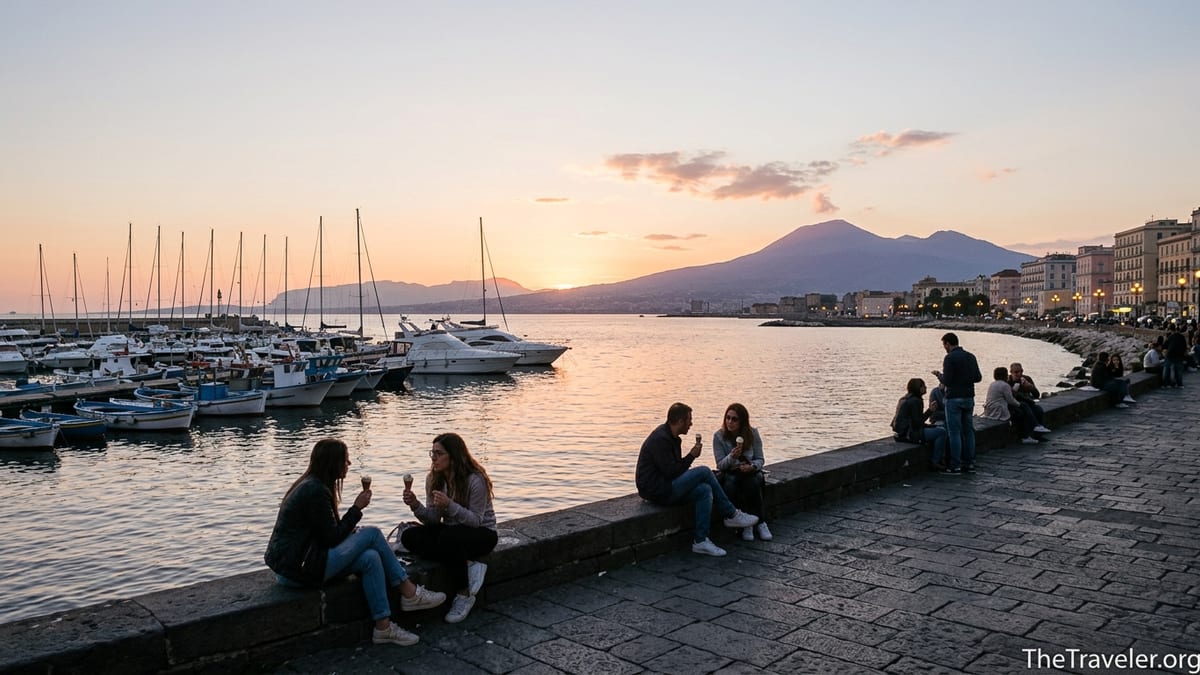
Ask a Neapolitan where to go when the city feels too intense and many will give the same answer: "Scendi a Mergellina" – go down to Mergellina. This waterfront district in the Chiaia area is where Naples loosens its collar in the late afternoon, as joggers, dog walkers, teenagers with gelato, and grandparents arm in arm all drift toward the sea. For locals, the seafront here is less a sightseeing stop and more a daily ritual, built around one simple pleasure: watching the sun sink behind the Bay of Naples.
Get the latest updates straight to your inbox!
Mergellina: Naples’ Everyday Escape by the Sea
Mergellina is a coastal district in western Naples, tucked between the elegant Chiaia neighborhood and the slopes of Posillipo. It stretches along Via Francesco Caracciolo, the broad waterfront promenade that locals simply call the lungomare. On one side you have marinas and the open bay; on the other, a row of palm trees, low-rise apartment buildings, and the traffic of the Riviera di Chiaia kept at just enough distance that the sound of waves and conversation still dominate.
This is not a manicured resort strip. Fishing boats sit alongside sleek yachts, and fishermen mend nets a short walk from busy pavement cafés. The atmosphere is distinctly Neapolitan: lively but unpretentious, with older men debating football near the small harbor and families pushing strollers as children ride scooters up and down the promenade. It feels like the city’s living room, where everyone shares the same front-row seat on the sea.
What makes Mergellina special to locals is its accessibility. From Piazza Garibaldi, many residents jump on Line 2 of the metro and step off at Napoli Mergellina station, just a few minutes’ walk from the water. Others arrive by the new Linea 6 metro or by bus along the Riviera di Chiaia. Because the seafront is flat and mostly pedestrian, it is welcoming to all ages, including older residents and parents with buggies, which helps explain why this stretch of coastline is woven into daily life rather than reserved only for weekends or tourists.
For visitors, this means that simply walking here in the late afternoon instantly puts you in the middle of local Naples. You are not crossing a curated itinerary item off a list; you are joining a routine that Neapolitans have been repeating for generations: a passeggiata sul mare, a slow walk by the sea.
Why the Seafront Promenade Feels Like Naples’ Living Room
The lungomare from Mergellina toward Castel dell’Ovo is about 3 kilometers long, depending on where you start and turn around. Many locals treat it as their outdoor gym. After work, you will see runners tracing the route from the yacht clubs at Mergellina toward the more central stretch near Via Nazario Sauro, sometimes looping two or three times to build up distance. Cyclists ring their bells as they weave gently through strolling couples, and groups of teenagers sit on the rocks facing the water, chatting until the streetlights come on.
Around the small harbor of Mergellina itself, the atmosphere is especially relaxed. Marina Molo Luise and other docks host pleasure boats and fishing vessels, and during summer evenings the air smells like the mix of salt water, grilled fish, and gasoline from small outboard engines. Local kids fish off the pier with simple lines, hoping for small bream or mullet. It is common to see commuters in work clothes pause here on their way home, leaning on the railings for a few minutes just to watch the light change on the bay.
Cafés and kiosks along Via Caracciolo make it easy to turn a simple walk into an impromptu social occasion. A mid-range bar on the seafront might charge around 1.50 to 2 euros for an espresso and 3 to 4 euros for an aperitivo spritz, which is why many locals choose to stand at the counter or sit on the low walls facing the sea rather than settle in for an expensive meal. Young Neapolitans often pick up a takeaway pizza a portafoglio (a folded slice, usually around 2.50 to 3.50 euros) from a pizzeria on a back street and then eat it looking out toward Vesuvius.
The promenade is also where local traditions play out on a small scale. On Sunday evenings, for example, Neapolitan families often dress up a little and take a slow passeggiata, greeting neighbors and relatives along the way. During local football matches, you might hear roars from nearby bars when Napoli scores, followed by car horns and snatches of club songs echoing along the seafront. These everyday rituals are part of why residents feel attached to this stretch of coast: it is both stage and backdrop for their social lives.
Sunset Rituals: How Neapolitans Enjoy the Golden Hour
Ask locals about the best time to visit Mergellina and most will point you to the hour before sunset. The bay curves gently, so as the sun drops, it often sinks behind the low hills toward Pozzuoli, casting a warm, sideways light across the water and lighting up the pastel façades along the coast. On clear days, Mount Vesuvius turns a soft purple silhouette, while small boats in the marina take on a golden edge.
In the warmer months, it is common for friends to agree on an informal meeting point like the fountain near the Mergellina harbor or the steps down to the rocks just beyond the main cluster of restaurants. They might stop at a gelateria on nearby streets for a cone of hazelnut and pistachio, usually around 3 euros for two flavors, then drift down to the seafront to lick it slowly as the sky changes color. Couples sometimes bring takeaway paper cups of wine or beer from small shops set back from the promenade, which is generally cheaper than ordering on the waterfront terraces.
Even in the cooler seasons, the sunset hour remains busy. Older residents wrap up in scarves and sit on benches facing the bay, while dog owners take advantage of the open space to give their pets a proper walk. On breezy winter evenings, the scene can feel almost cinematic: clouds racing above the volcano, waves slapping the rocks, and the streetlights flicking on one by one along Via Caracciolo, creating a chain of reflections on the wet pavement.
For photographers, this is the moment when Mergellina’s colors are most subtle and layered. The light is soft enough to flatter portraits, and the combination of sea, sky, Vesuvius, and the curve of the city creates compositions without much effort. Many locals know this intuitively, pulling out their phones as soon as the sky turns pink, framing shots that include the row of small fishing boats or the distant outline of Castel dell’Ovo near Borgo Marinari.
Views, Landmarks, and Easy Side Trips From Mergellina
Part of Mergellina’s appeal is the range of views and simple side trips you can access from one place. Standing on the promenade with your back to the apartment blocks, you look directly across the bay toward the San Ferdinando district and the medieval outline of Castel dell’Ovo, perched on its rocky outcrop. To your right, the shoreline curves toward Posillipo, where villas peek out from lush green slopes. To your left, the city thickens toward the historic center, which lies roughly a 30 to 40 minute walk away if you follow the lungomare.
Many locals turn their evening walk into a mini excursion by continuing east along the seafront from Mergellina toward Castel dell’Ovo. The full stretch from Mergellina metro station to the castle is roughly 4 to 5 kilometers round trip, depending on how much you explore side streets and viewpoints. Walking at a relaxed pace with pauses for photos and a coffee, most people complete it in about two hours.
Reaching the castle itself is straightforward: you follow Via Francesco Caracciolo as it becomes Via Partenope and then Via Nazario Sauro, staying as close to the water as possible. Along the way you pass small beaches where locals sunbathe in summer, street musicians playing classic Neapolitan songs, and clusters of fishermen’s boats pulled up on the sand. As you approach Castel dell’Ovo, Borgo Marinari appears, a tiny island-like village connected by a narrow causeway and surrounded by marinas. Locals often come here after their seafront walk to share a simple seafood dinner or an aperitivo on the terraces overlooking the boats.
If you prefer a view from above, Mergellina is also one of the gateways to Posillipo Hill. From the district behind the station, the Mergellina funicular climbs up toward Via Manzoni, giving panoramic glimpses of the gulf. When it is operating regularly, locals sometimes combine a seafront stroll with a ride up to Posillipo for sunset, then walk down via staircases like the famous Pedamentina or less-known flights of steps that weave between gardens and residential buildings. Services and hours can vary by season, so Neapolitans often check local transport notices or ask station staff before planning an evening around the funicular.
Eating and Drinking by the Water Like a Local
Mergellina has a long tradition of simple seafood eateries, pizzerias, and bars that cater primarily to Neapolitans rather than tour groups. Along the harbor, you will find casual restaurants where plastic chairs and paper tablecloths are part of the charm. Many specialize in fritto misto di mare, featuring small fried anchovies, calamari, and baby shrimp served in paper cones. Prices fluctuate, but a generous portion often runs in the range of 8 to 12 euros, making it an affordable snack to share while you watch boats come and go.
Pizzerias in the streets just inland from the lungomare are popular with local families, especially on Friday and Saturday nights. A classic Margherita pizza from a straightforward neighborhood place often costs around 6 to 8 euros, with more elaborate toppings pushing the price into the 9 to 12 euro range. It is common for residents to meet for pizza near Mergellina, then walk down to the seafront for coffee or dessert. This rhythm keeps the promenade lively well into the evening without making it feel dominated by sit-down restaurants.
If you want to follow local habits, consider skipping the more formal, tourist-oriented terraces that line the most central stretch of Via Partenope and instead duck into bars where Neapolitans actually congregate. One approach many visitors find helpful is to look for places with standing-room counters full of people chatting in Italian and servers moving quickly between espresso machines and spritz taps. Ordering un caffè at the bar rather than taking a full table typically costs around 1.20 to 1.50 euros, which is why many locals drink their coffee quickly, standing side by side, then drift back outside to continue their walk.
Street food culture also plays a big role here. In the evenings, food trucks and small stalls sometimes appear near the promenade selling cuoppi di frittura, paper cones of fried vegetables or fish, and zeppole di alghe, savory dough fritters with seaweed. Young locals often buy a cone of fried snacks to share among friends, sitting on the rocks with their feet dangling over the water. It is an easy, informal way to eat well without a reservation or a big bill.
Getting There, Safety, and Practical Tips for Visitors
Locals appreciate Mergellina not only for its views but also because it is relatively easy to reach from across the city. The Napoli Mergellina railway and metro station is on Line 2, which many Neapolitans use daily. From the station, it is roughly a five to ten minute walk downhill along Via Mergellina or Via Piedigrotta to the seafront. Several bus routes run along the Riviera di Chiaia, connecting Mergellina with Piazza Vittoria and the city center, and Linea 6 of the metro, when running its full schedule, links Mergellina with the Municipio area near the cruise port.
Transport schedules in Naples can change for maintenance or strikes, so locals often double-check times on the official public transport channels before heading out, especially in the evenings. Single tickets for metro, funiculars, and buses generally cost a little over 1 euro when bought in advance at tobacconists or station kiosks, with day passes offering better value if you plan to move around a lot. Many residents still prefer to walk from central areas like Piazza del Plebiscito to Mergellina along the seafront, a distance that typically takes 30 to 40 minutes on foot at a relaxed pace.
In terms of safety, the Mergellina seafront is a popular and busy area, particularly at sunset and on weekends. Families, joggers, and couples fill the promenade, and the general atmosphere is relaxed. Nevertheless, locals follow basic big-city common sense: keeping bags zipped, avoiding obvious displays of expensive watches or cameras, and being cautious around anyone who seems overly eager to offer unsolicited help or sell you something. Petty theft can occur in crowded places, so many Neapolitans carry only what they need for the evening.
Comfortable shoes are important. The lungomare pavement is mostly smooth, but if you plan to climb any of the staircases into the hillside neighborhoods or explore rocky areas near the water, you will appreciate sturdy soles. In summer, locals often bring a light extra layer for late evening, since the sea breeze can turn surprisingly cool once the sun drops. In cooler months, a windproof jacket makes sunset walks comfortable even when daytime temperatures feel mild.
The Takeaway
For Neapolitans, Mergellina is not a postcard but a habit. It is where they go to run off the day’s stress, to let children burn energy, to meet friends without a fixed plan, and to watch the sun disappear behind the gentle curve of the bay. The appeal lies in its mix of everyday life and extraordinary scenery: Vesuvius on the horizon, fishing boats bobbing in the harbor, and the city stretching out in a loose semicircle of lights.
As a visitor, if you want to glimpse how Naples really breathes, plan at least one evening on this waterfront. Arrive an hour before sunset, walk slowly from the Mergellina harbor toward Castel dell’Ovo, stop for a simple snack or coffee, and join the quiet choreography of the local passeggiata. You will leave with salt on your skin, city sounds in your ears, and a sense of why this stretch of seafront holds such affection in the hearts of the people who live here.
FAQ
Q1. What is the best time of day to visit Mergellina for a seafront walk?
The hour before sunset is ideal, when temperatures soften, the light turns golden over the bay, and locals come out for their evening passeggiata.
Q2. How do I get to Mergellina from central Naples?
You can take Line 2 of the metro to Napoli Mergellina station, use buses along Riviera di Chiaia, or simply walk the seafront from areas near Piazza del Plebiscito.
Q3. Is the Mergellina seafront safe to walk at night?
The area is usually lively and feels safe, especially around sunset and early evening, but you should still follow normal city precautions against petty theft.
Q4. How long is the walk from Mergellina to Castel dell’Ovo?
At a relaxed pace, the roundtrip lungomare walk between Mergellina and Castel dell’Ovo typically takes about two hours, including short photo or coffee stops.
Q5. Can I swim near Mergellina?
Small urban beaches appear along the seafront, and locals sometimes swim there in summer, but conditions vary, so ask residents or check local guidance before going in.
Q6. Are there affordable food options by the water?
Yes. You will find street food stalls, simple seafood places, and pizzerias where a pizza or cone of fried fish is reasonably priced and popular with locals.
Q7. Is Mergellina suitable for families with children?
Yes. The flat, wide promenade is stroller friendly, and children often ride scooters or bikes along the seafront while parents enjoy the view.
Q8. What should I wear for an evening walk in Mergellina?
Comfortable walking shoes are essential, plus a light layer in summer evenings or a windproof jacket in cooler months because of the sea breeze.
Q9. Can I combine Mergellina with a visit to Posillipo?
Many locals do. You can reach Posillipo by bus or funicular when it is operating, then enjoy hilltop views before returning to Mergellina for a sunset stroll.
Q10. Do I need to book a restaurant in advance along the Mergellina seafront?
For casual snacks you usually do not, but for popular waterfront seafood restaurants on weekends or holidays, reservations are wise, just as locals often do.