


Mergellina is often treated as a quick photo stop on the way to Posillipo or the historic center of Naples. Travelers stroll the waterfront, maybe grab a seafood lunch, and move on. Yet just a few streets inland, this neighborhood reveals a quieter, more intimate side of the city, where ancient tombs sit above railway lines, funicular cars climb the cliffs of Posillipo, and everyday Neapolitans live far from the crowds of Spaccanapoli. If you are willing to step away from the promenade, Mergellina offers some of the most atmospheric corners in Naples.
Get the latest updates straight to your inbox!
Getting Oriented in Mergellina Beyond the Promenade
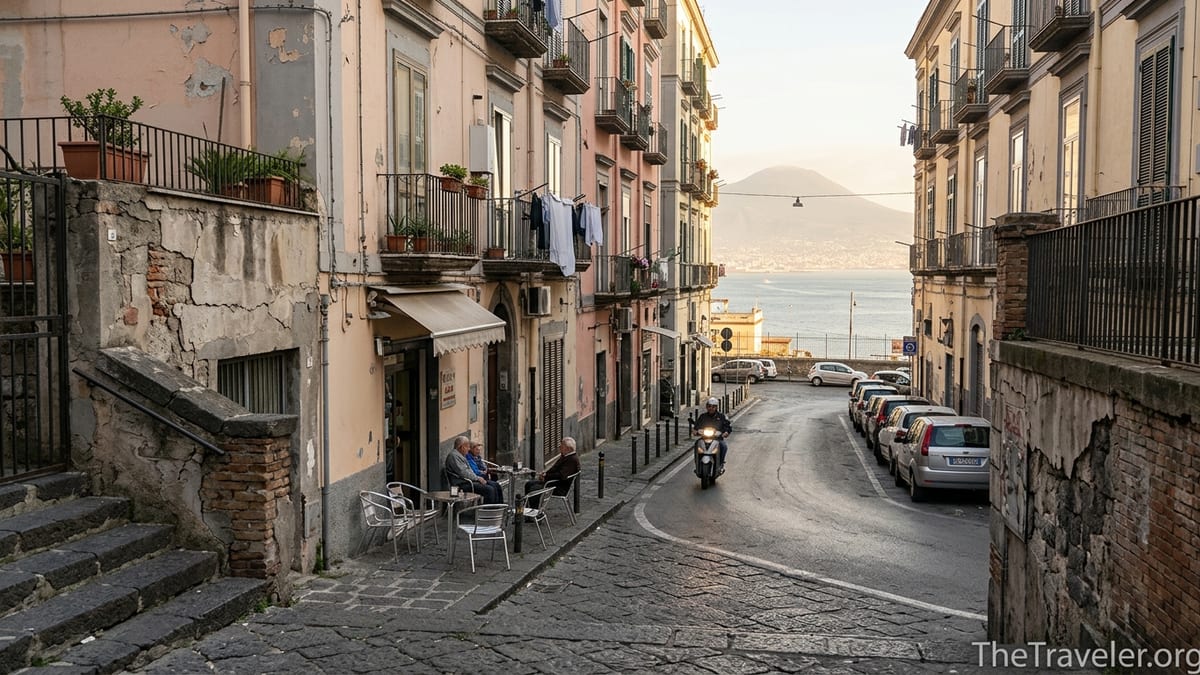
The classic Mergellina image is the line of boats and seafood restaurants along the marina, with Vesuvius on the horizon. To go beyond the waterfront, it helps to understand the layout of the neighborhood. The heart of inland Mergellina lies around Napoli Mergellina railway station and the nearby metro and funicular stops, where the slopes of the Posillipo hill rise steeply behind the tracks. From here, a grid of narrow streets climbs toward residential terraces, small neighborhood churches, and pocket gardens that feel a world away from the busy lungomare.
Most visitors arrive at Mergellina using regional trains or the urban Line 2, getting off at Napoli Mergellina station, which also connects to metro Line 6 and local buses heading up the hill. Just across the street from the station, apartment façades are streaked with age, balconies overflow with plants, and the smell of frying pizza dough mixes with the sea air. It is a good place to grab a quick espresso at the bar inside the station or at one of the small cafés on Piazza Piedigrotta before heading further inland.
As you move away from the water, Mergellina becomes tighter and more vertical. Stairs often replace sidewalks, and streets like Salita della Grotta or the roads leading toward Posillipo wind upward between tuff rock cliffs. This topography is what makes the neighborhood interesting: you can walk from the busy marina to an almost silent viewpoint in less than fifteen minutes, simply by following a set of steps or using the funicular.
Because many of these streets are residential, the rhythm of the day shifts with local life. Bakeries open early, small groceries roll out crates of vegetables by mid-morning, and in the late afternoon you will see children playing football in tiny piazzas while older residents chat on folding chairs. Plan at least half a day to wander away from the seafront and let these inland corners reveal themselves.
Walk Through History at Parco Vergiliano a Piedigrotta
One of the most rewarding places to explore inland Mergellina is Parco Vergiliano a Piedigrotta, a compact park tucked directly behind the church of Santa Maria di Piedigrotta and just across from Napoli Mergellina station. Sometimes called Parco Virgiliano of Mergellina, it should not be confused with the larger panoramic park of the same name in Posillipo. This hillside garden climbs a tuff rock slope above an ancient Roman tunnel, and it is famously associated with the poet Virgil. Local tradition has long claimed that his tomb stands here, near the entrance to the old Crypta Neapolitana tunnel through the hill.
The park is modest in size, but it is dense with atmosphere. A narrow path leads up through terraces shaded by pines and cypresses, with views back toward the railway tracks and the church dome below. About halfway up you reach the site traditionally identified as Virgil’s tomb, a Roman burial niche in the rock with commemorative plaques. Higher still lies the tomb of the nineteenth-century poet Giacomo Leopardi, whose remains were moved here after his death in Naples. This layering of ancient and modern literary memory makes the park feel more like an open-air anthology than a garden.
Parco Vergiliano a Piedigrotta is managed as a small archaeological green space, and its opening hours can be limited, often concentrated in the morning and early afternoon on selected days of the week. It is wise to check locally at the tourist office or ask at your accommodation for current hours before planning a visit, as schedules can change for maintenance or safety reasons. Admission is typically free, which makes it a particularly good value stop for travelers on a budget who still want a tangible connection to Roman history and Italian literature.
After exploring the park, walk back down Salita della Grotta and pause for a coffee or a cold drink in the bars near the station. Locals often stand at the counter for a quick espresso that costs around one to two euros, accompanied by a small pastry such as a sfogliatella or babà. The contrast between the tranquil hillside tombs and the everyday bustle at street level captures exactly what makes Mergellina’s inland side so compelling.
Ride the Mergellina Funicular into Everyday Posillipo
For a very different perspective on Mergellina, take the Mergellina Funicular from its lower station a short walk inland from the waterfront. This inclined railway, opened in the early twentieth century, climbs roughly half a kilometer up the slopes of the Posillipo hill, linking the seaside district to residential neighborhoods above. Unlike the more famous funiculars near Vomero, this line serves quieter areas, and riding it feels like slipping behind the scenes of Naples.
Tickets for the funicular are integrated into the city’s public transport system. A single ticket for metro, funicular, and buses typically costs only a few euros and is valid for a set time window, so you can use the same ticket to ride up to Posillipo and then transfer to another line if needed. Trains usually run every few minutes during the day, but frequencies can vary by season and local events, so it is best to check the current timetable posted at the station. Try to avoid rush hour when commuters fill the cars; late morning or mid-afternoon offers a more relaxed experience.
The ride itself takes only a few minutes, but it offers glimpses into courtyards, terraced gardens, and the back façades of buildings you would never see from the promenade. Stations such as Parco Angelina and San Gioacchino serve primarily residential zones where you can hop off and explore short stretches of local streets before catching the next funicular. A simple walk between two stops, then a return ride down to Mergellina, turns public transport into a small urban hike.
At the upper terminus in the Posillipo Alto area, the atmosphere feels more village-like, with corner groceries, bakeries, and bars catering mostly to locals. From here you can continue on foot along side streets that look back toward the bay, or catch a bus connection toward other viewpoints in Posillipo. The excursion is not about grand monuments, but about observing the everyday life of Naples from above and appreciating how steep geography shapes the city.
Discover Neighborhood Churches and Local Devotions
Away from the seafront, Mergellina reveals a dense network of parish churches and chapels that still anchor community life. The most prominent is the church of Santa Maria di Piedigrotta near the station, historically associated with a major local festival and with the entrance to the ancient tunnel at the base of Parco Vergiliano. Its façade, set slightly back from the traffic, looks out over a small square where vendors sometimes sell devotional objects, snacks, and lottery tickets.
Inside Santa Maria di Piedigrotta, side chapels, paintings, and ex-voto offerings reflect centuries of local faith and maritime culture. When Mass is not in progress, visitors are generally welcome to step quietly inside, dress modestly, and refrain from taking photos during services. Entrance is free, though a small donation in the offertory box is appreciated. Sitting for a few minutes in a pew, listening to the sounds of the city muffled through thick walls, gives you an intimate window onto Neapolitan spirituality that many tourists miss.
In the uphill streets toward Posillipo, smaller churches and oratories punctuate the urban fabric. Some stand at the top of staircases or on corners where children play and grandparents supervise from folding chairs. Their doors may be open only during certain hours, often in the early evening when locals gather for Mass or devotions. It is worth detouring up a staircase simply to see how these buildings fit into the dense residential texture of the district.
These religious spaces are not museum pieces but active community hubs. You might find a parish bulletin board advertising language classes, charity markets, or neighborhood processions. If you happen to be in Mergellina around a local feast day, you could encounter a small procession moving through the streets with a band, banners, and a statue carried on the shoulders of parishioners, giving you a vivid sense of how tradition shapes the calendar here.
Eat Like a Local in Backstreet Cafés and Pizzerias
The waterfront of Mergellina is known for its seafood restaurants, many of which have external menus featuring mixed fried fish, spaghetti alle vongole, and grilled catch of the day at prices that can easily run from twenty to thirty euros per main course. While some are excellent, the inland streets offer more modestly priced options where you can mix with local residents. Small trattorias and pizzerias on and around Piazza Sannazaro, a short walk from the station, are a good starting point.
In this area you will find traditional pizzerias where a basic margherita often costs under ten euros and more elaborate versions with buffalo mozzarella or seasonal toppings are only a bit more. Some places serve classic Neapolitan starters like frittatina di pasta, a deep-fried pasta and béchamel disk, and arancini or crocchè di patate. Ordering a starter to share, one pizza per person, and a carafe of house wine typically comes to a very reasonable bill for two, especially compared with waterfront venues.
Inland Mergellina also has several long-standing restaurants known among Neapolitans for seafood and seasonal cuisine, not just for bay views. Menus might include local dishes such as impepata di cozze, a peppery mussel stew served in a steaming bowl, or simple grilled fish dressed only with lemon and olive oil. Ask about the catch of the day and be prepared for prices to vary with market availability; a whole grilled fish might cost more than a plate of pasta but will usually be clearly priced by weight on the menu.
For a quick snack between explorations, step into a neighborhood bar that offers a glass display of pastries and savory bites. Many locals will order a coffee and a small piece of pizza al taglio, sold by the slice, or a trancio of focaccia topped with tomatoes and oregano. You can often eat standing at the counter for a lower price than sitting at an outside table. This is not only cheaper but also more in keeping with local habits, giving you a chance to watch the flow of everyday life.
Climb the Stairs and Linger at Local Viewpoints
One of the simplest ways to experience Mergellina beyond the waterfront is to follow its staircases. Several flights of public steps climb from the streets near the station and Piazza Sannazaro toward higher residential roads. These are not formal tourist routes, but they are well used by locals moving between home, shops, and transport stops. Wear comfortable shoes, bring water, and be prepared for some steep sections.
As you ascend, pause on landings where the buildings open slightly and you can see glimpses of the bay and Castel dell’Ovo between rooftops. You may notice laundry strung across courtyards, shrines to the Virgin Mary tucked into niches, and the sound of television drifting through open windows. The appeal here is not a single panoramic terrace but a series of small, changing perspectives that gradually shift your sense of the neighborhood.
Near some of the upper streets, unassuming railings and corners provide surprisingly good viewpoints. Look back toward the marina and the curve of the seafront, or sideways toward the layers of housing stacked on the hillside. Early evening is especially atmospheric, when lights are turning on and residents lean on balconies to talk with neighbors. These micro-viewpoints are rarely marked on maps, yet they often deliver more intimate memories than the major outlooks of Posillipo.
Using the funicular for one leg and walking the other is a good strategy. For example, you might ride the Mergellina Funicular up to one of the higher stops, explore a few blocks of residential streets, then walk back down via staircases, stopping for a drink at a bar along the way. This loop gives you the physical feel of the hill and helps you understand how tightly Mergellina is woven into the broader topography of Naples.
Experience Everyday Shopping Streets and Markets
A few blocks inland from the waterfront, Mergellina shifts from tourist promenades to everyday commercial streets. Here you will find greengrocers setting out crates of tomatoes, peppers, and local greens, bakeries selling fresh bread and taralli, and household shops specializing in everything from cleaning products to religious items. Prices are generally aimed at residents rather than visitors, so simple purchases like fruit, bottled water, or snacks are often significantly cheaper than along the seafront.
Morning is the best time to see these streets at their most lively. Many small food shops close for a few hours in the early afternoon and reopen in the early evening, following traditional working hours. Strolling between them, you can create an informal picnic: a bag of seasonal fruit, some sliced salumi and cheese, a loaf of local bread, and perhaps a small box of pastries from a pasticceria. Bring your finds back to your accommodation or enjoy them on a bench in a small square away from the main traffic.
On side streets, you may also encounter tiny family-run delicatessens that prepare ready-made dishes like parmigiana di melanzane, meatballs in tomato sauce, or pasta al forno sold by the portion. These are ideal if you want a hot meal without sitting in a restaurant; a generous takeaway portion can be more affordable than a full-service dining experience and lets you sample genuinely home-style cooking.
While Mergellina does not have the vast produce markets of neighborhoods like Poggioreale or the historic center, its shops and micro-markets offer a more human scale. Shopkeepers often chat with regulars, recommend the best fruit of the day, or suggest how to cook a particular cut of fish. Even if your Italian is limited, simple phrases and gestures usually suffice, and the exchange itself becomes part of the travel experience.
The Takeaway
Seen only from the waterfront, Mergellina can feel like a pleasant but predictable stop in Naples, defined by its marina, its seafood restaurants, and its views of Vesuvius. Step just a few hundred meters inland, however, and you find a district where Roman tunnels and poets’ tombs pierce the hillside, funicular cars slide past kitchen windows, and neighborhood churches and staircases shape daily life. It is here, among railway lines, pocket parks, backstreet pizzerias, and quiet viewpoints, that Mergellina reveals its real personality.
Plan time to explore Parco Vergiliano a Piedigrotta, ride the Mergellina Funicular, peek into local churches, snack at standing-room-only bars, and climb at least a few of the neighborhood’s steep staircases. Wear comfortable shoes, carry small change for public transport and coffee, and let yourself wander without a rigid checklist. By the time you return to the seafront, the bay will look different, framed by the stories and everyday scenes you have collected inland.
FAQ
Q1. Is Mergellina safe to explore away from the waterfront?
Overall, inland Mergellina is a lived-in residential area where visitors and locals coexist without major issues. As in any big city, take standard precautions: keep valuables secure, avoid poorly lit side streets very late at night, and be discreet with cameras and phones. Visiting during daylight or early evening hours is usually comfortable for solo travelers.
Q2. How much time should I plan to spend exploring Mergellina beyond the promenade?
You can see the main inland highlights in half a day if you focus on Parco Vergiliano a Piedigrotta, a ride on the Mergellina Funicular, and a meal around Piazza Sannazaro. If you enjoy slow wandering and photography, consider a full day to include stairway walks, church visits, and time to linger in cafés observing local life.
Q3. What is the best way to reach Mergellina from central Naples?
The simplest option is usually the Line 2 suburban rail or metro from Napoli Centrale or Montesanto to Napoli Mergellina station. The ride is short and inexpensive, and from the station you are already in the heart of inland Mergellina. Buses and taxis along the seafront are alternatives, but traffic around the bay can be heavy at peak times.
Q4. Are there entrance fees for Parco Vergiliano a Piedigrotta?
Parco Vergiliano a Piedigrotta has typically been free to enter, functioning as a public archaeological park. Policies can change, so check locally for the latest information on access and opening hours when you arrive. Even if there is a small fee, it is likely to remain modest compared with major attractions.
Q5. When is Parco Vergiliano usually open?
The park often keeps limited hours, commonly in the morning and early afternoon on specific days, and may close for maintenance or safety checks. Opening times can shift from year to year, so rely on current local information rather than older guidebooks. If visiting in cooler months or on holidays, ask in advance at your accommodation.
Q6. Do I need a separate ticket for the Mergellina Funicular?
The funicular is part of Naples’ integrated public transport system, so the same tickets used for metro and buses usually apply. Single-ride tickets cost only a few euros and are valid for a set time window, allowing transfers between different modes. You can buy tickets at newsstands, tabacchi shops, or automatic machines at larger stations.
Q7. Are inland restaurants in Mergellina cheaper than those on the waterfront?
In general, yes. Pizzerias and trattorias a few blocks inland often charge significantly less than seafront venues for similar quality. Expect a basic pizza to cost under ten euros and complete meals to be reasonably priced, especially if you avoid the most tourist-oriented spots right on the marina and eat where local families do.
Q8. Can I visit both Mergellina and Posillipo in one day?
It is entirely possible to combine inland Mergellina with a visit to Posillipo. You can ride the Mergellina Funicular up to the hill, then connect by bus or walk to viewpoints and parks in Posillipo before descending again. Just keep in mind the steep terrain and allow enough time for walking and public transport transfers.
Q9. What should I wear for exploring Mergellina’s inland areas?
Comfortable, closed footwear is essential because streets and staircases can be steep and uneven. In warm months, light breathable clothing works well, but carry a light layer for churches or breezy hilltop areas. If you plan to enter religious buildings, avoid beachwear, very short shorts, or uncovered shoulders.
Q10. Is Mergellina a good base for accommodation in Naples?
Mergellina can be an appealing base for travelers who prefer a quieter stay with easy access to the seafront and public transport. From here, Line 2 trains, buses, and the funicular connect you to the historic center and hill districts, while the area itself offers a mix of local eateries and neighborhood services. It is less central than some districts but often feels more relaxed.