


More news on this day
The UK government has widened its Middle East travel warning to cover 16 countries in and around the region, highlighting a heightened risk of sudden escalations, airspace changes and travel disruption affecting both holidaymakers and transit passengers.
Get the latest news straight to your inbox!
Which 16 countries are covered by the updated warning
According to recent updates to the UK Foreign, Commonwealth and Development Office (FCDO) travel advice, the expanded regional warning now appears on the country pages for Bahrain, Egypt, Iran, Iraq, Israel, Jordan, Kuwait, Oman, Pakistan, Palestine, Qatar, Saudi Arabia, Syria, Turkey, the United Arab Emirates and Yemen. Publicly available guidance indicates that these states are considered exposed to the knock-on effects of current tensions and conflict across the wider Middle East.
The new language has been inserted as a standardised disruption warning across all 16 pages, signalling that even destinations not directly involved in active fighting could experience secondary impacts such as changes to routing, diversions or temporary suspensions of services. While the underlying security picture differs significantly from one country to another, the shared advisory text focuses on the potential for rapid deterioration and operational uncertainty rather than a uniform assessment of on-the-ground risk.
In several of the listed countries, the broader warning sits alongside long-standing, stricter notices. Publicly available FCDO maps and summaries show that Iraq, Syria and Yemen continue to be subject to advice against travel to most or all of their territory, while parts of Egypt, Israel, Palestine, Jordan, Pakistan and Saudi Arabia remain covered by recommendations against all travel or all but essential travel.
Core message: be ready for flight disruption and airspace changes
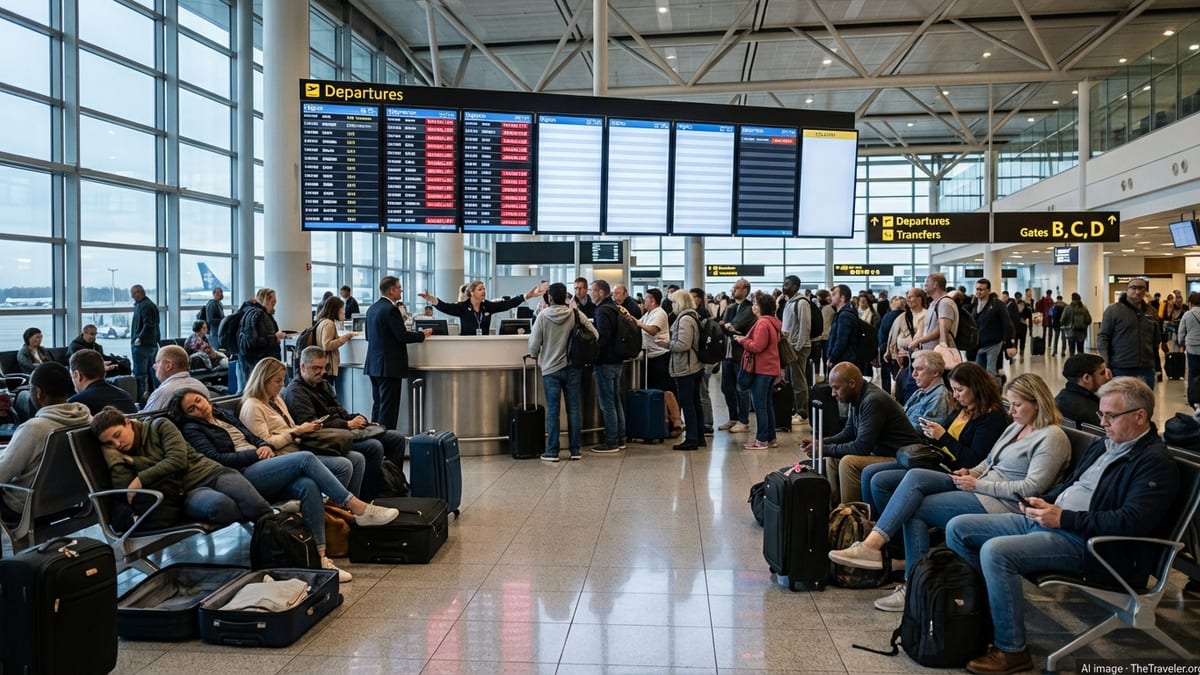
Recent summaries of the updated advice state that travellers in, or planning to travel through, the Middle East should be prepared for possible flight cancellations, sudden airspace closures and short-notice changes to airline schedules. The emphasis is on disruption that may affect both direct trips to the region and journeys that rely on major hubs such as Dubai, Abu Dhabi, Doha, Istanbul, Jeddah, Riyadh and Sharm el Sheikh.
Published coverage notes that the wording highlights a risk of escalation in regional tensions that could prompt aviation authorities or carriers to reroute aircraft away from certain air corridors or temporarily suspend operations to specific airports. For passengers, this could translate into missed connections, enforced stopovers, extended diversions or last-minute rebookings, even where their final destination lies outside the Middle East.
The warning also underlines that such disruption may occur at short notice, leaving limited time for travellers to adjust plans. Reports on the latest advice indicate that British nationals are encouraged to monitor airline communications closely, keep contact details up to date on bookings and allow extra time in itineraries that depend on tight connections at regional hubs.
Implications for tour operators, airlines and travel insurance
Travel trade reports suggest that the broader regional wording is prompting tour operators and airlines to reassess winter schedules and contingency plans for services touching the affected countries. Some carriers have already adjusted routings in recent months to avoid particular airspace segments, and the new FCDO language may reinforce the case for further caution on marginal routes.
Consumer and industry guidance stresses that travellers with existing bookings to any of the 16 countries should review both the specific FCDO page for their destination and the conditions of their travel insurance policy. Many UK-issued policies are closely linked to the official advisory level: cover may be restricted or invalidated if travellers choose to visit areas that are subject to advice against all travel or all but essential travel.
For destinations where the broader warning focuses on disruption rather than an outright “do not travel” message, most standard policies are expected to remain valid, but may not automatically cover voluntary cancellations based solely on concern about the regional situation. Publicly available briefings recommend checking for clauses related to war, civil unrest and airspace closure, and contacting insurers before making major changes to itineraries.
How the update affects transit passengers and indirect routes
The inclusion of key aviation gateways such as the United Arab Emirates, Qatar and Turkey means the impact of the warning extends beyond travellers whose final stop is in the Middle East. Many long-haul itineraries from the UK to Asia, Africa and Australasia rely on connections through Dubai, Abu Dhabi, Doha or Istanbul, placing a large number of transit passengers within the scope of any sudden airspace restrictions or flight cancellations.
Published analyses of the new wording indicate that the FCDO is not advising against using these hubs in general, but is flagging the need for heightened awareness of potential disruption. Travellers are encouraged in public guidance to consider flexible tickets where feasible, ensure they have adequate time between connecting flights and keep an eye on alternative routings that avoid the region entirely if circumstances deteriorate.
Airlines may respond to further volatility by consolidating frequencies, routing flights along longer but safer corridors or shifting capacity to routes perceived as lower risk. While such changes are primarily operational decisions for carriers, the presence of a formal government warning about disruption is likely to be a factor in future scheduling choices.
Practical steps for UK travellers monitoring the situation
Publicly available FCDO materials advise UK travellers to check the official country advice both when booking and again shortly before departure, as levels and wording can change quickly in response to developments. For those already in one of the 16 countries, travel industry bulletins recommend monitoring local news, airline updates and airport announcements, and keeping travel documents, digital tickets and important contact numbers easily accessible in case of sudden changes.
Travel planners also highlight the value of keeping accommodation bookings, internal flights and ground transport as flexible as possible where budget allows, particularly for trips that cross borders within the region. In practical terms, that can mean favouring refundable rates, avoiding very tight same-day connections between separate tickets and building a buffer day into multi-leg itineraries that rely on busy hubs.
For travellers who decide they no longer wish to proceed with a trip involving one of the affected countries, options will depend on individual airline and tour operator policies. Recent coverage points out that some companies may offer rebooking or vouchers where schedules have been significantly altered, while others may apply standard change fees if services are still operating. Carefully documenting any airline-initiated changes and keeping all receipts is widely recommended in case a later insurance claim becomes necessary.