


More news on this day
Travel plans across Mexico were thrown into disarray as at least 78 flights were delayed and 13 were cancelled at major hubs including Monterrey, Cancún and Guadalajara, affecting passengers on VivaAerobus, Volaris, American Airlines and several other carriers.
Get the latest news straight to your inbox!
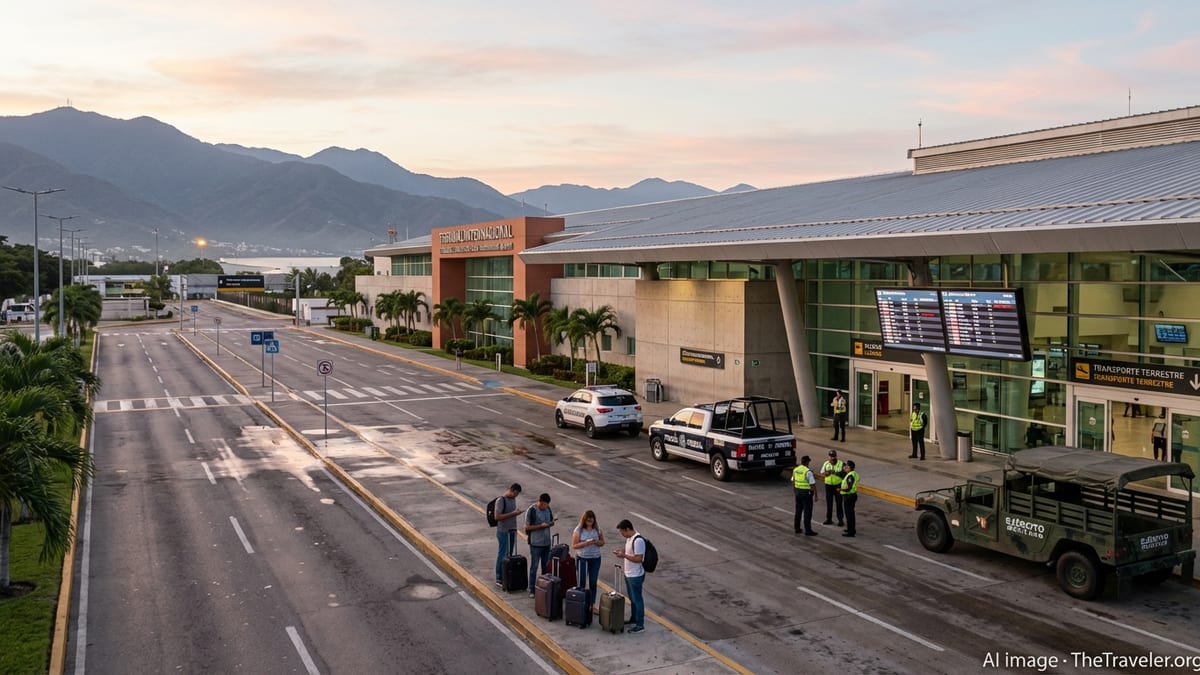
Delays and Cancellations Ripple Through Key Mexican Airports
Published airport dashboards and flight tracking data for mid July indicate an unusual cluster of disruptions across several of Mexico’s busiest airports. The combined tally of at least 78 delayed departures and 13 cancellations concentrated on routes linking Monterrey, Cancún, Guadalajara and other domestic destinations, hitting both low cost Mexican airlines and large international carriers.
VivaAerobus and Volaris, which dominate many domestic routes from Monterrey and Guadalajara, appear prominently in delay statistics, with multiple services showing late departures and, in some cases, scrubbed flights. Individual flight records for routes such as Guadalajara to Monterrey and Monterrey to beach destinations show extended delays and schedule changes, underlining how operational issues on specific sectors can quickly cascade through daily rotations.
American Airlines and other foreign carriers serving Mexican hubs have also reported schedule adjustments during the same period, according to publicly available timetables and flight status pages. While most long haul links continued operating, a small number of cancellations and rolling delays added to queues at check in, security and rebooking counters for travelers attempting to connect onward to the United States and other international destinations.
The overall total of 78 delays and 13 cancellations across a single day’s operations remains modest compared with peak holiday disruption seen in larger markets such as the United States or Europe, yet the concentration on a limited set of key domestic corridors made the impact especially visible for those relying on tightly timed weekend or business travel.
VivaAerobus and Volaris Under Scrutiny as Low Cost Networks Stretch
The disruptions once again place a spotlight on the reliability of Mexico’s low cost carriers, which offer dense schedules on popular domestic routes but often operate with tight turnarounds. Operational performance summaries for VivaAerobus and Volaris at airports such as Monterrey and Guadalajara show average delays creeping upward in recent months, reinforcing the sense among travelers that punctuality has become harder to count on.
Data compiled from recent flight histories illustrate how a single delayed aircraft can impact multiple city pairs over the course of a day. A VivaAerobus flight from Guadalajara to Monterrey that pushes back late can, for example, affect subsequent departures onward from Monterrey to destinations like Cancún, Puerto Vallarta or Mérida, as ground crews work to turn the aircraft within a compressed window.
Volaris, which has aggressively expanded from Guadalajara and other secondary Mexican hubs, faces similar operational challenges. Recent records show some services between Monterrey and Guadalajara experiencing significant average delays, and selected flights on these routes have been cancelled outright on certain days, forcing passengers to seek last minute alternatives or accept extended layovers.
Travel forums and consumer discussion boards reflect growing frustration with repeated schedule changes, unexplained delays and last minute cancellations on some low cost operators. While such accounts are anecdotal, they align with the patterns visible in punctuality reports, where even small deterioration in on time performance can be keenly felt on high frequency domestic routes.
American Airlines and International Links Also Affected
Although Mexican low cost carriers account for a large share of domestic disruption statistics, U.S. based airlines connecting Mexico to major North American hubs have not been immune. American Airlines, which markets itself heavily as a gateway carrier for travel to cities such as Monterrey, Cancún and Guadalajara, shows a mix of delays and isolated cancellations on its Mexico network during the same period.
According to published schedules and performance dashboards, American has been operating multiple daily services from U.S. gateways into Monterrey and other regional airports, particularly around high demand events and peak travel windows. When these flights encounter weather, air traffic control constraints or operational challenges such as maintenance or crew availability, the effects are quickly felt by passengers attempting to make onward connections.
Consumer facing guides issued by American and other large airlines describe how they handle controllable versus uncontrollable delays, including policies for rebooking, refunds and meal or hotel assistance in some circumstances. However, travelers caught up in this latest wave of schedule disruptions at Mexican airports reported on social platforms that accessing timely information and alternative arrangements often required persistence and flexibility.
Industry observers note that even relatively low numbers of outright cancellations can have outsized consequences for those traveling from secondary or regional airports, where frequencies are limited and same day alternatives may be scarce. In such cases, a single cancelled flight can effectively erase an entire day of travel options.
Monterrey, Cancún and Guadalajara Feel the Strain
The impact of the latest disruption has been most visible at Mexico’s busiest tourism and business gateways. Monterrey, a key industrial and commercial center in northern Mexico, has seen a steady build up in traffic, with VivaAerobus, Volaris and American Airlines among the most active operators. When several of these carriers face delays on the same day, the result is longer lines, crowded departure halls and increased pressure on customer service desks.
In Cancún, heavy leisure demand throughout the year means that even modest schedule irregularities can translate into hours of waiting for families beginning or ending beach vacations. Low cost and U.S. carriers share many of the same peak departure banks, so a disruption in one portion of the network can quickly spill over onto other routes serving North American and domestic Mexican cities.
Guadalajara, another major hub for both business and visiting friends and relatives traffic, has also recorded fluctuating punctuality metrics. Publicly available airport and airline statistics show that on time performance at the city’s international airport has been under pressure, mirroring a broader trend of operational strain across several Mexican carriers during 2026.
Across all three cities, the concentration of delays and cancellations on short haul domestic sectors has highlighted the fragile nature of highly optimized low cost carrier schedules. With aircraft utilization pushed high to keep fares low, recovery windows are limited once early morning flights depart behind schedule.
What Travelers Can Do When Schedules Unravel
The latest wave of disruptions across Mexican airports serves as a reminder that even on short domestic hops, contingency planning is increasingly important. Travel advisories and consumer guidance from aviation regulators and airline websites consistently recommend monitoring flight status closely via apps or airport displays, and allowing additional connection time when journeys involve multiple carriers or airports known for congestion.
For those whose flights are delayed or cancelled, passenger rights and compensation options vary depending on the airline, ticket type and cause of disruption. Official consumer dashboards in the United States outline what major carriers commit to provide during controllable delays, including rebooking and, in some cases, amenities such as meal or hotel vouchers. While Mexican carriers operate under a different regulatory framework, many publish their own service commitments and rebooking rules on their websites.
Travel experts generally advise building in buffer days when attending important events or international connections through hubs such as Monterrey, Cancún or Guadalajara, particularly during peak holiday periods or when weather or security conditions are unsettled. They also suggest considering earlier departures in the day, as statistics in numerous markets show that delays tend to accumulate as the schedule progresses.
As airlines across Mexico continue to balance rapid growth in demand with infrastructure and staffing constraints, sporadic clusters of delays and cancellations are likely to remain a feature of the travel landscape. For now, passengers on VivaAerobus, Volaris, American Airlines and other carriers affected by the latest operational snarl are once again reminded of the value of flexible plans and up to date information when flying through the country’s busiest hubs.